


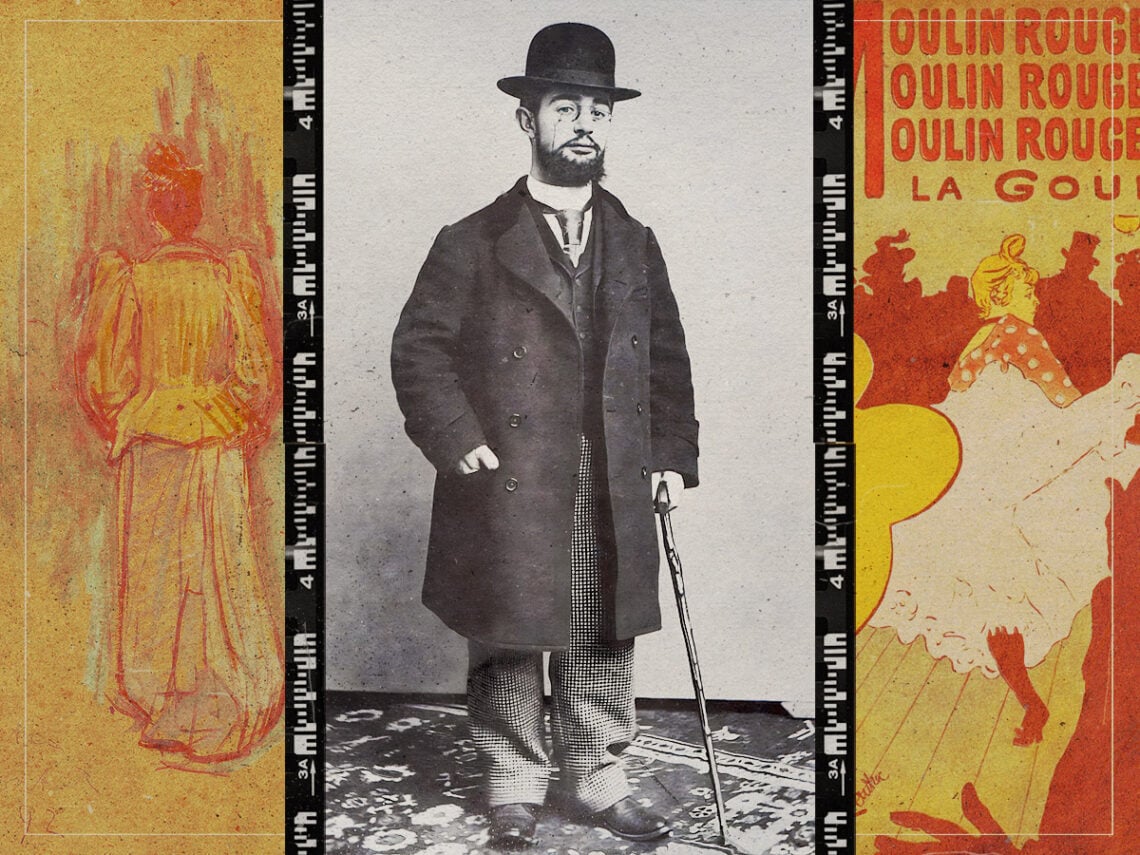
Why Henri de Toulouse-Lautrec found the muse in prostitutes

Henri de Toulouse-Lautrec achieved the incredible feat of painting prostitutes in the 19th century without passing any moral judgment. He also spent his life on the fringes of society, born with a genetic disorder that stopped his legs from growing and was so often ridiculed for his appearance that it drove him to alcoholism, institutionalisation, and early death. Prostitutes offered the only romantic intimacy he ever knew. Because of how he looked, sex was solely transactional, yet in his art, it’s painted with such tenderness you’d never know how tormented he was by his loneliness.
Even Lautrec’s sense of belonging in artistic terms is tenuous. He is often lumped in with Post-Impressionists like Vincent van Gogh and Georges Seurat, and that group itself reflects a broad mix of outsiders. Lautrec lived through two significant cultural moments in Paris: the birth of printmaking and the explosion of the city’s burgeoning nightlife. He watched on as performers found fame in the dance halls, often drawing the posters that promoted its starlets. His lithographs and posters were used to advertise the Moulin Rouge and were so successful that the cabaret always reserved a seat for him.
But his appearance relegated him to being the constant observer, never invited into the fold. By way of compensation, Lautrec turned to self-deprecation and alcohol. He was also said to have developed a keen eye for caricatures, maybe in part because of people’s reactions to his body. But his paintings never veered into cartoonish depictions of people. In fact, they were brutally tender and humanistic, which is precisely what you’d expect from an artist who spent a lifetime watching as life unfolded without him.
Brothels welcomed him with open arms, and he was such a regular that he could take time to draw studies of the women while they waited for clients. Fellow French painter Édouard Vuillard said Lautrec befriended them because he was a “physical freak” too proud to attempt a serious relationship with a non-working woman, saying: “He found an affinity between his condition and the moral penury of the prostitute.”
He made hundreds of artworks inspired by these women, with maybe the most profound being Woman Before a Mirror. A nude woman stares into a mirror, but Lautrec blurs her reflection. It’s a nod to his refusal to cast judgment, even when approaching it from her eyes. She’s naked, but it’s so unsexual it’s not erotic or voyeuristic. It feels like an ordinary, passing moment.
Even in more sensual paintings, like The Bed the Kiss, the locked embrace of a couple feels more tragic than sentimental because it’s a vision of intimacy and love he was condemned only to imagine.
He once declared in another employment of self-protective humour: “I have found girls of my own size!” Rejoicing in the fleeting sense of belonging he felt in Parisian brothels, he said, half-jokingly: “Nowhere else do I feel so much at home.”
