


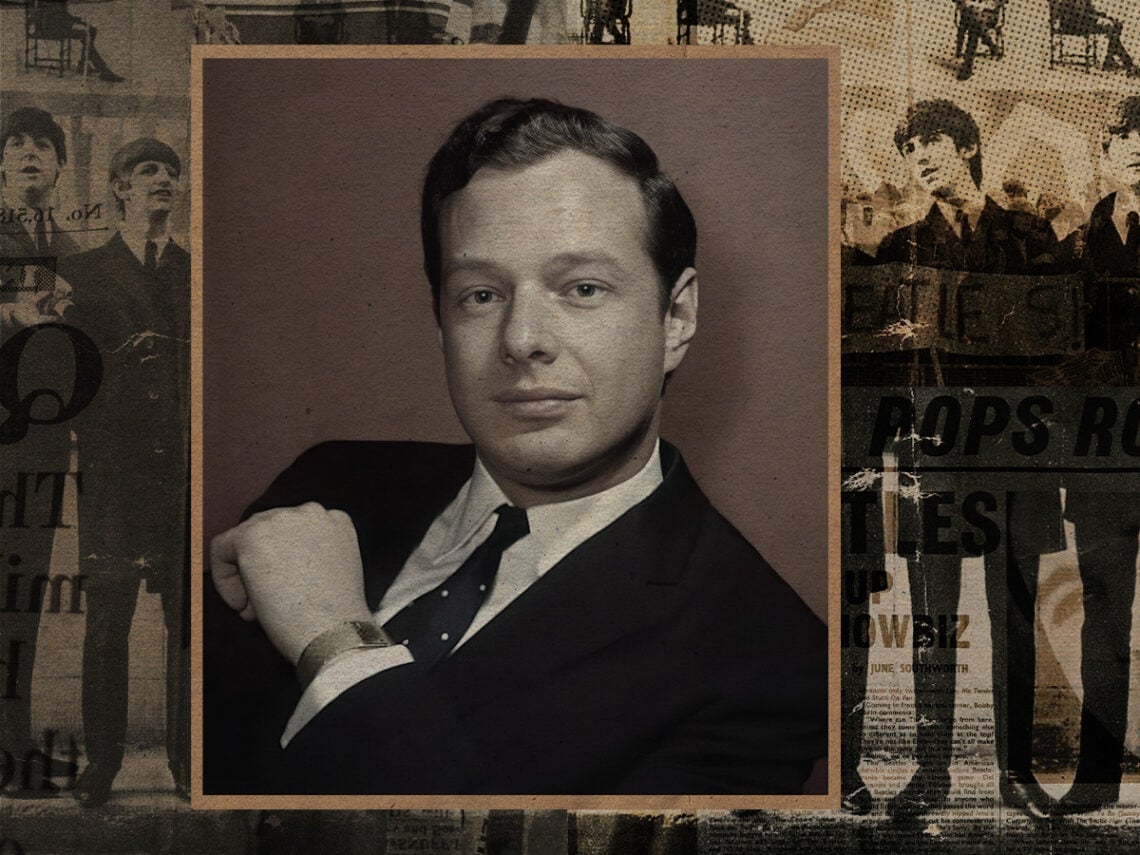
Why didn’t Brian Epstein sign The Beatles’ first contract?

While many like to claim the title belongs to them, Brian Epstein truly is the man who made The Beatles. When he first discovered the band, playing a lunchtime set at the Cavern Club on November 9th, 1961, they were good but not yet great. With his help, though, they became the historical phenomenon we know them as today. However, one detail was missing: Brian Epstein’s signature on the dotted line of their management contract.
Epstein was a fascinating man. With his story now being told in Joe A Stephenson’s Midas Man, the life of The Beatles’ manager is being recognised as being just as interesting as the band he managed. Although born in Liverpool, just like the Fab Four, he came from a very different part of town. His family owned NEMS – or North End Music Store – so while he was raised around music, it was more on the traditional, classical side of things, selling expensive instruments to the city’s more well-off families.
But Epstein did have real business savvy. As Elvis Presley was taking the world by storm and rock and roll was starting to be the thing, he knew that NEMS needed to keep up, so he convinced his family to sell popular records, too. This allowed him to build connections with record labels and eventually find The Beatles when a customer asked for a copy of their rare ‘My Bonnie’, which was only available in Hamburg at the time.
This intrigued him, so before he agreed to pay to ship copies of the record, he decided to go and watch them play at the iconic Cavern Club. “I was immediately struck by their music, their beat and their sense of humour on stage,” Epstein said of that show, “And, even afterwards, when I met them, I was struck again by their personal charm. And it was there that, really, it all started.”
At lunch after the show, Epstein said to his assistant, “I think they’re tremendous!” Then, by the end of the meal, an idea was in his head. Despite having no experience in the area, he said, “Do you think I should manage them?”
From that moment on, nothing was going to stop Epstein from locking the band in and securing his role as their new manager, even when the group’s old one, Allan Williams, advised him “not to touch them with a fucking barge pole”. But nothing would put him off. Eventually, he convinced the group to take a chance and paperwork was drawn up. However, one signature was missing – his own.
So, why didn’t Brian Epstein sign The Beatles’ first contract?
When Brian Epstein finally convinced The Beatles to let him manage them, both parties were taking a chance. Epstein was taking a chance on the band, betting on them to become big and investing time and money into helping it happen. He was also risking his current career as he dedicated less time to NEMS and risked irritating his contracts at record labels by now trying to flog them something rather than buy something.
But The Beatles were taking a risk too. Epstein had no experience in management, he also generally had little experience in the world of modern music as his family’s shop had largely dealt in classical. He wasn’t all that immersed in pop culture, or youth culture at all, so he definitely stood out as slightly square to the Fab Four.
However, Epstein was willing to take a shot, not just on the band but on himself, choosing to believe that he could do this and make this band work. To put them at ease and convince them to give him a go, he said that he wouldn’t sign his side of the contract.
He explained the decision to his assistant, Alistair Taylor, by saying, “Well, if they ever want to tear it up, they can hold me, but I can’t hold them.” He didn’t sign the contract to give them all the power but mostly to get them to trust him and take a chance on the newbie that would eventually make them huge.
It payed off. “If anyone was the fifth Beatle, it was Brian,” Paul McCartney once said as they stayed with him as their manager until his tragic death as age 32.

Never Miss A Beat
The Far Out Beatles Newsletter
All the latest stories about The Beatles from the independent voice of culture.
Straight to your inbox.