


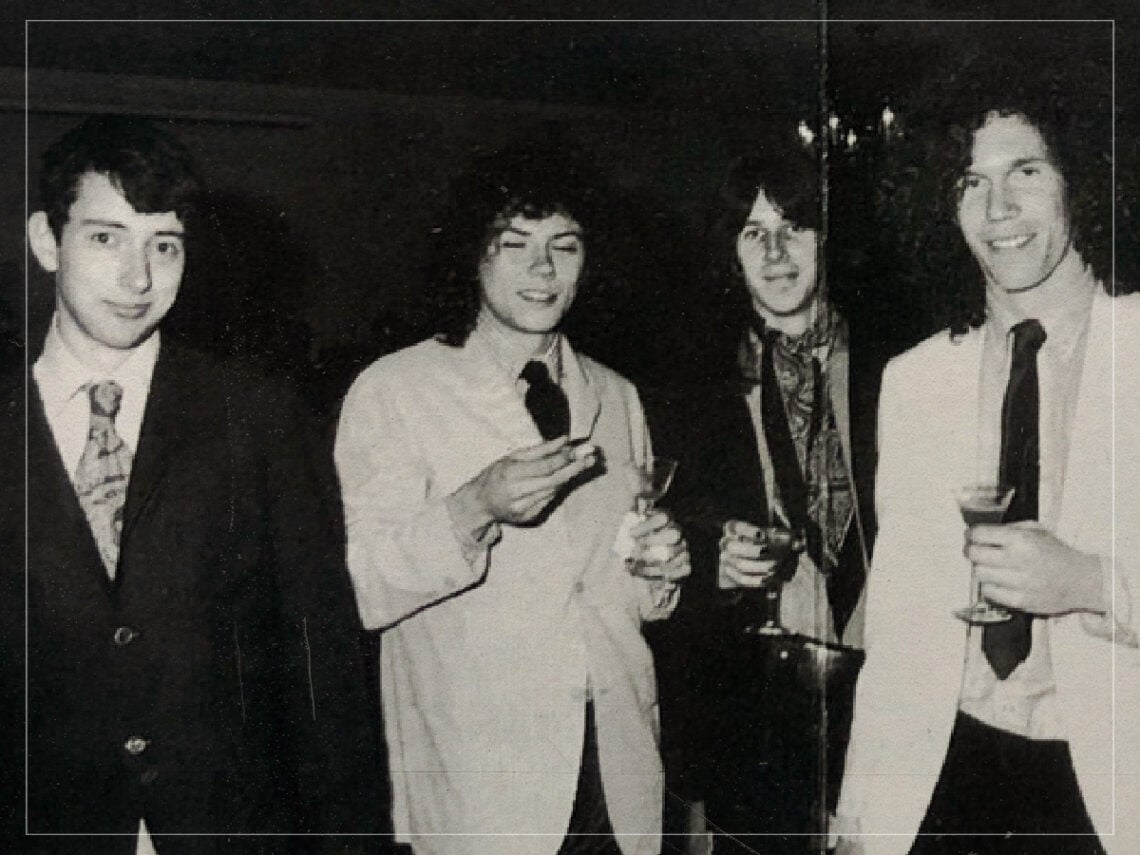
Why did The Modern Lovers come apart after only four years?

Boston, Massachusetts, has produced a wealth of musical talent over the years, but Jonathan Richman has always been something of an outlier.
Unconcerned with trivialities such as popularity, commercial success, or, indeed, building an audience, The Modern Lovers were among the most revolutionary outfits of the 1970s, but nobody seemed to be listening.
Like any underground outfit worth its salt, the story of The Modern Lovers begins with a spark of inspiration provided by The Velvet Underground. Lou Reed and John Cale’s experimental output offered an alternative to the self-aggrandising, big-budget glamour of the mainstream music industry, and although they didn’t amass a colossal audience during their initial tenure, that inspiration soon spread to those who needed it most, including Jonathan Richman.
After a brief yet nonetheless life-changing few months spent in New York, following in the footsteps of the Velvets, Richman set about creating a new band in their image, and therein lies the origin story of The Modern Lovers. During an age in which half of the rock scene was still recovering from the perpetual acid trip of the 1960s, and the rest were falling over themselves to try and replicate the success of Led Zeppelin, The Modern Lovers were in a league entirely of their own.
Richman’s songwriting was honest, understated, and indebted to the same kind of antiquated 1950s R&B that had similarly found itself at the root of Lou Reed’s output. Looking objectively at the band’s admittedly limited output, Richman’s outfit were among the first true punk rock outfits, rebelling against the rock status quo without much of a thought about commercialism or signing eye-watering record deals.
In the end, though, a band can only exist for so long without an audience. The Modern Lovers were indebted to Richman’s songwriting styling, but as the years passed by, he was increasingly wanting to move in different directions. Not that it mattered much, in fairness, as the band still hadn’t released any records.
Recording sessions came and went, including one particularly notable session with The Velvet Underground’s John Cale behind the production desk, but striking upon a cohesive debut album proved an almost impossible task, and one which was becoming increasingly frustrating for the band’s leader.
After all, he had written the stand-out track, ‘Roadrunner’, back in 1970, so by the time the group came to record it in 1972, he had already started moving away from that style.
Ultimately, Richman’s tireless artistry, despite being the heart of The Modern Lovers, was also their downfall. After Warner Bros lost all faith in the band to produce a debut album, they were dropped, and Richman moved on to pastures new. After only four years, one of the most revolutionary outfits of the 1970s was done and dusted, and nobody even realised they had started.
It wasn’t until Richman’s style of DIY songwriting came into fashion, during the age of punk rock, that The Modern Lovers’ recordings finally saw the light of day in 1976, after gathering dust for over four years, and this, of course, inspired a new version of the band, with an entirely different line-up, to form. Richman’s day in the spotlight had finally arrived, even if it was a few years too late to truly take advantage.
