


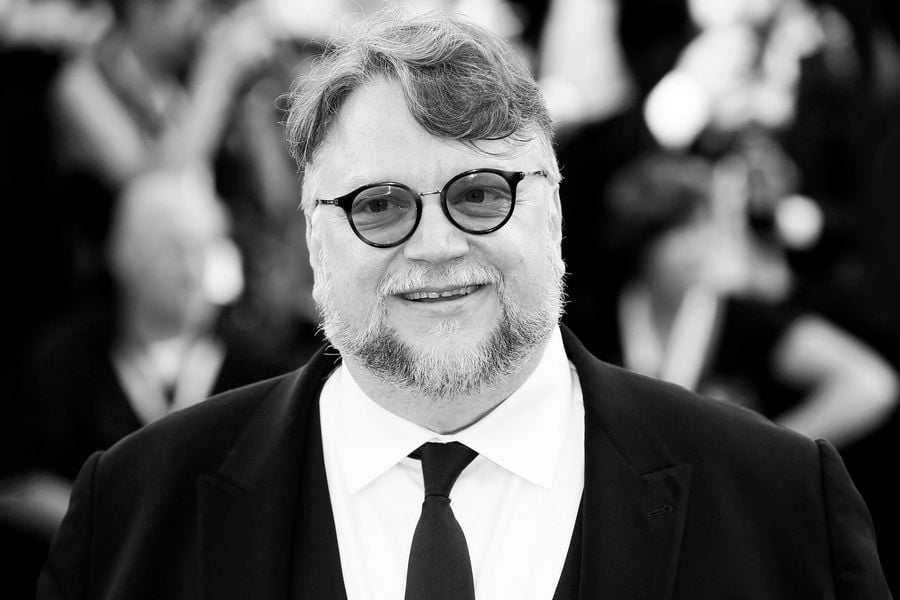
Why did Guillermo del Toro quit as director of ‘The Hobbit’ movies?

It is a well-known fact that Peter Jackson’s The Lord of the Rings trilogy is one of the most successful film franchises in history. Expansive in scope and incredibly costly for the time, the adaptation was a resounding success. Significant leaps in visual FX capabilities were achieved, the boundaries of scriptwriting were pushed, and the starring actors crystallised their names in pop culture legend.
The project was so successful that not long after the final instalment in the trilogy, The Return of the King, hit cinemas in 2003, fans of the movies and J.R.R. Tolkien’s original books called for his prequel to the series, The Hobbit, to begin production. Of course, they would eventually get their wish, and for a time, Mexican auteur Guillermo del Toro was in the driving seat.
Wanting to capitalise on the success of Jackson’s trilogy, New Line Cinema teamed up with Hollywood heavyweight MGM. After the tricky issue of the rights was resolved, plans developed around adapting The Hobbit into a movie. Interestingly though, Jackson didn’t want to sit in the director’s chair. He sought only to write and produce what became two planned titles.
Then came the arrival of Guillermo del Toro, the mind behind The Devil’s Backbone and Pan’s Labyrinth. A master of dark fantasy who had proven his skill at adaptations with his pair of Hellboy films, del Toro was officially hired as director for The Hobbit in April 2008. As part of the deal, del Toro would also co-write with Jackson and his Lord of the Rings collaborators Fran Walsh and Philippa Boyens.
However, things didn’t go to plan, and del Toro quit in May 2010. It was then up to Peter Jackson to reluctantly make what became a trio of Hobbit films. Since then, it’s left fans wondering what Guillermo del Toro’s spin on Middle Earth would have looked like.
In November 2008, del Toro explained some of the issues he and Jackson encountered when attempting to adapt the book. One of these was that the arduous process of writing the script hindered other aspects of production. “Literally, like every week, what you discover writing the two movies, writing the two stories, it changes,” he told ComingSoon.net. “So, every week there’s a discovery, and anything we say this week [might] be contradicted next week. Certainly that would be true in casting. Why create hopes or why create expectations if down the line you’re going to go, ‘You know what? That was not a good idea.'”
Adding to the problem was that filming was slated to commence at the start of 2010, but towards the end of 2009, it became evident that this was impossible. Reportedly, Jackson had instead estimated that production would kick off in the middle of the year as casting and budgeting were still to happen. Miraculously, at this point, neither New Line nor MGM had even given the films the green light.
In May 2010, when speaking to Shock Till You Drop, del Toro inferred that the writing had now been finished, alongside other parts of the production, including the animatics. However, the financial troubles that would eventually bankrupt MGM started emerging. “There can’t be any start date, really, until the MGM situation gets resolved,” del Toro explained. “Whether they stay and get supported or they get bought or they transfer some of the rights, nobody knows… we are very, very prepared for when it’s finally triggered, but we don’t know anything until MGM is solved.”
Not long after, The Hobbit films were flung into limbo and, with production set to take much longer than expected, del Toro quit. He announced his departure on May 30th, 2010. “In light of ongoing delays in the setting of a start date for filming The Hobbit, I am faced with the hardest decision of my life,” he expressed to The One Ring. “I remain an ally to it and its makers, present and future, and fully support a smooth transition to a new director.”
