


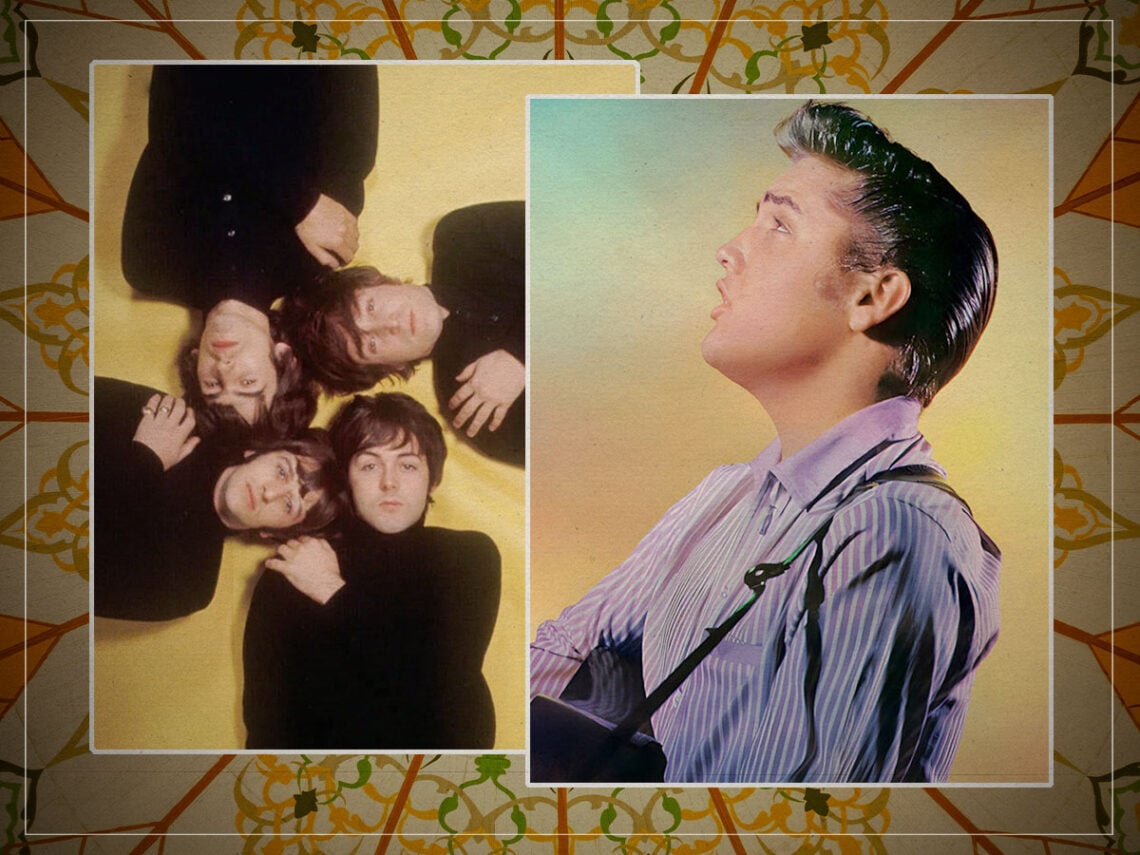
Why did Elvis Presley call The Beatles “anti-American”?

It’s no hidden secret that Elvis Presley and The Beatles didn’t exactly see eye to eye. While the Liverpudlians grew up idolising him, their meeting was precisely why people say never meet your heroes, and ‘The King’ also later became obscenely bitter about the success of the Fab Four.
Let’s take it back to the four young men eagerly awaiting the latest drop off of American records that seemed to flow through the docks at Liverpool. The port city offered its inhabitants first grab at the new records, and while the blues were devoured by the real musos, it was hard to escape the allure of Elvis.
The singer quickly became a hit on both sides of the Atlantic, dominating both the radio airwaves and the television screen. He would become a worldwide phenomenon and quickly infiltrate the minds and creative nous of all who saw him, including four boys who would go on to become one of the biggest bands of all time, dominating just as The King had done, the princes of rock soon became just as large an influence as their own.
The summit between the two giant cultural behemoths came in the summer of 1965 after Beatlemania took America by storm. Elvis wanted to see what all the fuss was about for himself and agreed to let the band visit his residence. As The Beatles enjoyed a break from commitments in their diaries, the group initiated a trip to Bel Air, and a suitably bizarre evening ensued.
However, the unlikely pairing didn’t immediately hit it off. According to The Beatles’ former press officer, Tony Barrow, who was also in attendance, the small talk didn’t take long to wear thin. He told the BBC: “There was this embarrassing silence between the mega-famous five, stood there facing each other, with very little of import being said”.

Thankfully, Elvis had a brainwave and decided to orchestrate a jam session, removing all of the awkward tension from the room. Barrow recalled: “Up to that point, the party really had been a bit lifeless and unexciting. But as soon as Presley and The Beatles began to play together, the atmosphere livened up”.
He continued: “The boys found that they could make much better conversation with their guitars than they could with their spoken word. Music was their natural meeting point, their most intelligent means of communication”.
Despite the evening getting back on track, Elvis seemingly wasn’t won over by The Beatles. Years later, it emerged that he believed they were a force for immorality in America, a group that was destroying the cultural fabric of his once-great country. Publically, however, he was kind to the Fab Four, and during a press conference for his comeback tour in 1968, Elvis said: “I really like a lot of the new groups—The Beatles, the Beards, and whatever.”
Why did he call them “anti-American” then?
Yet, behind closed doors, it was a different story, and his well-documented meeting with President Nixon in December 1970 confirmed what Presley honestly thought about the group.
There was plenty that Elvis had on his agenda for the engagement, and one of his key prerogatives was to take down The Beatles. Lawyer Egil ‘Bud’ Krogh took notes of the meeting, reflecting poorly on Presley. Elvis told Nixon: “The Beatles had been a real force for anti-American spirit,” and also claimed, “The Beatles came to this country, made their money, and then returned to England where they promoted an anti-American theme.”
The following year, Presley attended a tour of the FBI offices, and again, he used this time to spread his anti-Beatles propaganda to those in places of power. According to notes, Elvis explained to FBI director J Edgar Hoover why “The Beatles laid the groundwork for many of the problems we are having with young people by their filthy unkempt appearances and suggestive music.”
It remains unknown whether Elvis genuinely believed that The Beatles were the embodiment of evil or if his vicious remarks were simply down to jealousy. However, Elvis certainly wasn’t a Beatlemaniac, and in his eyes, they were to blame for ending his version of America.

Never Miss A Beat
The Far Out Beatles Newsletter
All the latest stories about The Beatles from the independent voice of culture.
Straight to your inbox.