


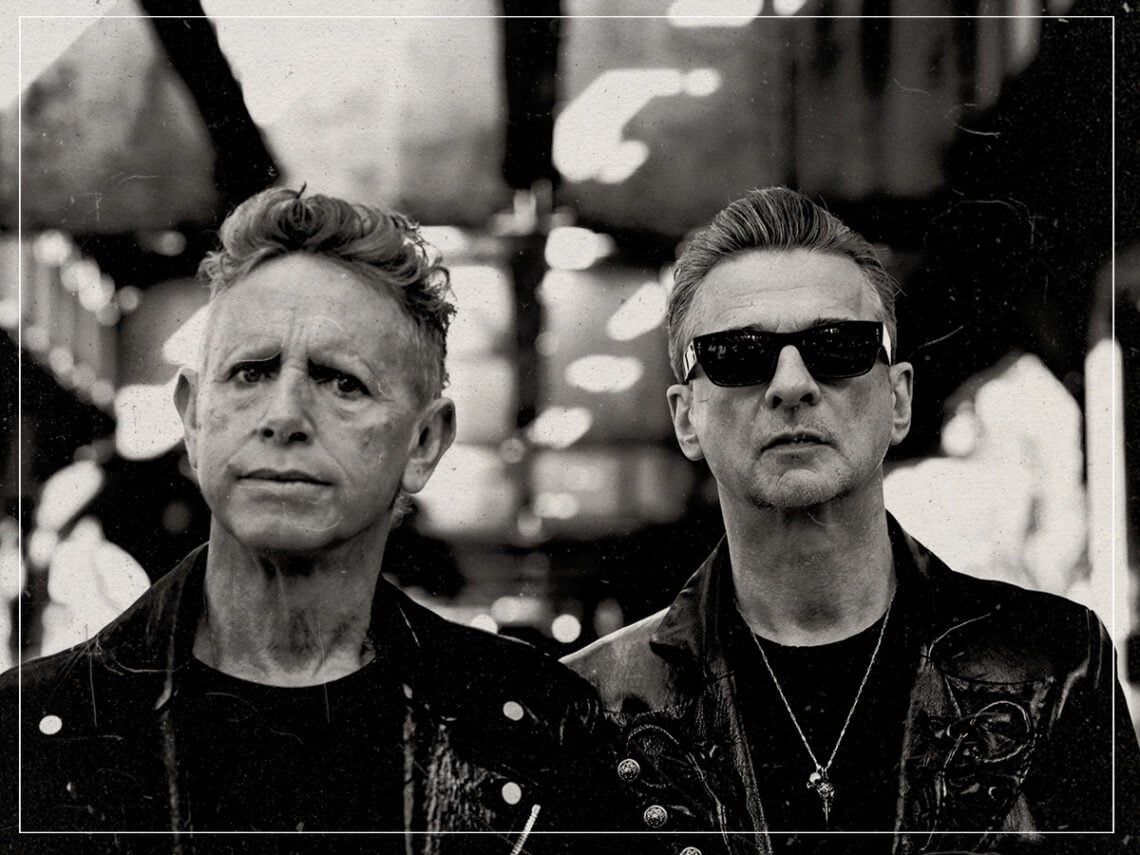
Why Depeche Mode turned their backs on their 1984 hit and refuse to play it live

Despite standing as their biggest hit yet, Depeche Mode’s distaste for one early smash in 1984 has meant its erasure from setlists for nearly 40 years.
They’re not averse to playing the hits. ‘Just Can’t Get Enough’ is tossed to the fans as a typical encore despite existing several creative lifetimes ago and not even being penned by principal songwriter Martin Gore, and the chunky ‘Everything Counts’ enjoys a routine slot on their performances, played as late as 2024 during the Memento Mori World Tour.
But seismic changes were underway during those early years. Long before the electro-cool of Violator or Songs of Faith and Devotion’s bluesy alt-rock, Depeche Mode’s awkward infancy was on full show for a music press who targeted the Basildon lads with particular scorn among the original synthpop class of ‘81.
They didn’t help themselves. Stiff appearances on Razzmatazz and Multi-Coloured Swap Shop invited a teenybop image that stuck in the critics’ craw for years, and their first two Speak & Spell and A Broken Frame LPs boasted flashes of pop brilliance while bogged down in polyphonic fodder their peers were flexing with greater aplomb.
Yet, Depeche Mode endured while the rest of the synthpop bunch lapsed into irrelevance or retro circuit deadends. Fighting the odds, Gore’s emerging sophistication as a writer and the band’s pull into European industrial would see the third album, Construction Time Again, shake off the bouncy synths of old for a harder, crunchier, tread-plated canvas of mechanical clangour and cavernous heft courtesy of the new innovations in digital sampling. Aligning with the likes of DAF and Einstürzende Neubauten, Depeche Mode’s new sonic belligerence found the quartet firmly in the alternative world’s moodier orbit.
It wasn’t a clean break, however. Most fans will agree that the real ‘Mk II’ of Depeche Mode’s artistic evolution begins with 1986’s Black Celebration, but paths were paved decisively on Construction Time Again and 1984’s follow-up, Some Great Reward. Bridging their pop foundations and pursuit of darker terrain, Some Great Reward’s lead single would yield their biggest hit yet, but quickly score a moment in their chart trajectory that Depeche Mode quickly outgrew.
It’s seemingly all there. Nice factory pummel, Synclavier punch, gleaming melody lines, ‘People Are People’ initially appears to cut a bold step forward for Depeche Mode. One listen to Some Great Reward, and even its B-sides, reveals far greater dynamism at play, as well as Gore’s lyrical bite ever sharper. ‘Something to Do’s S&M dystopia, ‘Lie to Me’s skulking groove, and ‘Blashphemous Rumours’ cynical mortal balladry point to a band already above ‘People Are People’s trite sentiments about social disharmony, and some clearly bad lines, “It’s obvious you hate me, though, I’ve done nothing wrong / I’ve never even met you, so what could I have done?”
They’d scored their biggest hit yet, topping the West German charts, nabbing their first Top Five in the UK, and cracking 13 on the US Billboard Hot 100. Depeche Mode would dutifully perform ‘People Are People’ for the next four years, as their newer material began to overshadow their 1984 hit. The last time it would ever appear on a setlist was for the 1988 Rose Bowl show captured on the 101 concert film.
It’s a key piece of Depeche Mode’s warts and all rise and rise, just as essential a learning curve as their early music video disasters, leading to Anton Corbijn’s visual recruitment or A Broken Frame’s necessary teeth cutting in the aftermath of songwriter Vince Clarke’s scarpering just as they found success.
“I really don’t appreciate the song anymore nowadays,” Gore mused to Germany’s Rolling Stone in 2009, “but without it, we might not have been around as a band right now.”
