


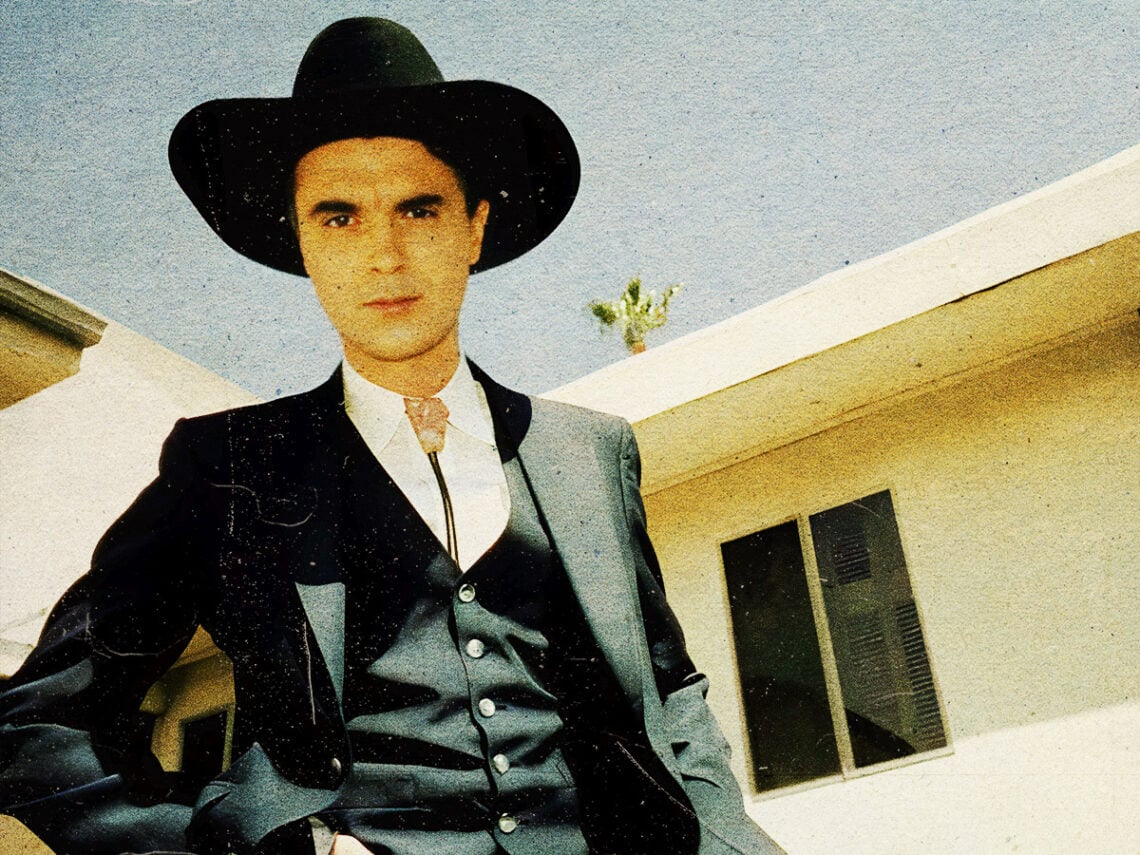
Why David Byrne only made one movie

Frontman David Byrne got his first taste of filmmaking in 1984. He assisted with stage design and choreography for the iconic Talking Heads concert film, Stop Making Sense, which involved Byrne flailing his arms around and running up and down the stage while singing ‘Life During Wartime’. The film has since become one of the most celebrated live music films of all time, gaining cult classic status among post-punk fanatics and film fans alike.
Two years later, Byrne took his cinematic ventures a step further with his directorial debut, the musical satire masterpiece True Stories. After the huge success of Stop Making Sense, Byrne was granted creative control, and it formed a real picture of Byrne’s artistic auteurship. Written in collaboration with Stephen Tobolowsky and Beth Henley, the singer’s feature film was a quirky commentary on small-town America which combined surrealism and satire, soundtracked by Talking Heads themselves.
Despite the mainstream success of the band’s concert film, True Stories was less of a commercial hit, perhaps due to its niche style. Since then, Byrne has shown a continued interest in film, soundtracking The Last Emperor alongside the late Ryuichi Sakamoto, appearing in John Mulaney’s comedy special John Mulaney & the Sack Lunch Bunch, and collaborating with Spike Lee on a concert film version of his Broadway musical American Utopia. But Byrne’s directorial career started and ended with True Stories.
In an interview with The Talks, he explained the reason why he never made another movie, putting it down to the lengthy process of filmmaking. Byrne explained, “Somehow, it was my fault. After that movie, I was seduced by it and tried to get other movies going in Los Angeles, and it was a disaster.”
He continued to emphasise the patience needed to succeed in filmmaking, adding, “You hear the story over and over again of people who spend years trying to get something done, and if it takes too long, so I thought, ‘No, I don’t have the patience. I’ll write some songs and make a record.’” He concluded, “It is more difficult because you don’t have the patience. If you focus on making a movie, everything else is gone.”
Nonetheless, Byrne shared his love for other filmmakers using his music in their films, provided they do it right. He reflected, “When it works, it is great. When it works, you really get something special, but when it doesn’t work, then it is a disaster.” The frontman once had to reject a filmmaker from using ‘This Must Be the Place’ to accompany a scene where a woman was being hacked into pieces. He recalled, “I just thought, ‘No, I don’t want that image connected with that song.’”
Despite Byrne’s one-and-done venture into directing, True Stories retains a cult following in circles of Talking Heads fans, providing a look into Byrne’s quirky artistry on screen.
Watch the video for ‘Love for Sale’ from David Byrne’s one and only film, True Stories, below.
