


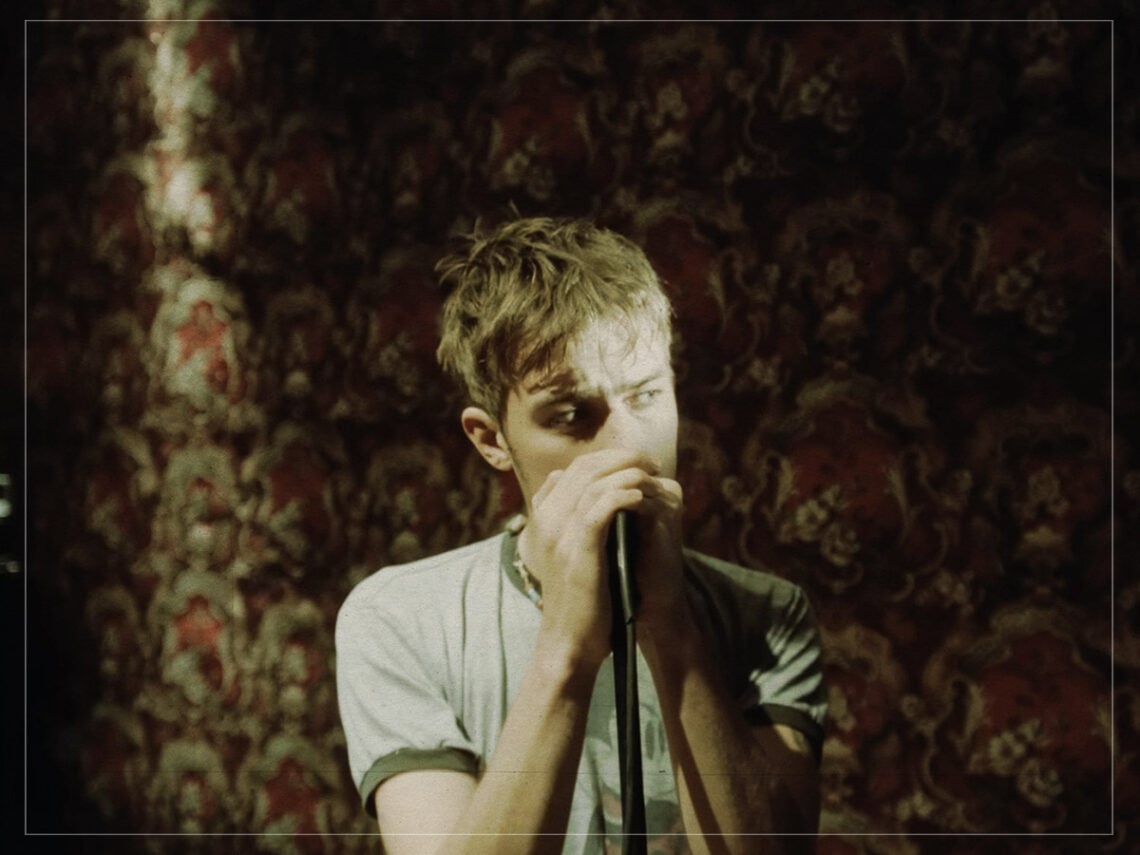
Why Damon Albarn compared early Blur records to gangsta rap

“My great fear,” Blur frontman Damon Albarn said in 1994, “is sticking around for ten years and by the time we start making it over here [in America], we won’t be any good anymore”.
That nightmare never came true for Albarn, not because Blur stayed together too long or completely lost their mojo, but because America just never quite caught on to them. The band’s commercial peak in the States was 1997’s self-titled album, which was powered by the surprising hit single ‘Song 2’, a satirical faux-grunge song everyone took seriously, topping out at number 61 on the US charts, which might rightly qualify a British band for a ‘Made It In America’ badge, but it’s probably not the Oasis-sized invasion Damon had in mind.
It’s long been said that mainstream radio competition was simply too stiff for bands like Blur and Pulp and Suede to carve out a US niche when the airwaves were still dominated by the last vestiges of unironic grunge rock and a parade of hits from a new generation of modern R&B and hip-hop acts. Young Americans preferred Tupac and Biggie to this unrelatable brand of guitar-pop being made by rail-thin art-school boys in Britain, but, then again, maybe there wasn’t such a big difference between those two worlds after all.
“I love music that knows its place,” Albarn continued in the ’94 interview with The Philadelphia Inquirer, when Blur and Pulp were touring together, playing medium-sized theatres across the States, “I love the ambience of gangsta rap. I can believe I’m in downtown LA when I’m listening to it. We like to think we do that with suburban England.”
Damon would presumably come to learn that “downtown” Los Angeles isn’t really the setting for most gangsta rap, but his point was still interesting, as Blur, like The Kinks before them, were often celebrated for shining a light on a very specific sort of Englishness: the peculiar characters that occupy the outskirts of London, the mundanities and frustrations of a hum-drum suburban existence.
“We create the equivalent of little films, I think,” Albarn explained, “Our songs are about people trapped in their own ordinary worlds and their futile attempts to escape”.
Many of Blur’s early songs were holding up a mirror, I suppose, in a way not too dissimilar from what American rappers were doing at the time. It’s just that the images being reflected, and the life-and-death stakes involved in one versus the other, make for a bit of a shaky equivalency.
As it turned out, Albarn finally conquered America not by waiting for Americans to appreciate the subtle brilliance of a story about an annoying man in Essex, but by subverting the usual sounds and storylines of both Britpop and hip-hop through his second outfit, Gorillaz, a group that has dramatically and consistently outsold Blur in the US.
“The success of Gorillaz was a confidence booster,” he told the Chicago Tribune in 2003, acknowledging his past concerns about finding an audience in the States, adding with a sarcastic chuckle, “But it serves me right that I’m coming back with Blur”.
