


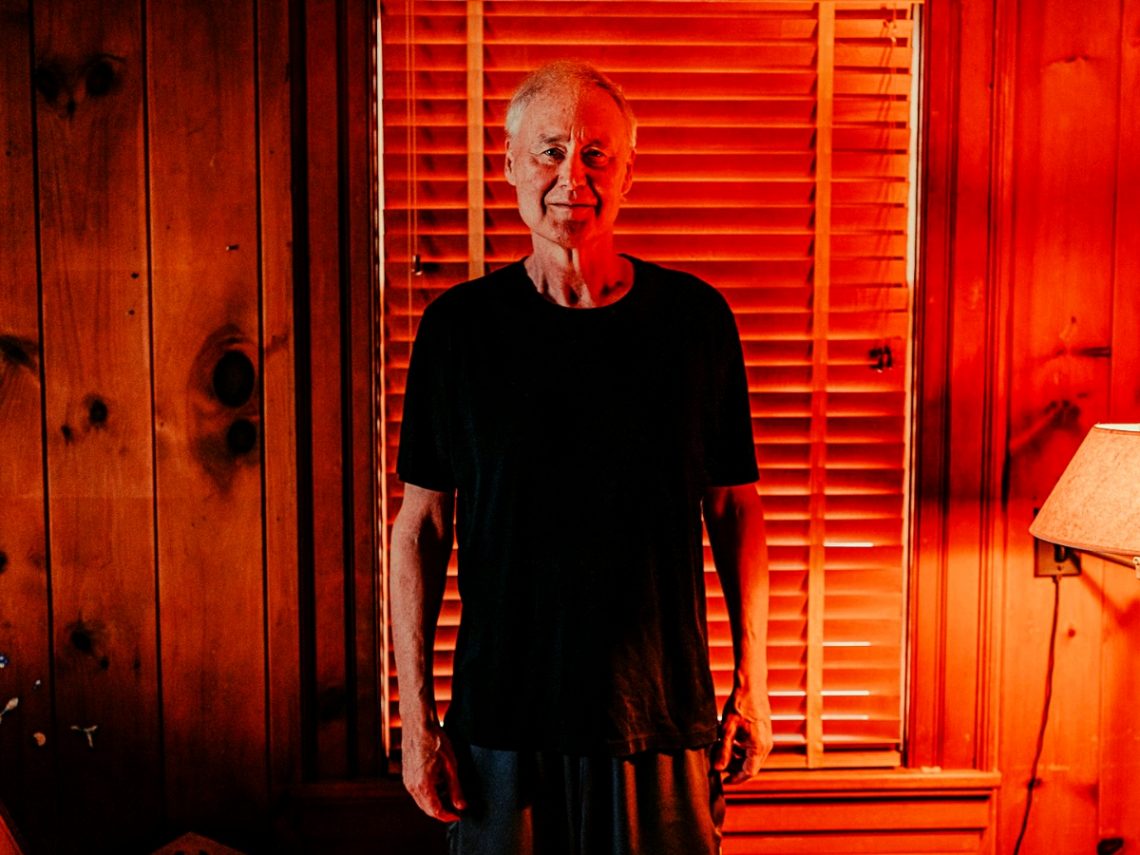
The reason why Bruce Hornsby left the Grateful Dead

It was one of the oddest matchups in the history of popular music. Bruce Hornsby, the soft rock giant who had just scored major hits like ‘The Way It Is’ and ‘Mandolin Rain’ with his band The Range, was going to put his own career on hold to join jam rock pioneers the Grateful Dead. In terms of outward styles, Hornsby and the Dead seemed to be living on different planets.
But the Dead needed help. Keyboardist and vocalist Brent Mydland died in July of 1990, throwing the band into personal and professional chaos. The smart course of action would have been to cancel the band’s fall tour, take time to recoup, and make sure they had the perfect replacement. Instead, the machine that is the Grateful Dead couldn’t stop, so an immediate replacement was necessary.
Hornsby was the band’s first choice. Apart from the strong report he had with Jerry Garcia, Hornsby had guested with the Dead at a number of shows between 1988 and 1990, often playing the accordion or a spare synthesiser. But when it came to joining them permanently, Hornsby recognised that he would have to put his own solo career on hold, something that he had worked to build up for a full decade. Instead, he proposed a different idea.
“I said, ‘I’ll certainly help you out through this time, ’cause I know this is rough, but I’ve got this thing of my own going pretty well. I’ve spent a lot of time trying to get this thing off the ground, and it’s off the ground now. If this had happened in 1984, then I’d have lived happily ever after being your piano player,'” Hornsby explained in the book This Is All a Dream We Dreamed. “In 1990, I had four or five years of nice success in my own group, so I did that. I told them they needed to look for someone permanent.”
Instead, the group added Vince Welnick, former keyboardist for The Tubes and Todd Rundgren. Welnick had a valuable asset: he could replicate the high harmonies essential to the band’s vocal blend. While Welnick had experience with synthesisers, he originally auditioned under the assumption that piano would be his main duty within the Dead. After learning the band’s repertoire, Welnick was informed that Hornsby would be playing piano and Welnick would be on keyboards.
The two-keyboard lineup of the Dead got off to a shaky start, but by 1991, the group had gelled. Welnick was beginning to find his place in the band, and Hornsby was constantly challenging Garcia in the live setting to rise to his potential.
“Bruce is spectacularly colourful and real playful,” Bob Weir explained in 1992. “And Vince is finally becoming real solid. He’s starting to become a real fixture. His influence on the music is subtler right now, but as pervasive as Bruce’s. Vince is a little more integrated into what we’re doing now than I see Bruce becoming. Bruce more or less imposes his personality on the band – which is not a band thing at all. Vince has been endeavouring to become one of us, whereas Bruce is just playing with us.”
Even though Garcia’s health was a constant worry, the Dead were reaching a new peak of popularity and acclaim. The only places that could hold them were stadiums, and even then, there were often just as many people partying in the parking lot than actually watching the show inside. The gigantic gigs became less and less satisfying to Hornsby as the initial novelty of playing with the Dead began to wear off.
More importantly, Hornsby had his own life and music career to get back to. “I loved playing with them for more than a year and a half, more than 100 shows,” Hornsby noted to The Los Angeles Times when he departed. “And I just had twins and want to spend more time with them, and I want to focus on my own music again.”
In This is All a Dream We Dreamed, Hornsby kept his explanation simple. “In the end, I said it was time for Vince to be the guy, time for me to go,” Hornsby explained. “They understood; they said ‘fine.'” But earlier in the book, Hornsby expressed his dissatisfaction with the Dead’s regimented live structure and lackadaisical approach to music. Hornsby specifically pointed to ‘Space’, the freeform improvisational segment at the end of each night’s drum solo.
“‘Space’ to me was a situation where sometimes it was really amazing, and a lot of times it was not. It was a real hit-or-miss proposition,” Hornsby shared. “I think the Dead would say the same thing. Sometimes ‘Space’ would get into some great things, other times I’d be sitting there, ‘I don’t really see where this is going…”
“I’m all for the ‘Space’ concept, but totally improvised music is a hard thing to make work,” he added. “I know a lot of players in the jazz world who play freely, and a lot of them tell me, ‘More times than not, we’re up there scuffling to find something to play together.’ This was no different. If there’s no structure, it makes it much harder for the music to be coherent and have meaning.”
This dissatisfaction and the band’s notoriously non-confrontational attitude added to Hornsby’s desire to move on. “I’m all for playing freely, but I’ve been in too many instances where I’ve thought that the level of listening was not up to the demands that are required for this sort of playing to really be meaningful. Sometimes I felt that there were real conversations going on between people, and other times I didn’t.”
Poor playing probably wasn’t the primary reason Hornsby decided to depart in 1992, but it certainly did help that Garcia began regressing once his health issues and drug use returned to the fore. Ultimately, his departure didn’t hurt his standing within the Dead organisation. Hornsby continued to sit in occasionally and even inducted the Grateful Dead into the Rock and Roll Hall of Fame in 1993. When the surviving members of the band gathered together for the ‘Fare Thee Well’ concerts in 2015, Hornsby was there on stage to pay tribute to his part in the band’s legacy.

Never Miss A Tale
The Far Out Classic Rock Newsletter
All the latest Classic Rock content from the independent voice of culture.
Straight to your inbox.