


Why are so few rockstars politically engaged these days?

“People need inspiration,” the environmentalist Roger Hallam recently told Chris Packham. “Major things will happen when public figures do what public figures have always done at times of crisis, which is lead.” Currently, there are hordes of musicians valiantly making points and political stands, but that is to be expected. After all, we are facing the existential catastrophe of climate change, the scale of economic inequity is at its worst point in recent history, and the cost of living crisis is exacerbating homelessness, to name but a few.
Thus, it would seem that the cause is far out-sizing the response when it comes to music’s political pickets. That statement is not to disparage rockstars either. The zeitgeist is a product of what came before, a perpetual transition, and the tale of diminished engagement running counter to exponential agency is rooted in culture’s recent past. The notable lack of huge names taking up the fight in this era has just as much causation as the swathe of icons on the figurative frontlines in the 1960s.
In 1971, Lennon appeared on The Dick Cavett Show alongside Yoko Ono. In an army overshirt, he spoke of peace and love. Outside the Regis Hotel where it was filmed, things were falling apart in a rainy New York City. Between 1969 and 1974, the former bohemian utopia lost 500,000 manufacturing jobs. Subsequently, a million homes depended on welfare, crimes such as rape and burglary tripled, drugs ran rampant, and murders hit a high of 1690 a year.
They had sung ‘All You Need is Love’ only a few years earlier; now it was clear you needed a whole lot more than that. No matter how engaged the 1960s had been, on the legislative surface, very little had changed. The American war offensive in Vietnam intensified. Charles Manson’s sentencing relived the horrors of spiritualism-turned-cultism in the headlines. The post-war income gains began to drift from the median in favour of the 95th percentile for the first time as the rich got richer. Jim Morrison’s excesses caught up with him. And the children of the revolution were faced with reconciling the fact that loads of lovely songs had, in fact, failed to stop a string of assassinations and other atrocities.
But worse still, the inevitable symptom of cynicism was taking hold. This was the line that many of the bands from the next generation were espousing. Steely Dan put a fine point on it when they hit back at Lennon’s privileged plea for peace by opining that “only a fool would say that”. Their 1972 track, ‘Only a Fool Would Say That’ was written in response. It looks at idealism through the practical eyes of folks on the street. “You do his nine to five,” they sing, “drag yourself home half alive, and there on the screen, a man with a dream.” And with that, you get a sense of how grating and vacuous they thought that Lennon’s ‘Imagine’ campaign had become.
In many ways, this line of thought has only gained further credence over the years, reaching a crescendo now in the age of social media and fast-tracked cynicism at a click. Lennon’s own duality goes without saying, his shortcomings were well-documented even at the time. However, even the cleaner political advocates of the era were subject to scornful rebuttal if it was deemed that they had turned their back on the cause in some way. These two factors are now readily apparent.
You instantly know that if a prominent rockstar were to make a public statement urging action on climate change, then a barrage of comments akin to, ‘Well, are you going to stop flying around the globe on tour?’ would soon follow. Brian Eno has attempted to counter this through various environmental agencies. However, his work is notably sequestered from the forefront of publicity by the artists he supports because of the inevitable backlash, even in the face of a positive change.
“There’s always been this thing about the hypocrisy charge when artists get vocal about it,” Lewis Jamieson of Music Declares Emergency told us, “Because music is perceived as a high carbon industry”. The problem is one that underpins all political engagement from the arts: music is in a far cleaner position than other industries, but because it is purely cultural, the impacts are held up to higher scrutiny. As Jamieson explains: “We see it in front of us – the touring, the shows, the records, the merch – so the perception is that it’s high carbon.”
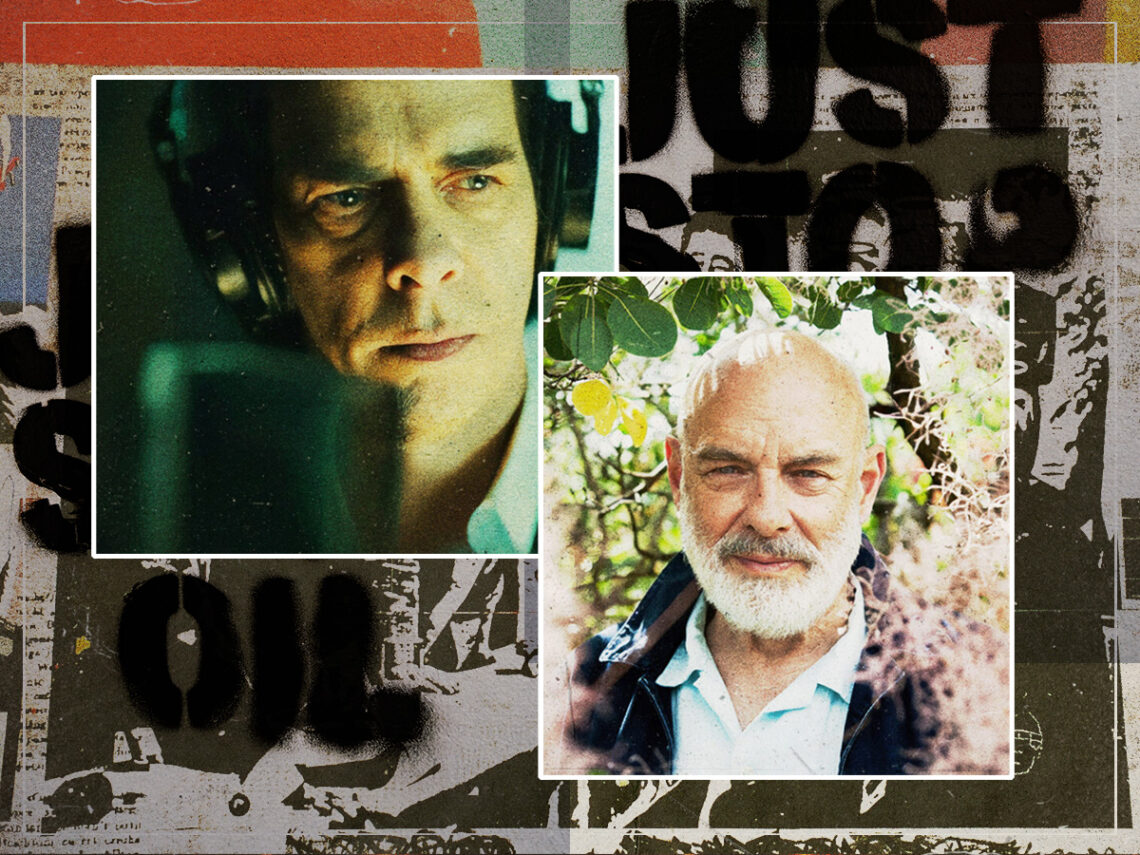
This heightened level of scrutiny precludes political engagement by its performers. Recently, we saw this unfold with Nick Cave, who went from a virtuous hero of the modern age to a certified villain overnight after accepting an invitation to the King’s Coronation. Indeed, in an ideal world, our favourite rockstars would boycott an event that perpetuated problematic societal implications.
However, we don’t live in an ideal world, and the reaction almost seemed like the obverse of the Lennon vs. Steely Dan debacle: we are now the foolhardy, imperfect idealists holding the world to rights to a merciless, unattainable degree and then cutting anyone down who wavers from that path, marrying both the rose-tinted utopianism of Lennon with the finger wags of Steely Dan.
This environment has not only created a space where artists in a position to truly facilitate change are cautious to engage but also one whereby the toxicity surrounding any engagement has created a sort of political apathy among many at the worst possible time. However, there is also an evident beacon of hope. Now, a new legion of artists are breaking through with an amplified sense of social conciseness, and that just might help to galvanise vital action because “people need inspiration”.
