


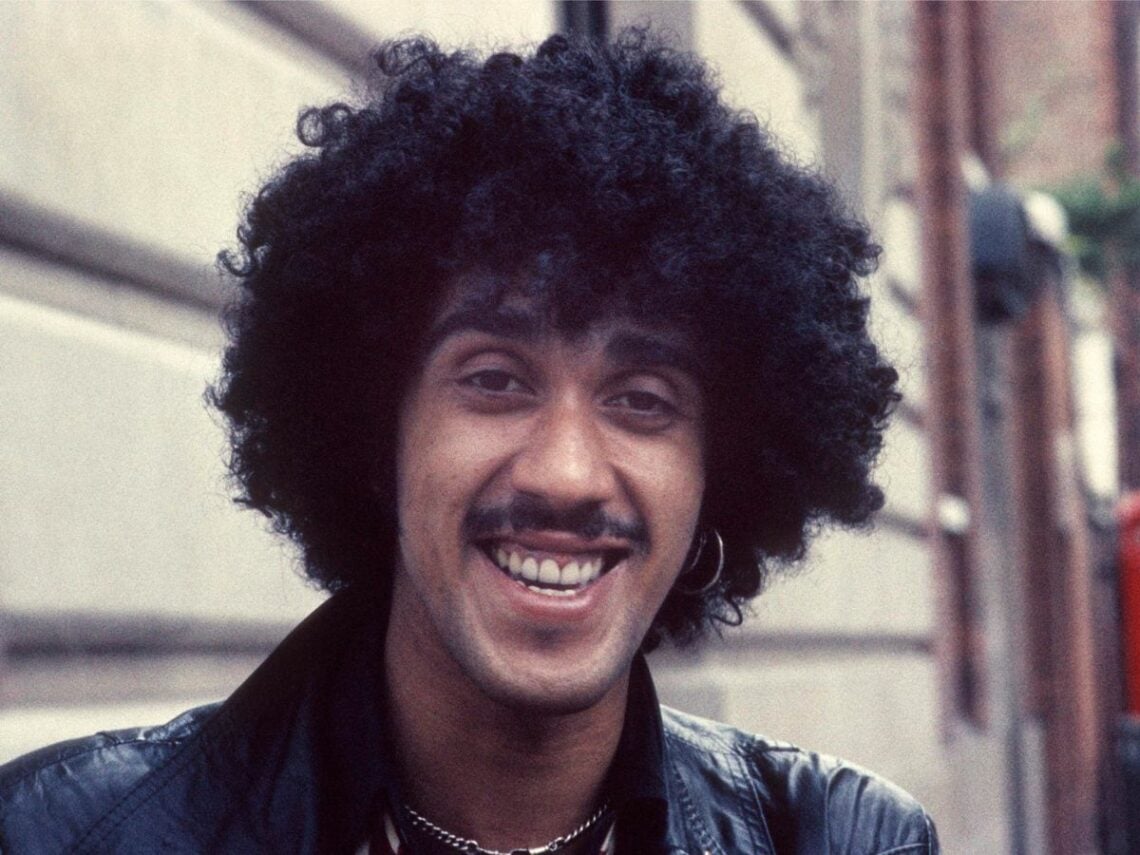
Why a “betrayed” Phil Lynott wasn’t invited to play Live Aid

The end of the life of Thin Lizzy bassist and leader Phil Lynott was not a happy time. The rock star was barely in his mid-30s, but his world was crumbling around him. Thin Lizzy had broken up in 1983, and Lynott’s next group, Grand Slam, failed to find a recording contract and split. Lynott was thoroughly addicted to drugs and alcohol by this point, limping through a modest solo career without much in the way of direction.
But all was not lost. Lynott learned through some of his friends that a massive benefit concert was being staged in London in the summer of 1985. Even better, it was being organised by his old friends, Bob Geldof and Midge Ure. For a few months between 1979 and 1980, Ure was briefly a touring Thin Lizzy member and had a good relationship with Lynott. Surely, this would have been the moment for Lynott to clean up, turn things around, and reclaim his status as one of Ireland’s true stars.
It wasn’t to be. “It wasn’t even that they thought, ‘No, better not’,” Graeme Thomson, the author of Cowboy Song: The Authorized Biography of Phillip Lynott told RTÉ in 2016. “It’s actually that he wasn’t even on the radar at that point for that kind of thing. And I think that is really telling of where he was. And that was only six months before he died.”
“If he had been in a healthy state, that could have been the Queen moment for them – ‘The Boys Are Back in Town’ at Wembley? Can you imagine?” Ure said in the book. “But it never crossed our minds, and we were both good friends of his. I think he would have felt absolutely betrayed by that. I think if we had done that [asked him to appear at Live Aid], Lizzy would have reformed.”
Lynott was indeed tossing around the idea of reforming Thin Lizzy with drummer Brian Downey in 1985. Years prior, Lynott had helped the Boomtown Rats, Geldof’s band, secure a recording contract with Ensign Records. Despite his friendship with Geldof and Ure, Lynott was not invited to play at Live Aid. He helped the fundraising efforts by auctioning his bass and even might have attended the event in London as a spectator, but that was the extent of Lynott’s participation.
“He actually turned up at the RTÉ studios that day and he auctioned a bass off. He did his bit, I guess, and there’s something quite heartbreaking about that,” Thomson added. “He wasn’t somebody who would vent about it. But privately, I think, you can be sure that that had a [profound effect]. It’s someone literally looking in from the outside at this party that’s going on, this rock celebration. And he’s quite clearly been left out.”
In the final days of 1985, Lynott collapsed and spent his final days in the hospital. On January 4th, Lynott died of pneumonia and heart failure, largely caused by his addictions. It was a premature end for one of Ireland’s biggest rock stars, but his legacy with Thin Lizzy continues to live on.
