


Who was to blame for the Altamont Free Concert tragedy?

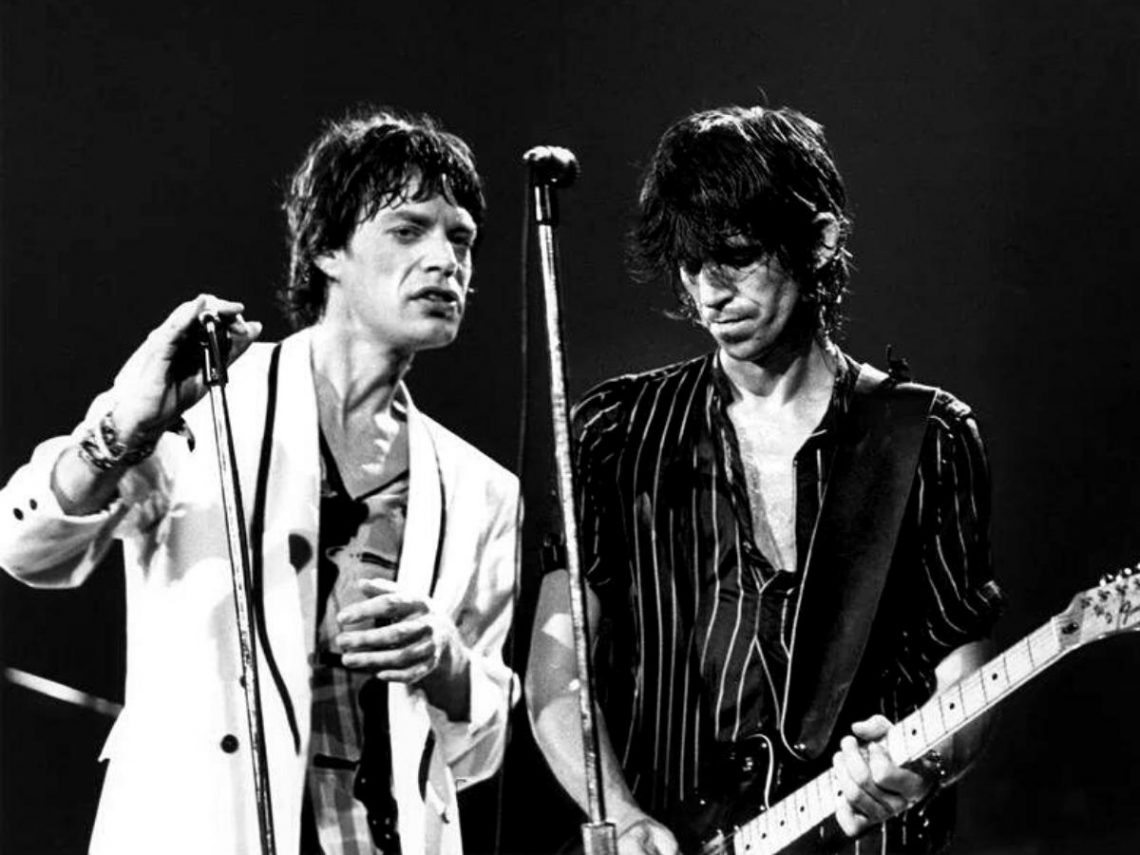
“Who’s fighting and what for?” That’s what Mick Jagger asked into the microphone as the chaos continued to rage around him. A free concert just outside of San Francisco, California, featuring some of the biggest and best rock music acts from San Francisco and beyond, had taken an ugly turn. Organised in tandem between The Rolling Stones and the Grateful Dead, the Altamont Free Concert had the potential to become the last great celebration of the 1960s. Instead, it was the final blow to the peace and love generation.
Widespread violence throughout the day only served as a precursor to what happened when the Stones eventually took the stage. As they stumbled into ‘Under My Thumb’, a black teenager named Meredith Hunter got into a confrontation with several Hells Angels, the motorcycle club that was employed to protect the generators. Hunter pulled a gun out of his suit jacket, and that’s when Hells Angel Alan Passaro stabbed him. Hunter died just to the side of the stage as the Stones kept playing.
Hunter’s death became the defining moment of the Altamont Festival. Soon, news reports began asking the same question: who was to blame for the death and destruction? While it was no mistaking that Passaro delivered the deadly blows, interest turned to who could have set the murder in motion. Everyone from the Hells Angels to The Rolling Stones to the Grateful Dead were accused of lighting the match.
The Hells Angels had been a frequent presence around the San Francisco rock music scene since its inception. The club was originally formed in 1948, but when Ralph ‘Sonny’ Barger established the Oakland chapter in 1957, the Angels began to take on a notorious reputation. A frequent presence around the Bay Area in the 1960s, the Club’s headquarters were briefly located at 715 Ashbury, across the street from the former residential house occupied by the Grateful Dead.
The Dead and the Angels had a close bond since the band first formed in 1965. In particular, Jerry Garcia and Ron ‘Pigpen’ McKernan had close ties to the group. “Hells Angels would sit around his room fucked up on acid, and Pigpen would be taking care of them,” Garcia once observed. “It was so great. Pigpen was like a warm fire, a cosy fire.”
“Our relationship with the Angels is that we both exist in essentially the same area, we both know each other exist, and they out-number us about 90 to one,” Garcia explained in the aftermath of the festival. “We get along okay with them. Those guys are guys that we all know. We’ve known them for years, and we don’t have any fight with them, but we do know that they’re Hells Angels and that they’re capable of doing a lot of pretty amazing things. We just stay out of their way.”
All members of the Grateful Dead and their extended family of friends, wives, and hangers-on knew that the Angels had unprecedented access to the band. “We had Hells Angels hanging around for ages,” lyricist John Perry Barlow observed in the documentary Long Strange Trip, “And those are people who don’t even try to be good guys.”
Jerry Garcia spearheaded and played a yearly fundraiser for the Hells Angels throughout the early 1970s, and it was widely accepted that members of the club could get backstage at shows without passes or proper clearance. “At one point, I complained to Garcia about what I thought was the unnecessary presence of all the Angels thugging it up backstage, making everybody kind of nervous, and making it even harder for women in a scene that was misogynistic to the max,” Barlow said.
“He said, ‘Well, I don’t think that good means very much without evil,'” Barlow adds. “Which is true, but that doesn’t necessarily mean that you always have to have a seat for evil at the table.”
“When we did the Be-In at the Park in ’67, the Angels were at that scene strictly just to be there,” Garcia said. “It seemed like a good thing to be at, with the music and all. They found themselves taking care of lost kids, watching the stage, that kind of thing. They started doing it.”
When The Rolling Stones announced that they wanted to put on a free concert at the end of their 1969 US tour, road manager Sam Cutler was dispatched to Mickey Hart’s ranch in Novato to discuss logistics. The Dead had organised a number of free shows throughout the 1960s, so Cutler and the Dead organisation largely took the lead in putting the show together.
“We invited them in because they were the ones that did this all the time,” Keith Richards wrote in his autobiography Life. “We just hooked into their pipeline and said, ‘do you think we could put one together in the next two or three weeks?’ Thing is that Altamont wouldn’t have been at Altamont at all if it wasn’t for the absolute stupidity of the boneheaded, hard-nosed San Francisco council.”
Originally, the concert was supposed to take place in Golden Gate Park, but permits were never issued for the location. Just two days before the festival was scheduled to go on, it was moved to the Altamont Speedway in Livermore, just outside San Francisco.
Since the stage was low and valuable equipment, including guitars and generators, was so close to the crowd, it was decided that an extra layer of security was needed. At a meeting between Cutler, Grateful Dead manager Rock Scully, and Hells Angel Peter Knell, it was agreed that the Angels would watch over the generators in exchange for $500 worth of beer.
“The only agreement there ever was … the Angels would make sure nobody tampered with the generators, but that was the extent of it,” Cutler explained in Dennis McNally’s book Inside History of the Grateful Dead. “But there was no way ‘They’re going to be the police force’ or anything like that. That’s all bollocks.”
The concert included Santana, Jefferson Airplane, The Flying Burrito Brothers, Crosby, Stills, Nash, and Young, and finally, The Rolling Stones. The Dead were supposed to play before the Stones, but after witnessing the hellscape unfolding at the racetrack, they decided to opt out. “Phil and I got off the helicopter, and we came down through the crowd, and it was like Dante’s Inferno,” Garcia observed in 1970. “It was spreading out in concentric waves. It was weird… fuck, it was weird. It wasn’t just the Angels. There were weird kinds of psychic violence happening around the edges that didn’t have to do with blows.”
In his memoir Searching for the Sound, Phil Lesh described how an early altercation set the stage for their non-appearance. “While we’re disembarking, Santana drummer Mike Shrieve runs up, grabs Jerry and me, and, screaming over the chopper noise, tells us that Marty Balin of the Airplane has just been beaten up by some Angels,” Lesh writes. “My response: ‘Hells Angels beating up on musicians? That doesn’t seem right.’ After all, the San Francisco bands and management teams had been on good terms with many of the Oakland Angels. I couldn’t quite grasp what was going down by the stage.”
According to Jefferson Airplane’s Paul Kantner, who sarcastically thanked the Angels from the stage, most of the Angels that the bands knew weren’t at Altamont that day. Instead, a collection of aggressive members, new inductees, and non-inducted members made up most of the attendees.

“It turned out that most of them were having a big meeting in Oakland, and a lot of the guys who were there and causing a lot of the hassle were neophytes, young would-bes – early trainees, as it were,” Kantner recalls in the Grateful Dead oral history This Is All a Dream We Dreamed. “I don’t blame it on the Hells Angels. I blame it on the people who were there, but I don’t characterise that as ‘the Hells Angels.'”
At a certain point, the Angels began arming themselves with sawed-off pool cues and motorcycle chains, beating anyone unlucky enough to get too close to either the stage or the club’s bikes. “Since his bike is more important to an Angel than just about anything, the bikes serve more as provocation than as protection,” Lesh wrote.
“That was where the Angels certainly didn’t help,” Richards said. “They had their own agenda, which was basically to get as out of it as possible. Hardly an organised security force. Some of those guys, their eyes are rolling, they’re chewing on their lips. And the deliberate provocation of parking their choppers in front of the stage. Because you can’t touch an Angel’s chopper, apparently. It’s absolutely verboten.”
“I’ve met enough Hells Angels and have spent enough time in their universe to know that they’re no different from any other group,” Grateful Dead roadie Steve Parish explained in his book Home Before Daylight. “What I mean is, you have to take each individual Hells Angel for who he is. Some don’t want to know you or talk to anyone who is not a Hells Angel or who doesn’t ride a Harley-Davidson. But they’re not all like that.”
On this day, most of the “Hells Angels” that were known to the Dead, the Airplane, and even to the Stones were not there. “In all fairness, the Stones were just as naive about the true nature of the Hells Angels as we were,” Lesh writes. “The British version of bikers was descendant from the ‘rockers’ of the fifties; they were mostly about wearing leather and riding two-wheelers, bar the occasional rumble with the ‘mods’… The London branch of the Angels had, in fact, acted as security at the Stones’ July ’69 Hyde Park concert and behaved peacefully there.”
“It wasn’t long after that before the shit hit the fan,” Richards wrote. “In the film [Gimme Shelter], you can see Meredith Hunter waving a pistol, and you can see the stabbing. He had a pale lime green suit on and a hat. He was foaming at the mouth too; he was as nuts as the rest. To wave a shooter in front of the Angels was like, well, that’s what they’re waiting for! That’s the trigger. I doubt the thing was loaded, but he wanted to be flash. Wrong place, wrong time.”
When it was all said and done, four people died in and around the festival. Two were from a hit-and-run incident, one was from a drowning that was at least partially precipitated by an LSD trip, and finally, Hunter’s stabbing. Once the concert was over, the blame game was on.
“What’s to forgive, there isn’t any blame,” Garcia claimed in an interview following the event. “Because who are you going to blame? You’d have to blame everybody. We’re all human beings, we’re all in this planet together, all of the problems are all of ours. Not ‘Some are mine, and some are theirs. You know, if there’s a war going on, I’m as responsible as anybody is. If somebody’s murdered, I’m responsible for that too. At a certain point, someone has to say, ‘There can be no Hells Angels.’ And who’s gonna say that?”
Lesh was more self-critical. “The Grateful Dead should have known better, but several factors clouded our minds and prevented us from seeing disaster approaching: the fact that the band wasn’t directly involved in the planning of the event; the lack of communication between our team and the Stones and between our management and the band.”
“Today, I regret that we didn’t play,” Lesh wrote. “Pace what I just said above, the music might have been able to at least modify the rhythm of events in some way, to slow, or even stop, the incessant flood of violence. We’ll never know. In the final analysis, we were afraid to stand up for our belief in the power of music and the spirit of our community to turn back the tide of hate and transform it into love. Not our finest hour.”
“I think the Angels behaved properly,” Garcia opinioned in 1970. “I mean, they did just what they would do, so they were not out of character. Also, I don’t think it was strictly a trip on the Angels. ‘Cause the Angels in California are surrounded by prospects – people who want to be Angels, and their way of showing they could be Angels is to come on bad. And they’re the ones who are mostly responsible. Most of the Angels I know are into partying.”
In the August 1970 edition of Esquire, Keith Richards said that Altamont was “basically well-handled, but lots of people were tired, and a few tempers got frayed, but called the show, “on the whole, a good concert.” In Life, Richards asserts that, “if it hadn’t been for the murder, we’d have thought it a very smooth gig by the skin of its fucking teeth. It was also the first time ‘Brown Sugar’ was played to a live audience – a baptism from hell, in a confused rumble in the California night. Nobody knew what had happened until we’d gotten back to the hotel later or even the next morning.”
When asked about how he felt about the concert and the murder in 1995 by Rolling Stone‘s Jann Wenner, Mick Jagger claimed that he felt, “Well, awful. I mean, just awful. You feel a responsibility. How could it all have been so silly and wrong? But I didn’t think of these things that you guys thought of, you in the press: this great loss of innocence, this cathartic end of the era… I didn’t think of any of that. That particular burden didn’t weigh on my mind. It was more how awful it was to have had this experience and how awful it was for someone to get killed.”
“The Angels had a terrible reputation in the wake of Altamont – a lot of people wanted nothing to do with them,” Parish recalled. Inside the club, a secret plot was hatched for revenge, one that allegedly involved retaliating by killing Jagger. A former FBI agent claimed as such in 2008, and Richards appears to corroborate the idea in Life.
The most immediate reaction to Altamont was that Sam Cutler was fired as the Stones’ road manager. Fearful that the police, or worse, the Angels, would come after him, Cutler hid out at Garcia’s house occupied by his partner, Mountain Girl, and their children. Eventually, Cutler was recruited into the Dead organisation, spearheading the group’s legendary 1972 European tour that eventually became the celebrated live album Europe ’72.
Passaro was arrested and put on trial for murder in the summer of 1971, but a jury acquitted him on the grounds of self-defence. Passaro himself drowned in 1985. The Altamont Speedway was barred from putting on concerts and had its attendance restricted to 3,000 people. In 2003, the murder case was reopened with a possible second assailant, but it was officially closed in 2005 without sufficient evidence. The Altamont Speedway eventually closed in 2008.
“I think Altamont was a valuable experience for everyone who was able to learn from it, and I think that everyone was supposed to did,” Garcia claimed. “Obviously, it was something very heavy for us to see what we had initiated by just, on a good day back in ’65, doin’ to the Pandhandle and settin’ up and playin’ for free – we saw it turn into that. It wasn’t lost on us, man.”

Never Miss A Tale
The Far Out Classic Rock Newsletter
All the latest Classic Rock content from the independent voice of culture.
Straight to your inbox.