


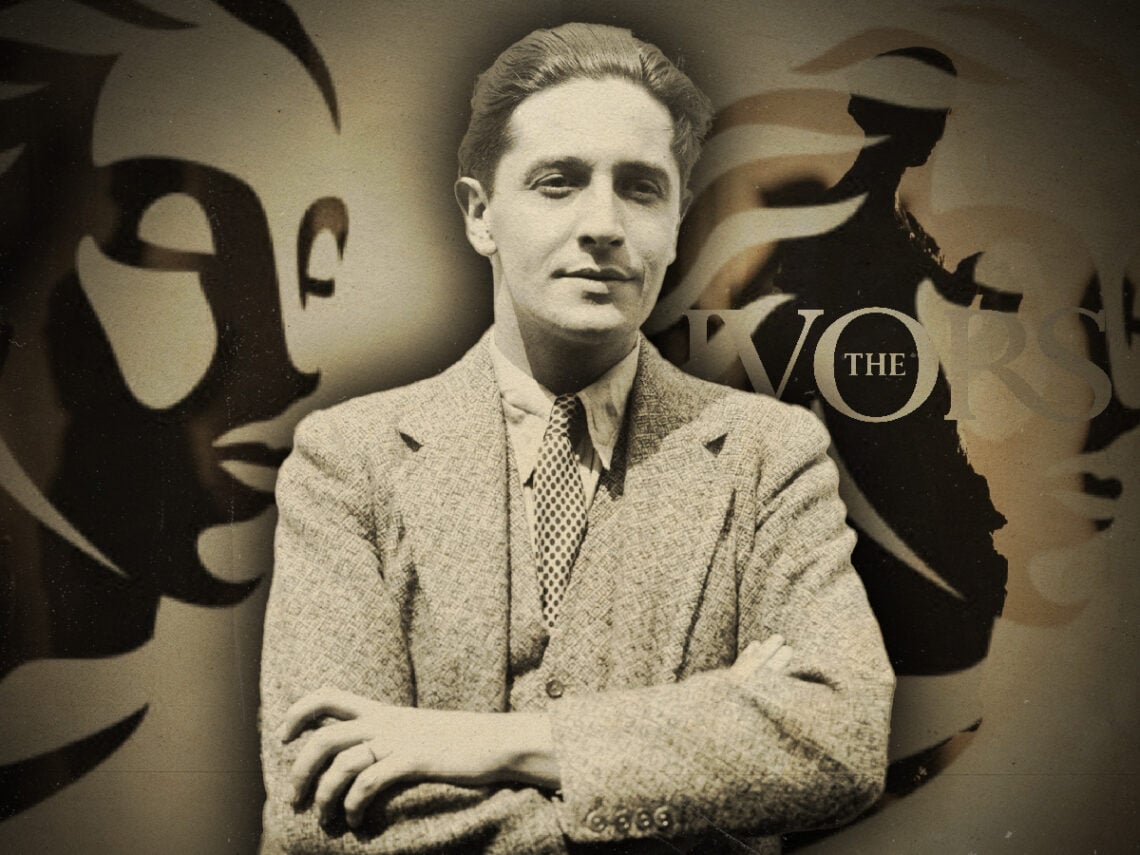
Who was Ivor Novello?

Maybe the easiest way to communicate the stature once held in British society by the entertainer and jack-of-all-trades Ivor Novello is to note that one of his musical plays, 1936’s Careless Rapture, was so popular that it forced the cancellation of all Christmas pantomimes at London’s Drury Lane that year, and the outrage was minimal!
“I shall never pretend that I am bored by being liked by anybody,” the Welsh actor, writer, and composer said a decade earlier, during his time as a silent-film heartthrob, “To me, it is an extraordinarily refreshing experience”.
That might sound like typical celebrity vanity, but Novello wasn’t kidding. At his peak, he was as close as Britain had to a one-man entertainment industry, a sort of Harry Styles, Lin-Manuel Miranda, and Benedict Cumberbatch rolled into one, operating in an era before social media, paparazzi, or PR machines existed to amplify fame, which he didn’t need either, as he walked into a room, raised one eyebrow, and the public would lose its mind.
Born David Ivor Davies in Cardiff in 1893, Novello grew up in a musical household, with his mother being a well-known singing teacher, and he quickly carved out his own path. Before turning 25, he had already written the music for one of the most famous British songs of the First World War, in the form of 1914’s ‘Keep the Home Fires Burning’, and if you’re trying to put that in modern terms, imagine a young songwriter penning the defining anthem of an entire era of national morale, before even figuring out what sort of career he wants, and that was Ivor.
Not content to be merely the ‘Home Fires’ kid, Novello next threw himself into London’s West End, attacking roles on both the stage and screen and emerging as a star in each, becoming one of the great matinee idols of the silent era. At the age of 30, much like Charlie Chaplin before him, he was also starting to write and produce his own films, including the 1924 hit The Rat, which Novello insisted on making in the UK despite offers from Hollywood.
“British films are gradually coming into their own,” Novello said at the time, “They say an Englishman takes long to learn a thing, but when he does know it, he makes a success of it. So I think is the case with British films.”
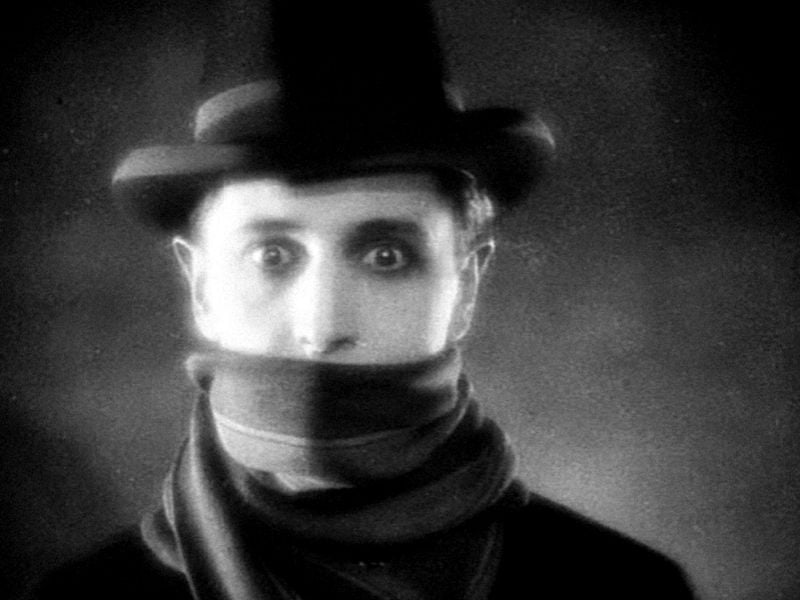
As evidence, we look to 1927, when a young Alfred Hitchcock cast Novello in one of his earliest films, The Lodger, with him delivering a performance that cemented his image as a dark, brooding, slightly dangerous romantic lead, a jazz-age Timothée Chalamet of sorts, but his role in the emergence of the British film industry was only a small part of his legacy.
He became even more famous for his lavish, glamorous, deeply romantic stage musical productions that transported audiences far away from the economic and political turbulence of the interwar years, with shows like 1935’s Glamorous Night, a year later’s Careless Rapture, and 1939’s The Dancing Years running for hundreds of performances, such that his name on a marquee was enough to guarantee a hit.
Novello also lived, quietly but openly enough for the time, as a gay man, maintaining a long-term partnership with actor Bobbie Andrews, and for someone so publicly adored and so relentlessly scrutinised, that in itself was remarkable. He was so beloved that the tabloids largely left him alone, and the public seemed to choose not to notice, but his life wasn’t without scandal.
During World War II, Novello was briefly imprisoned for misusing petrol coupons, which is basically the 1940s equivalent of getting hit with a very public tax-evasion charge, and while it dented his image, it didn’t destroy it, such that audiences returned to his work with enthusiasm once he was released.
When he died suddenly at 58 in 1951, collapsing shortly after a performance of ‘King’s Rhapsody’, it sparked an outpouring of national grief, and four years later, the songwriting awards that carry his name, the Ivor Novello Awards, were established in his memory.
Today, they remain one of the UK’s most prestigious honours for songwriters and composers, an annual reminder of how large Novello’s shadow still looms, and while modern audiences may not instantly recognise his name anymore, and actual footage of his performances is frustratingly hard to find, but in his lifetime, he wasn’t just famous; he was foundational, a superstar before the concept existed, a queer cultural icon long before the vocabulary came to light, and a creative force whose fingerprints still echo through British musical theatre and songwriting.
