


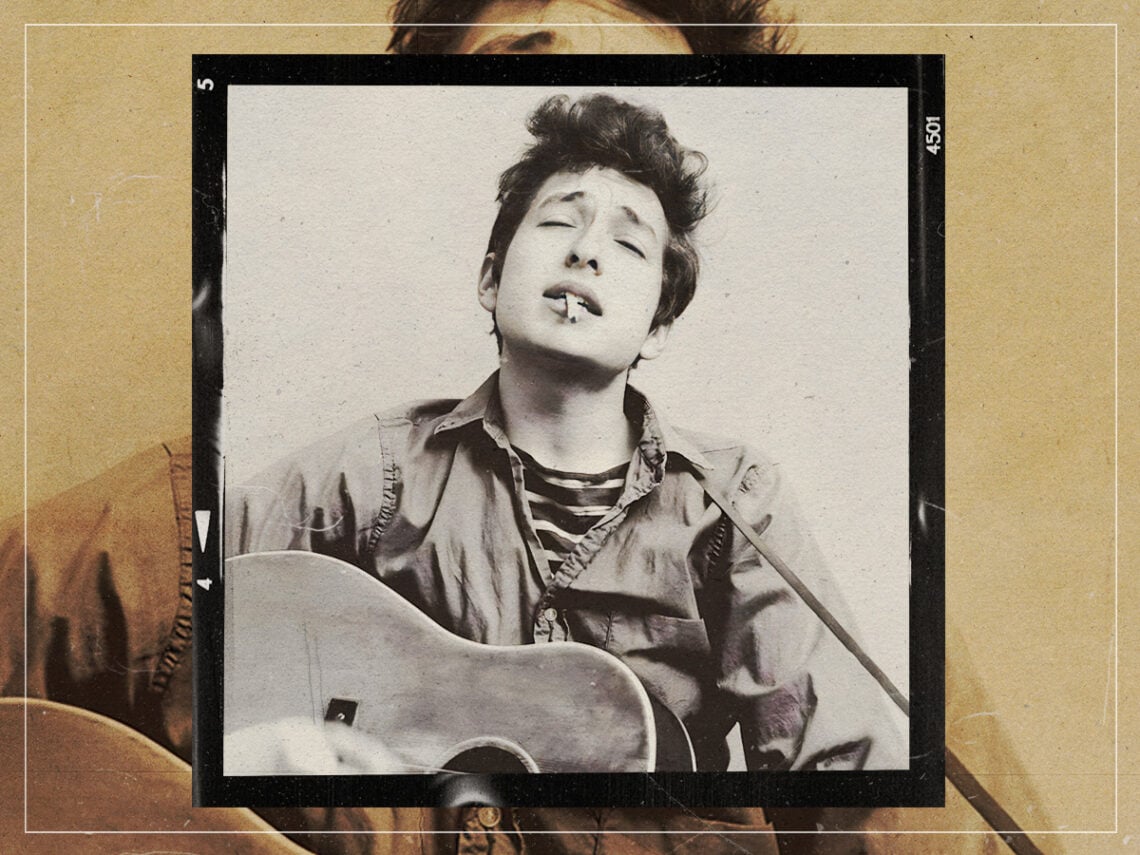
Who was “Maggie” from the Bob Dylan song ‘Maggie’s Farm’?

On July 25th, 1965, Bob Dylan sauntered onto the stage of the Newport Folk Festival for his second set of the weekend. With the dissonant clang of an electric guitar, he cried, “Let’s Go!” and launched into a double-time rampage of electric blues, backed by lead guitarist Mike Bloomfield turned up to 11, and a fully amped-up band.
“I ain’t gonna work on Maggie’s Farm no more,” Dylan began amid rival choruses of cheers and boos. He had apparently crossed a red line from which there was no way back for the American folk movement by plugging in, rocking out and going electric. Although folk legend Pete Seeger later played down his own anger at what Dylan had done, this was to be the end of Bob Dylan, the protest singer, and the beginning of a whole new music.
The performer continued, “I got a head full of ideas that are driving me insane,” and, without pausing for breath, “It’s a shame the way she makes me scrub the floor.” Unbeknownst to most of the crowd and folk officialdom gathered there, he was sending a message directly to them. A message that had its roots in the traditional American folk ballads Dylan was better versed in than most self-appointed aficionados at Newport.
He’d taken the name for his new number from a timeless dust bowl tune called ‘Down on Penny’s Farm’, which was popularised by a North Carolina folk duo called The Bentley Boys in 1929. The song rails against an exploitative landlord by the name of George Penny, who extorts the sharecroppers working his land until he “gets himself a mortgage on everything you got”.
It’s an anthem for poor farmers ruined by the expansion of big agribusiness in the late 19th and early 20th century. The type of rallying cry for the poor and downtrodden that Dylan’s hero Woody Guthrie would take up in the decade of the Great Depression.
So, where does “Maggie” come in?
Naturally prone to subversion even in cases where the established order was for a worthy cause, Dylan spun the rinsing of poor sharecroppers by a rapacious landlord into the imprisonment of a bohemian artist by didactic folk orthodoxy. “I try my best to be just like I am, but everybody wants you to be just like them,” he vents.
“They say, ‘Sing while you slave,’ but I just get bored,” he adds, in the most direct reference to the folk festival and civil rights grandees he felt used by. The instruction “sing while you slave” is also a double entendre referring to actual slave songs in the cotton fields from which the blues tradition originated. Except black slaves weren’t just “bored”, Bob; they were brutalised, tortured and worked today.
Nevertheless, Dylan’s role reversal of the folk movement in ‘Maggie’s Farm’ is supremely executed. And topped off with a titular allusion to boot. ‘Maggie’s farm’ is actually a deliberate misspelling of Magee’s farm, a real place where Dylan performed alongside Seeger, The Freedom Singers and other folk activists at a civil rights gathering on July 6th, 1963. The participants gathered at the farm of Silas Magee, who had offered them his land in Greenwood, Mississippi.
In debuting ‘Maggie’s Farm’ in a purposeful blast of electric distortion at Newport in 1965, Dylan felt he was spelling out quite clearly that there would be no more Magee’s Farm gatherings or civil rights marches. He was nobody’s folk singer and had more to say than that. He did return to protest music occasionally in subsequent decades, most notably on the stirring 1976 single ‘Hurricane’. But his role in politics was all but done.

Never Miss A Tale
The Far Out Bob Dylan Newsletter
All the latest stories about Bob Dylan from the independent voice of culture.
Straight to your inbox.