


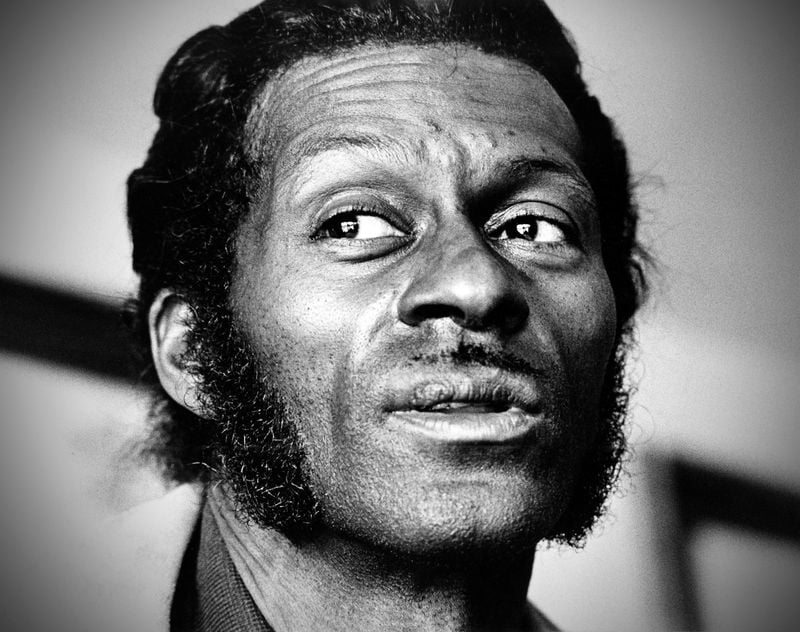
Who is Chuck Berry’s ‘Johnny B. Goode’?

In this series, we attempt to establish the true identities of characters immortalised in popular songs. This week, we’ll be heading “deep down south” to track down the genuine Johnny B. Goode, the young guitar prodigy Chuck Berry sang of in his 1958 single of the same name.
‘Johnny B. Goode’ is, so the story goes, based on Chuck’s own life. Written while Berry was on tour in New Orleans in 1958, the track focuses on a poor boy from a rural farming family in the deep south. Despite poor prospects and limited schooling, he manages to master the electric guitar and becomes the leader of a world-famous band. So far, so Blues star.
While the success of ‘Johnny B. Goode’ was partly down to the track’s autobiographical slant, Chuck Berry was a little better off than the fictional Johnny. Unlike the song’s protagonist, Berry could “read and write” very well. Indeed, when Berry revealed the meaning behind the track to Rolling Stone, he was quick to associate himself with the “country boy” who grew up in a backwater town in the Deep South. In fact, Berry grew up on Goode Street in St. Louis, a midwestern city with an unusually cosmopolitan atmosphere. He may not have been the sharpest academic, but Berry was also far from uneducated. He had a degree in hairdressing, for God’s sake.
You can look at it this way: Johnny B. Goode is simply a mythologised version of Chuck. Of course, that would be to ignore the presence of Jonnie Johnson, a piano player who tinkled the ivories on some of Berry’s biggest hits and who inspired the name of this song’s protagonist. Born in Fairmont, West Virginia, Johnson was a member of Bobby Troupe’s all-serviceman jazz orchestra, The Barracudas, during his stint with the United States Marine Corps in WW2.
After the war, he moved to Detroit and later Chicago, where he provided piano accompaniment to some of the area’s most revered artists, including Muddy Waters and Little Walter. He then relocated to St. Louis, where he formed the Sir John Trio with drummer Ebby Hardy and saxophonist Alvin Bennett. On New Year’s Eve, 1952, Bennett suffered a stroke and had to be taken to hospital. Desperately seeking a last-minute replacement, Johnson called on a young guitarist named Chuck Berry, who, owing to his lack of experience, was one of the only musicians in the city not booked for a New Year’s Show.
It was a considerable risk, but Berry showcased extraordinary showmanship, more than making up for his lack of experience. Bennett never fully recovered from his stroke, leaving Buddy to take up a full-time position with Johnson. When Chuck went solo, he often called on the pianist, who subsequently played on ‘Maybellene’, ‘Wee Wee Hours’, ‘Roll Over Beethoven’ and ‘Sweet Little 16’. You can hear Johnnie playing his track ‘Johnnie’s Boogie’ below.
