


Where does the bizarre tradition of getting a lock of a musician’s hair come from?

Infatuation is a curious thing. Devout love of artists has driven people to bizarre ends. For instance, when Yoko Ono was going through an intense Salvador Dalí phase, she decided she wanted a piece of him a tad more personal than any painting. She thought an offer of $10,000 would prise her a hair from Dalí’s iconic lobster-like moustache. The anti-materialistic star was delighted when he accepted.
However, what she soon received turned out to be a blade of grass in a secondhand receptacle. The reason for this was not only because Dalí loved to swindle people, but also because he feared that Yoko Ono was a witch hoping to use his hair to cast a curse. In its own weird way, the blade of grass represents a very unique piece of art, which, after all, is what Yoko Ono wanted in the first place.
In a fitting fashion, this strange tale is closer to the origin story of the curious tradition than you might think. Only it is not some modern pop culture fad; in fact, the origins prompt you to reappraise celebrity obsession as a psychological anomaly rather than some modern symptom of endless TV and entertainment.
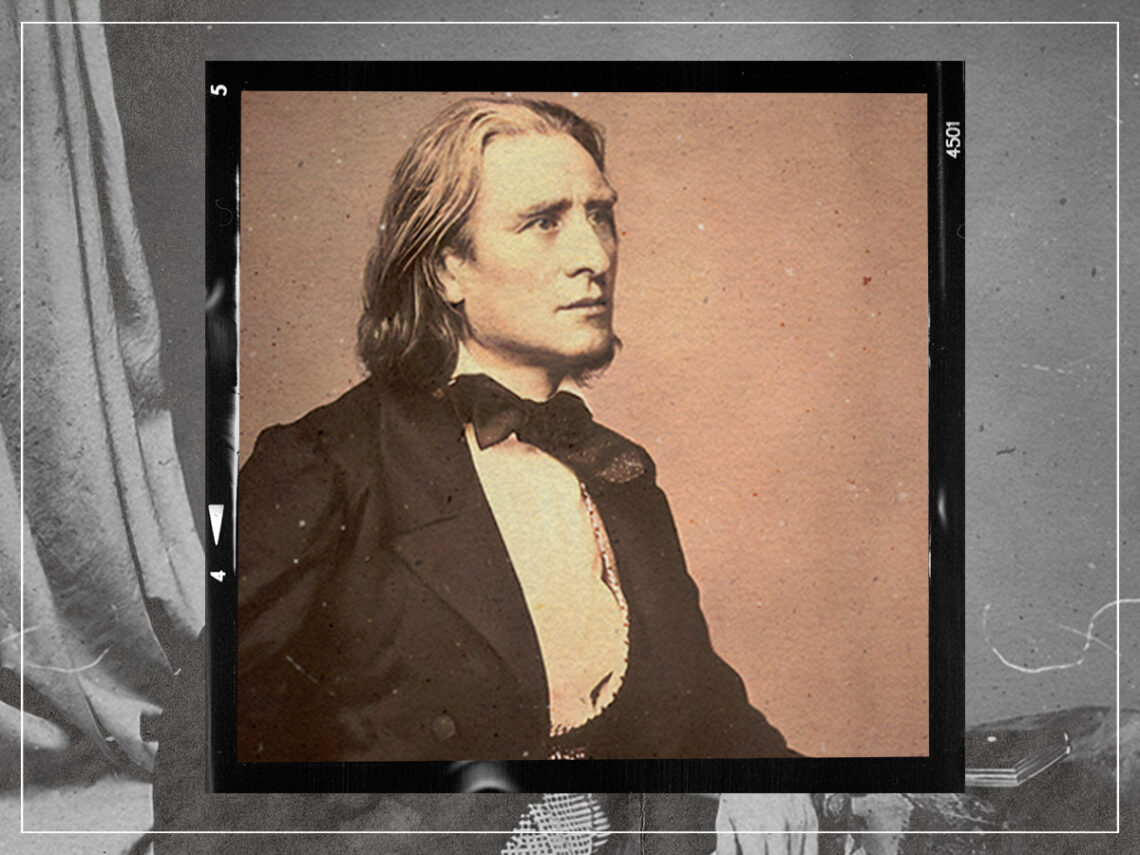
Franz Liszt was born in 1811. You might not have heard of him. However, he is considered the world’s first rock star. Moreover, you may well have heard of the term ‘Lisztomonia’, or at least the future permutations of that phrase: ‘Presleymania’ and ‘Beatlemania’. The term was coined by German poet Heinrich Heine who found himself utterly absorbed, along with many others, by Liszt’s piano-playing wizardry and Hollywood charms. He was an icon in the traditional sense, a false depiction of a God.
Fans would swarm this handsome virtuoso after every show. They all wanted a souvenir to commemorate the near-religious experience they had just had. This meant that amid the melee of followers, Liszt had gloves yanked from his hand, handkerchiefs plucked from his pocket, and sheet music snatched from his grasp. Even his spent cigar butts and broken strings were snaffled up. Alas, the biggest intrusion on his privacy was when people clutched at his hair.
Beyond the mere annoyance and pain, the chiselled Liszt feared for the future of his luscious barnet, so he came up with an ingenious solution that promised to keep crowds at bay. He bought himself a dog with fur colour-matched to his own mane. Then, before a show, he would simply snip a clump of its fur off, pop it somewhere safe, and then simply hand out these imposter strands to satiate baying audiences after the show.
They got what they wanted, and he was able to leave with a subdued sigh of approval rather than be the victim of a mass groping scandal. The success of this meant that it caught on. Not only did Liszt’s hair become lucrative, so more people wanted a strand, and the tradition grew, but as the printed press made more ‘celebrities’ for people to fall infatuated with, his tip got passed around musical circles, and more performers were at it.
