


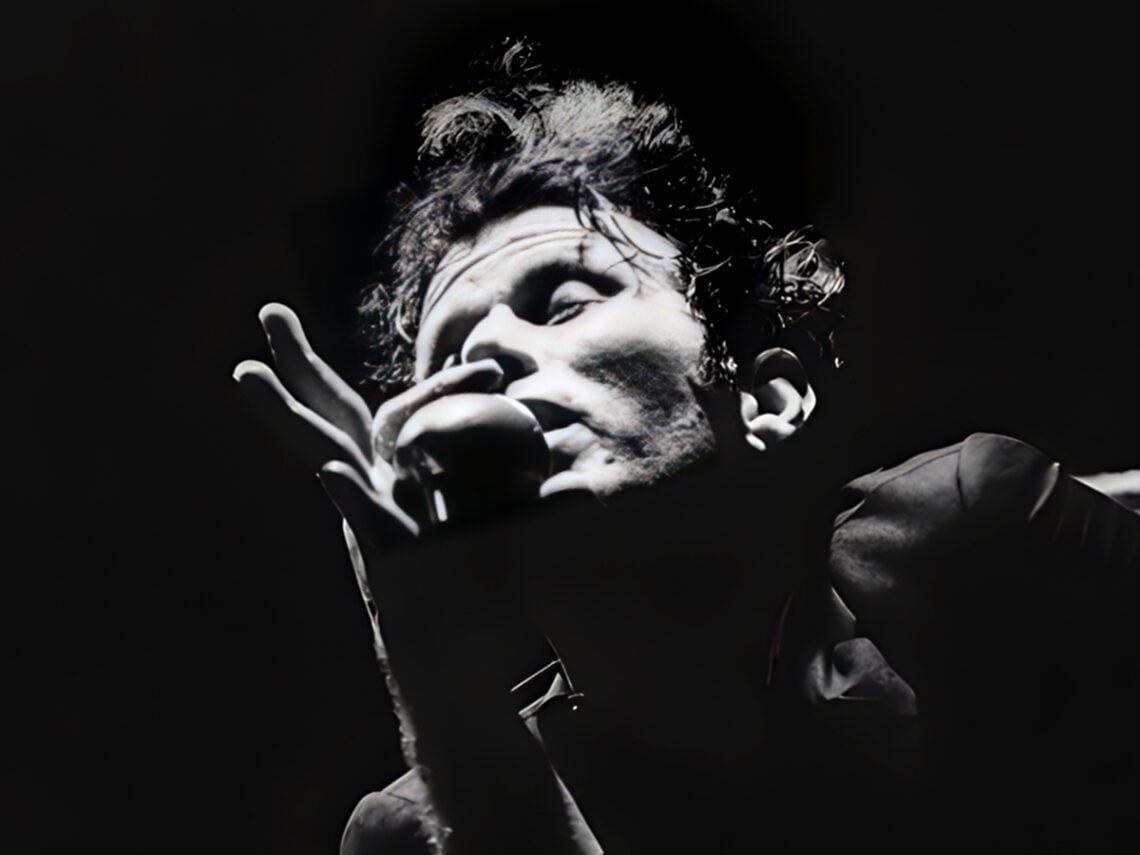
‘Alice’ and ‘Blood Money’: The time that Tom Waits released two great albums in one day

What could be better than one of the most exciting, creative, interesting and inventive artists of all time releasing one great new album? Why, one of the most exciting, creative, interesting and inventive artists of all time releasing two great new albums, of course, and that is exactly what Tom Waits did on May 7, 2002 when he simultaneously unleashed Alice and Blood Money on the world.
In a hilarious appearance on the Late Show With David Letterman to promote his new records, Waits was asked by his host about the perils of releasing two albums at once. “I wonder, will it be a possibility,” Letterman supposed, “people will say, ‘Oh I’ll take this Tom Waits album and not this Tom Waits album’ and one might be better than the other? Whereas if they would be together, everybody wins?” To which Waits drolly intoned: “I think you should get both, myself”.
In the interview, Letterman asked if “they don’t necessarily complement one another, but stand on their own individually?” to which Waits said, “Thank you so much!” Both records are immediately recognisable as Tom Waits works, but they certainly are both distinct and unique from each other, despite having a similar origin and background. It may have been phrased as a question, but Letterman was right, these albums really do stand on their own individually.
Both Alice and Blood Money were cultivated from musical seeds planted during Waits workings with the experimental theatre practitioner Robert Wilson. Writing and composing alongside his wife and long-time collaborator Kathleen Brennan, Waits and Wilson had first worked together in 1990 on The Black Rider, an avant-garde opera which also counted William S Burroughs among its writers.

Two years later, Wilson, Waits, and Brennan were collaborating again on another opera, this time based on the story of Lewis Carroll’s obsession with Alice Liddell, who, of course, inspired both Alice’s Adventures in Wonderland and Through the Looking Glass.
For years, the songs from Alice appeared on bootleg recordings circulated from a demo tape stolen from Waits’ car, but ten years on, he finally got into the studio to put the definitive versions together. Waits has described the album as being made up of “adult songs for children, or children’s songs for adults. It’s a maelstrom or fever dream, a tone poem, with torch songs and waltzes…an odyssey in dream logic and nonsense.” And he is not kidding.
Alice opens with the sultry, smoky titular track which has Waits skating back into his early jazzbo barfly territory through a haze of saxophones and cigarette smoke. Waits gets weirder than ever before on this album—and that’s really saying something—on songs like ‘Everything You Can Think’ or ‘Kommienezuspadt’. The former is a phantasmagoric fever dream which dissolves all reality around you, whilst the latter is a race through time and space with Waits cracking the whip to drive you on and hollering in a language entirely of his own creation all the while. ‘We’re All Mad Here’ riffs on the famous quote from the Cheshire Cat but takes it to a darker place than anywhere you’ll find yourself in Wonderland.
Even more disconcerting and disorienting than the carnival mirrors he holds up to the listener on the album are the moments where he becomes gut-wrenchingly earnest. ‘Flowers Grave’ is one of his great ballads whilst the slow lilt of ‘I’m Still Here’ is truly devastating.
Recorded during the same early millennium time period, in the same studio, with the same musicians and released on the same exact same day as Alice, Blood Money somehow still manages to be a completely distinct and separate work, with its own unique feel and textures and atmosphere and world. The songs are still made up with marching army ant rhythms, skeletal marimba melodies which sound like they’re being played on a xylophone of bones, scrapers and clarinets and Waits’ trademark hell-hound bark but they are their own kind of dark and deceptive on this album.
Originally written for the Robert Wilson opera Woyzeck, these songs are set more in a carnivalesque underworld than the nightmarish dreamworld landscapes found on Alice. Talking about Blood Money, Waits has said that “the songs are rooted in reality: jealousy, rage, the human meat wheel. They are more carnal. I like a beautiful song that tells you terrible things. We all like bad news out of a pretty mouth.” And these really are beautiful songs that tell you terrible things. Just glance at the titles to get an idea: ‘Misery is the River of the World’. ‘Everything Goes to Hell’. ‘God’s Away on Business’. ‘Starving in the Belly of a Whale’. ‘A Good Man is Hard to Find’.
Again, though, Waits has the ability to balance the beautiful with the brutal. ‘Coney Island Baby’ is a tender ode to a dream lover who takes you out to Dreamland while ‘All the World is Green’ is an aching lament to a love lost or found at sea.
These are some of the finest songs of Waits’ career and the album stands up alongside his career best albums like Swordfishtrombones, Rain Dogs and Mule Variations. ‘God’s Away on Business’ and ‘Starving in the Belly’ are not only quintessential Waits performances but quintessential Waits lyrics as well, full of everything that makes him one of the truest and maddest of all-time greats.
Tom Waits was right, as he is so often, when he said that you should get both of these albums.
