


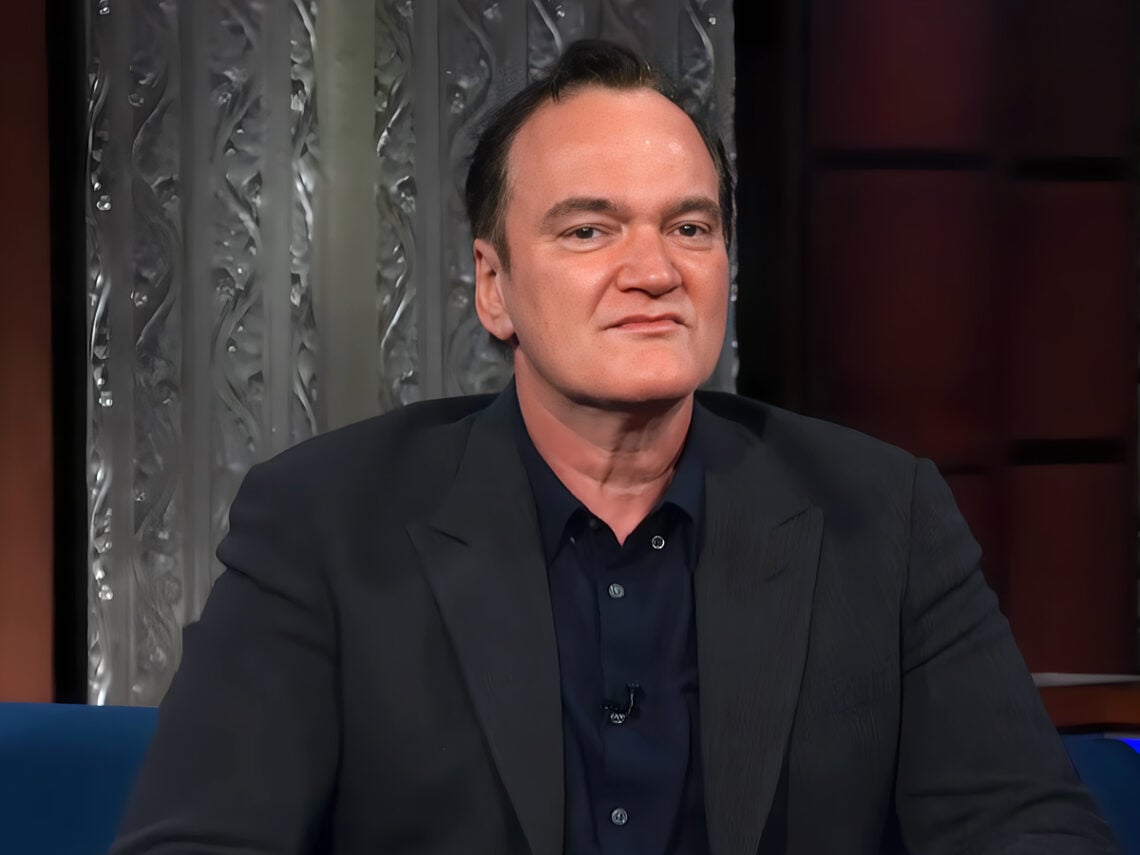
When Quentin Tarantino failed to become a Broadway actor

In 1998, Quentin Tarantino was on top of the world. In six years, he had written and directed Reservoir Dogs, Pulp Fiction, and Jackie Brown, becoming the toast of the town in the process. He had also watched his screenplays for True Romance, Natural Born Killers, and From Dusk Till Dawn find their way to the big screen. He suddenly found himself as an all-too-rare Hollywood unicorn: a celebrity director.
Tarantino’s mythology of the movie geek made good captured the imagination of the press and fellow cinema nerds all over the world, and his uniquely confident personality turned his interviews into must-read pieces. Interestingly, though, Tarantino’s ultra-confidence also got him into a spot of bother in this period. The director always fancied himself an actor and made cameos in many of his films — but then he tried to become a Broadway star, and it all came crashing down.
It’s easy to forget these days that when Tarantino burst onto the scene, it often appeared like he wanted to be an actor as much as he wanted to direct. After making sure to include himself in small cameo roles in Reservoir Dogs and Pulp Fiction, he took the opportunity to act in indie films like Four Rooms and Destiny Turns on the Radio. He even took one of the lead roles in From Dusk Till Dawn – rather implausibly playing George Clooney’s brother – and cameoed in movies by Spike Lee (Girl 6) and Robert Rodriguez (Desperado).
In 2003, Uma Thurman told Vanity Fair magazine, “You must never forget with Quentin that he wanted to be an actor. If somebody asked him to act in something while he was prepping Kill Bill, he would’ve dropped everything to go and act. His schedule was not being dictated by being a film director. He was much more interested in doing a guest spot on Alias.” Indeed, Tarantino did turn up in four episodes of that Jennifer Garner spy show as the villainous McKenas Cole.
The problem that most people could immediately ascertain from watching Tarantino act, though, is that he wasn’t particularly good at it. His brand of manic energy and an undercurrent of sleaze was generally palatable in cameo form. Still, the more he attempted to play meatier roles, the more his shortcomings couldn’t be ignored. In the end, it always seemed like people hired Tarantino to act as a method of juicing publicity in their projects, as opposed to any true belief that he was any good.
The most egregious example of this craven grasp for buzz came when theatre director Leonard Foglia approached Tarantino not long after Jackie Brown’s release. He had a proposition for the acclaimed director/wannabe actor — a lead role in his Broadway update of the 1966 play Wait Until Dark. Foglia wanted Tarantino to play Harry Roat Jr, a drug smuggler who hires two heavies to help him retrieve the heroin hidden in a doll in the apartment of a blind woman played by Marisa Tomei.

Foglia caught Tarantino at just the right time because the director was itching to act after deciding against casting himself in Jackie Brown. He explained, “The acting bug was very big on me at that time. I was really champing at the bit.” Fascinatingly, he didn’t believe he’d been praised enough for his turn in From Dusk Till Dawn, a performance he worked hard on and was very proud of, and Foglia’s play offered him an even more ambitious bite of the acting apple.
So, despite a stint in community theatre at the age of 17 being the last time Tarantino stepped foot on a stage, he signed up for the play. After its two-week trial run in Boston was eviscerated by critics, though, he must have wished he’d never bothered. Still, Tarantino felt like he had something to prove, so he saw things through, and the play debuted on Broadway in April 1998.
“It was opening night, and every other person in New York City was reading The New York Times,” recalled Tarantino. “I couldn’t walk 10 feet—they looked up from The New York Times, and there I was. They recognised me.” Unfortunately, he wasn’t being recognised for pulling an amazing performance out of the bag. The reviews were just as vitriolic as those in Boston, with the Times’ critic Ben Brantley writing, “Mr Tarantino seems menacing to nothing except possibly the script.” The New York Daily News added, “As a movie director, Tarantino may be the new Alfred Hitchcock, but as a stage actor, he is the new Ed Wood.” The poor guy was even accused of exhibiting “the vocal modulation of a railway station announcer, the expressive power of a fence post and the charisma of a week-old head of lettuce.”
All in all, Tarantino’s sincere attempt to prove that he had the chops to act in the unforgiving world of live theatre went down in flames. In some ways, the criticism felt like the same inevitable cycle of building someone up before tearing them down that so many celebrities go through – but Tarantino thought it was more personal than that. He confessed, “It was not about the play—it was about me, and at a certain point, I started getting too thin a skin about the constant criticism. It started getting to me. It’s fucked up when people make fun of you.”
In the years since the play shuttered its doors after only a 16-week run, Tarantino has only spoken about it publicly once, in the aforementioned Vanity Fair interview. When The Independent reached out to its cast and crew in 2019 for insight, none were willing to go on record about it. It seems like Tarantino said what he wanted to say about it in 2003, and then everyone agreed to forget it ever existed.
The experience undoubtedly hurt Tarantino in a big way, though. An unnamed insider close to the production told Vanity Fair that they believed Foglia had taken advantage of the enthusiastic star and left him exposed to a critical drubbing that would destroy the confidence of even the most hardened actor. They claimed, “He was traumatised by that resounding slam…delivered to him by the New York critics. He went into a tailspin. It scared him. He’s a very wounded guy in that way.”
We’ll leave the final word to David Carradine, the late actor who played the title role in Kill Bill. On the set of that film, Tarantino asked him, “Tell me the unvarnished truth. Don’t hold back. Do I have what it takes to make it on Broadway?” Carradine reportedly told his director that he was brave to even attempt theatre acting, but then he asked Tarantino his own question.
He enquired, “Why do you want to parade around on a stage in front of a bunch of blue-haired ladies who arrived on a bus? Because that’s what Broadway is. Whereas what you’re doing is making pictures that blow people away. What could you possibly get out of that compared to the other?”

Never Miss A Take
The Far Out Quentin Tarantino Newsletter
All the latest Quentin Tarantino content from the independent voice of culture.
Straight to your inbox.