


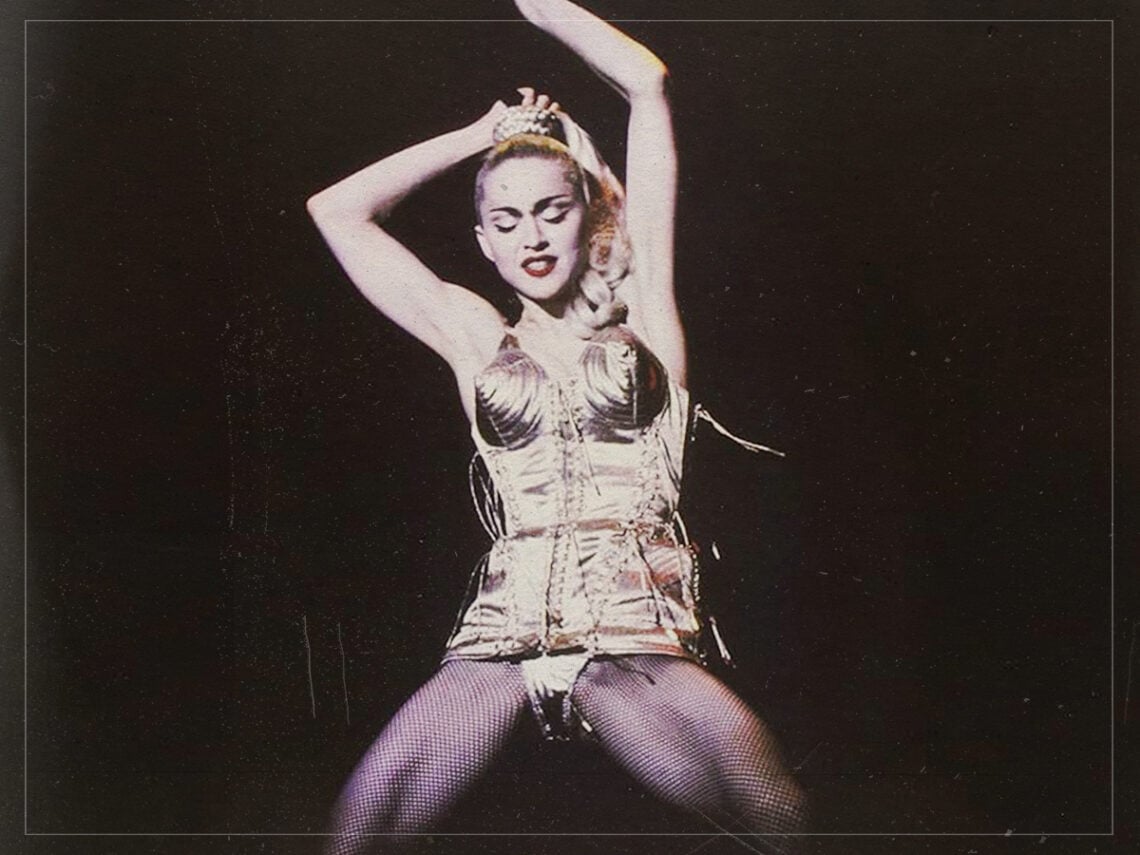
When Madonna’s 1990 orgy turned too raunchy for MTV

In the grand ledger of life, only three things are guaranteed: death, taxes, and Madonna‘s ability to poke the beehive of polite society.
By 1990, the ‘Queen of Pop’ had already danced among burning crosses and set the Vatican’s switchboards on fire, but with her 1990 track ‘Justify My Love’ she didn’t just push the envelope, she licked it, sealed it, and sent it to a Parisian hotel room where the standards of ‘broadcast-appropriate’ went to die.
If ‘Like A Prayer‘ was controversial, ‘Justify My Love’ took things to the next level, a commercial juggernaut, becoming Madonna’s ninth number-one single on the US Billboard Hot 100, while also peaking at the top in Canada and the top ten in several countries, including Australia, Germany, and the UK, but it was the Jean-Baptiste Mondino-directed video that had people clutching at their pearls.
Shot in grainy black-and-white as a tribute to the 1963 film Bay of Angels, the video stars Madonna and her then-boyfriend Tony Ward in a labyrinthine hotel hallway, quickly descending into a fever dream of voyeurism, S&M, and fluid sexuality, so naturally, MTV was not impressed.
The video was scheduled to be the crown jewel of MTV’s ‘Madonnathon’ weekend, but the executives panicked, and on November 29th, 1990, correspondent Kurt Loder delivered the verdict that the network simply couldn’t air it. Between the “gay and lesbian snuggling”, the leather-clad S&M, and the flashes of nudity (god forbid!), the standards committee baulked, with MTV Vice President Abbey Konowitch famously quipping, “You take the black lingerie, sex scenes and flesh out of ‘Justify My Love’, and you’ve got ten seconds of ill-focused dancing”.
Madonna, ever the strategist, didn’t flinch, and when MTV refused to even suggest edits, she took the ban and turned it into a revolution.
“We didn’t even really get a chance to try to make it viewable,” she noted, “they rejected it completely”. Instead of compromising, she released the video as a standalone VHS single, the first of its kind, which became a multi-platinum smash, proving once again that if you tell the public they aren’t allowed to see something, they’ll pay anything to do so. It was the precursor to her 1992 Sex book era, a bold, pioneering move for sexual liberation that risked her mainstream status just to see how far the ceiling would bend before it broke.
While many critics and fans viewed Madonna’s unapologetic reclamation of sexuality as central to her profound cultural impact, Paul McCartney remained distinctly unconvinced, quipping regarded her flair for provocation with the weary eyes of a man who had seen the 1960s up close, “If you want porn, why not watch porn? I think it’s OK, y’know, it’s pretty good, but it’s only surprising because she’s a pop singer really. If anybody else did it, it would be a fairly average porn movie.”
McCartney’s opinion on whether Madonna’s work during the ’90s was high art or “average porn” is beside the point, though, because even if the ban wasn’t her original plan, she had certainly made the world look, and in the process, she made MTV look like the one thing a youth network can never afford to be: boring.
