


When Lee Marvin was offended by one of his own films: “I found it very unpleasant”

In 1966, Hollywood‘s premier tough guy, Lee Marvin, was shooting The Dirty Dozen in London when he took a meeting with John Boorman, a young director on the rise.
Boorman pitched him on a violent thriller script entitled Point Blank, based on a novel by the famed hardboiled crime writer Donald Westlake. Despite both men hating the screenplay, they loved the main character, Walker, a taciturn professional thief. Ultimately, Marvin was so impressed with Boorman as a person that he agreed to make the movie and even stacked the deck in the director’s favour with the studio in a way that shocked everyone.
According to Boorman in the DVD commentary, he claimed Marvin said to the MGM executives, “I have script approval?” When they said yes, he added, “And I have approval of the principal cast?” After another yes, he nodded toward Boorman and said, “I defer all those approvals to John”.
From there, he strode out of the meeting, and Boorman, shooting his very first Hollywood film, suddenly had a $2million budget and “final cut”.
Soon after, Boorman was shooting Point Blank with a cast including Angie Dickinson as the female lead and John Vernon as Mal Reese, a fellow thief who betrays Walker at the start of the film, shooting him and leaving him for dead. Walker survives, of course, and embarks upon a single-minded mission to retrieve the money he is owed from his and Reese’s last score on Alcatraz Island.
Throughout the shoot, Boorman and Marvin were very much on the same page, with the best example coming up during rehearsals. Marvin and co-star Sharon Acker were running through a scene in which Walker questions her about where his money is, but every time she said a line, he remained quiet. This forced her to nervously carry out both sides of the conversation, while Walker stood there, simmering with quiet intimidation.
“I saw right away he was right,” Boorman marvelled, “Lee never made suggestions. He would just show you”.
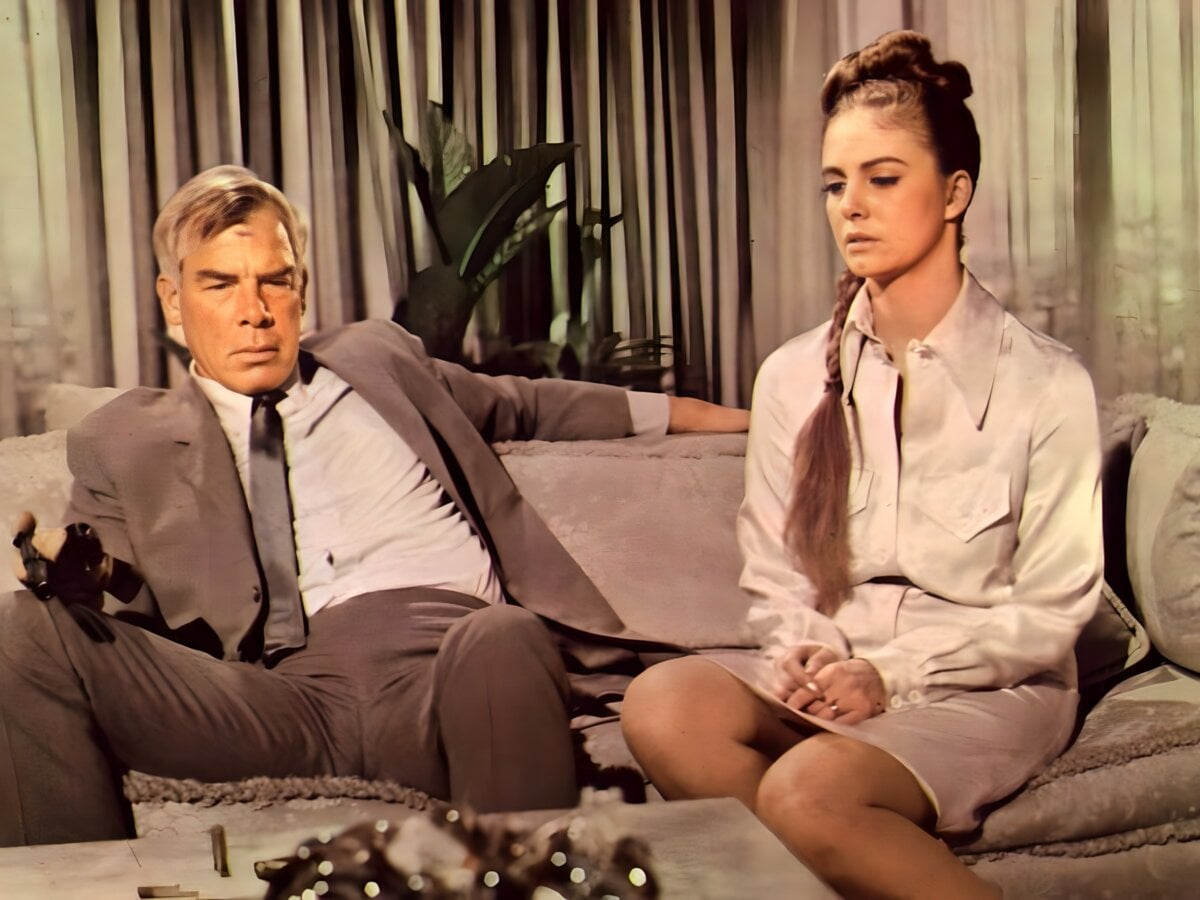
When Point Blank was unleashed on an unsuspecting public in 1967, it performed well at the box office, and critics predominantly hailed it as a brilliantly made thriller. Its style felt somewhere between classic film noir and the more dreamy aesthetic of European filmmaking. In fact, it is filled with artistic visual metaphors that Boorman credited Marvin with creating.
However, the topic that most critics couldn’t stop talking about was the film’s violence, which pushed the limits of what was acceptable in ’60s cinema. Even critics who liked the film commented on its “calculatedly sadistic” nature, and argued that it shouldn’t be seen by anyone faint of heart. Incredibly, though, 15 years after its release, a new voice would join those concerned over the violence in Point Blank: its own star.
“How did I feel when I saw myself on the screen?” Marvin mused in a 1983 interview. “I found it very unpleasant recently when I saw a film of mine called Point Blank, which was a violent film. We made it for the violence. I was shocked at how violent it was.”
It’s unclear if Marvin had never actually watched Point Blank from beginning to end before ’83, or if he had rewatched it and been taken aback by the starkness of the violence. Either way, he wasn’t a fan of what he saw and admitted that watching himself commit such brutal acts onscreen had a profound effect on him. “
When I saw the film, I literally almost could not stand up, I was so weak,” he claimed. “I did that? I am capable of that kind of violence?”
In the end, maybe Marvin watched it and regretted giving Boorman total control over the edit. However, if he hadn’t done that, perhaps the movie wouldn’t still be talked about in reverential terms today by directors like Steven Soderbergh and Brian Helgeland, who made a new version of Westlake’s novel in 1999 entitled Payback.
However, his reaction to the violence was certainly visceral enough that it points to something deeper at play. It’s well-known that Marvin served in World War II and was traumatised by his experience, so it’s entirely possible that Point Blank brought some very unpleasant memories to the fore that had been previously buried for decades.
“See, there is the fright, and this is why I think guys back off eventually,” Marvin mused, “They say, ‘No, I’m not going to put myself to those demons again’. The demon being the self”.
