


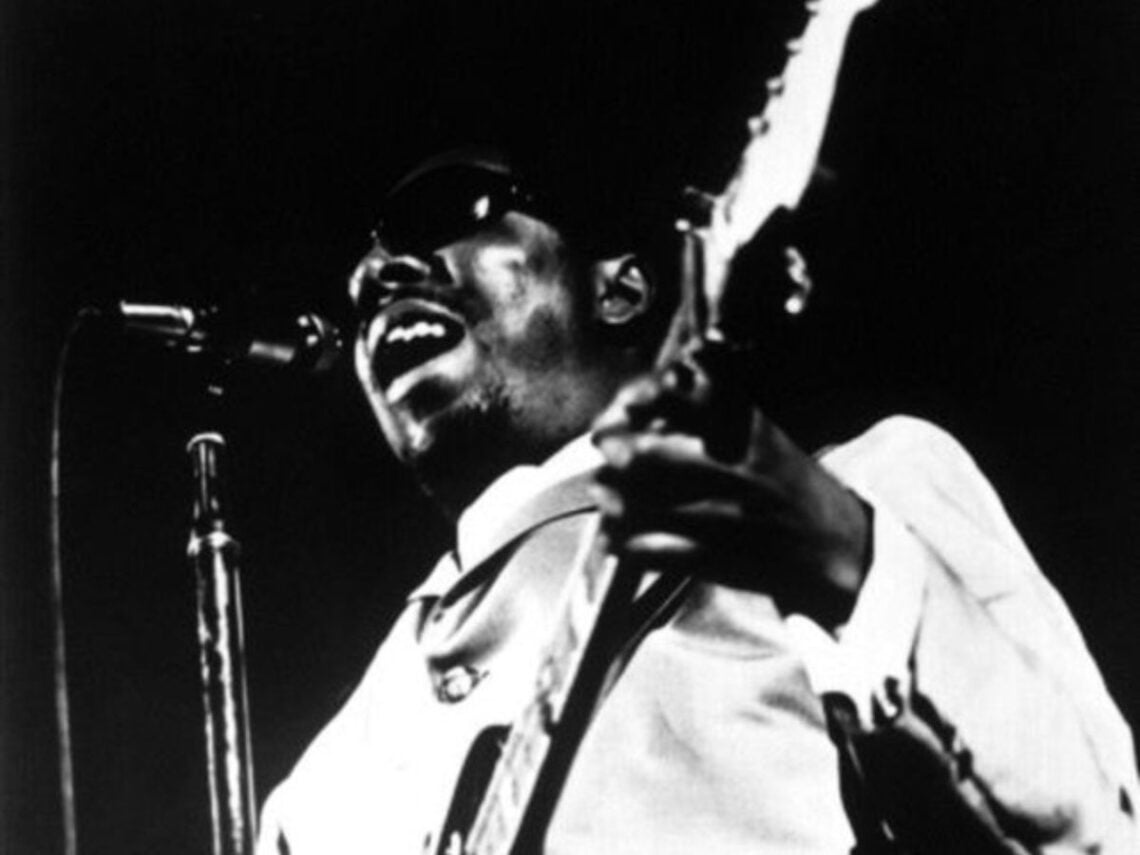
When Clarence Carter finally got to keep his million dollars: “My wife took my money and left”

Though his name has fallen a little out of fashion over the years, in a way that other soul favourites such as Sam & Dave, Wilson Pickett or Percy Sledge never had to worry about, Clarence Carter enjoyed huge successes in the late 1960s and early 1970s, going gold with songs like ‘Too Weak To Fight’ and ‘Patches’.
Clarence Carter, super-producer Rick Hall and his Muscle Shoals, AL FAME Studios were a match made in heaven. Hall had built the reputation of his studio on the timeless cheating song ‘Steal Away’, and lightning struck once more when he produced Carter’s first hit in 1968, the incredible ‘Slip Away’.
Behind Carter’s fantastic guitar part, his highly evocative and unique, hybrid lead and rhythm style, was a seriously imperious performance provided by the ever excellent Muscle Shoals sidemen. Roger Hawkins carries everything that’s great about the song while Spooner Oldham supplies a steady organ part. Tommy Cogbill provided a now-iconic bass line, and Duane Allman made one of his first session appearances. After the initial session, all that was left to do was overdub a great arrangement of horns and Carter was convinced he had his first hit.
Hall, however, made an incredibly rare misstep when he suggested that the track was only worthy of B-side status, and sent the track out behind the inferior ‘Funky Fever’. That’s not to say ‘Funky Fever’ isn’t a riot of a song, capable of selling plenty of copies by itself, but it doesn’t have the emotional toil, tear and thunder of ‘Steal Away’.
In time, the music-buying public would prove that Carter’s instincts on which track should have been the featured single were correct. ‘Funky Fever’ stalled at number 88 on the pop charts, while ‘Slip Away’ eventually went as high as number six (and went up slightly further to number two on the R&B charts). It was the biggest hit so far in Carter’s career, selling over a million copies, going gold and making Carter a million dollars in the process.
All was going well…until it wasn’t. Carter didn’t keep his money for long as the first in a string of divorces ate into most of his earnings. Luckily, Carter wasn’t to be a one-hit wonder and his next hit was on the way before long, but then again, so was his next divorce. And the next. And the next.
“I told y’all not long ago about them five wives I had,” Carter said from the stage at the Shoals Theater in Florence, Alabama in July, 2011, at the age of 75. “Well, it seems like every time I got a new wife, I had a million seller. And every time I had a million seller, a wife took my money and left.”
He added: “When I did ‘Slip Away’, million dollars! A wife got that. I did ‘Too Weak to Fight’. A million dollars! A wife got that. I did a song called ‘Making Love (At the Dark End of the Street)’. Had a million dollars. My wife got that. Then I did a song called ‘(How Can I Get It) If You Keep on Snatchin’ It Back?’. Another million dollars! A wife got that.”
“Well, finally I did a song that made me two million dollars. I got that!”
To the delight of his audience, he then immediately launched into his biggest hit, the one that made him twice as much as any of his greatest songs, but which is, in a quirk that is typical of the music industry, the worst out of any of his multi-million sellers, 1986’s ‘Strokin’’.
It’s a wonder that the song ever made as much as it did, though, as the lyrics were considered to be too bawdy and indecent to be released as a single or even played on the radio. Instead, the song was placed in public jukeboxes and left to find its own way into the collective consciousness. The general population, the world over, took matters into their own hands, eventually sending the song to number 31 in the UK dance charts, number six in the US, and even to number one in countries as far apart as Canada and Australia, eventually going platinum and finally earning Clarence Carter those two million dollars.
