


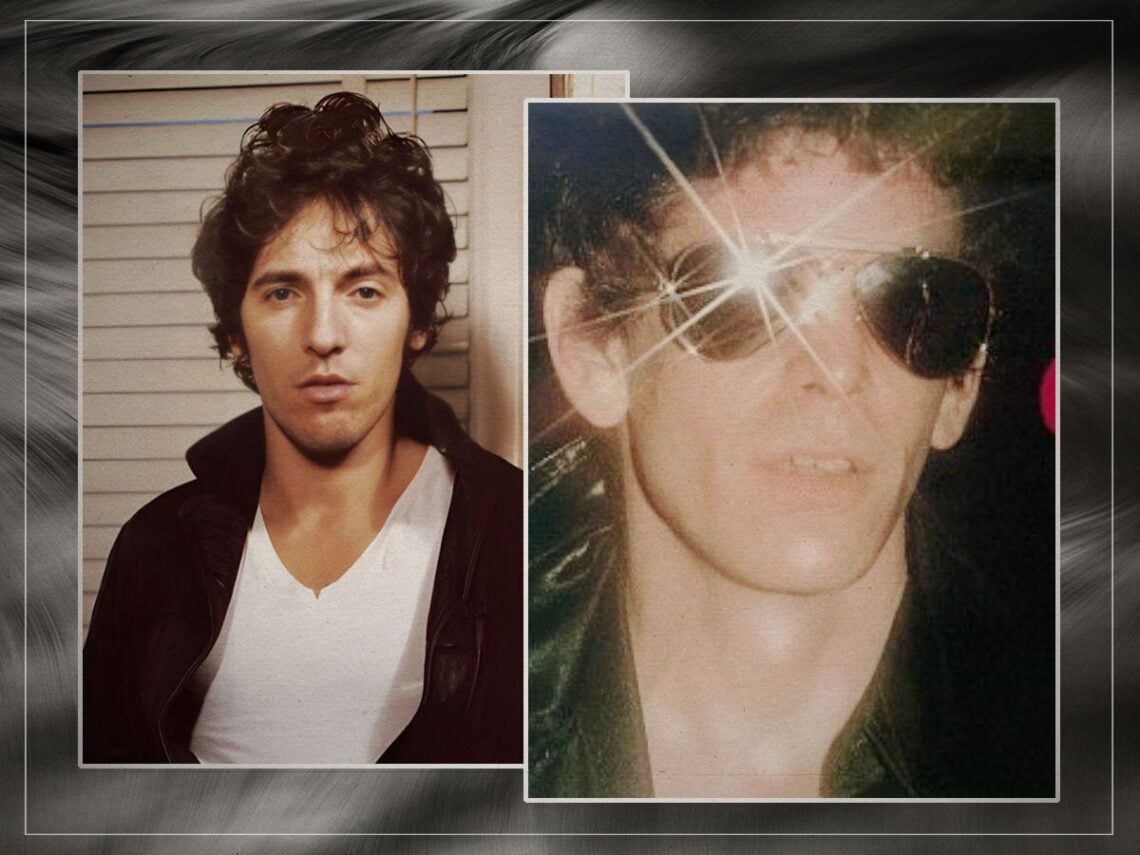
How did Bruce Springsteen end up appearing on Lou Reed’s ‘Street Hassle’?

Finish the lyric: “tramps like us, baby, we were born to…” Well, it all depends on whether you’re listening to the legendary Bruce Springsteen song ‘Born to Run’ or the three-part Lou Reed epic ‘Street Hassle’, although both times, the line in question is delivered by The Boss.
In 1977, Bruce Springsteen was working on the follow-up to his much-acclaimed third album, Born to Run. Though sessions for the album started at New York’s legendary Atlantic Studios, Springsteen soon soured on the sound he was getting from the room and the engineers and soon moved his band a few blocks downtown to the Record Plant. Unbeknownst to him at the time, the studio switch would not only have an impact on his own next album, but on the next record that Lou Reed would make, as well.
Whilst Springsteen is the working man’s hero, the friend to the blue-collar working class and the downtrodden every-man, Lou Reed was giving a voice to the outsiders. To the loners and the cast-aways. The cast-offs and the wantaways and the waifs and the strays in the city, and let’s face it, in New York, there are plenty of such souls.
Springsteen was singing from the inside and looking out and Reed was standing on the outside staring in, but when The Boss moved his production to the studios where Reed was busy making Street Hassle, their unlikely paths would momentarily cross.
Much like Springsteen, the Record Plant hadn’t been Reed’s first choice of studio for his new album, either. He’d originally wanted to record the album on the road, putting the street in the album’s title. The hassle would follow shortly behind. Reed recorded the bulk of the tracks at live shows in Germany, muting the audience, but on his return to the States was told by his label, Arista, that a live album wasn’t what they wanted from him at that time.

Having already had his creative vision turned down and watered down, Reed’s troubles continued once he’d swapped the stage for the studio. Following a fight with producer Richard Robinson, Reed found himself splitting his time between getting behind the mixing desk and the microphone.
But for all the label and personnel troubles with the album, it was a moment of clarity and input that came from Arista Records headman and legendary industry executive Clive Davis that would push the record onwards. Davis heard potential in Reed’s title track, ‘Street Hassle,’ and encouraged him to expand on the 11-minute epic.
One of Reed’s most sprawling, shocking and junkie-style-stream-of-consciousness outpourings since his Velvet Underground days, there is a far more unlikely allusion at the end of the song. When Reed got to the line “tramps like us, we were born to pay”, Davis recognised it from a hit he had worked on back in his Columbia Records days.
He advised Reed that the lyric was a little too reminiscent of a recent line by The Boss, but as luck would have it, Springsteen was working on an album of his own—and, coincidentally, a similarly dark, sprawling and expansive masterpiece of an album, and maybe one of the best he would ever make—in Darkness at the Edge of Town just a few floors down at The Record Plant.
They might have been working in close proximity, but the small distance between them was bridged further when Reed asked Springsteen to appear on the album and deliver the lyric which so closely resembled the earlier line from ‘Born to Run’. Though the pair were working so closely together, Reed decided not to make the short trip downstairs but instead phoned Springsteen up to explain the situation and request that they collaborate on the closing segment of the song. The Boss duly agreed to become the employee for a brief moment and, in a couple of takes, delivered the pacey spoken-word drawl that is delivered towards the end of ‘Street Hassle’.
“People expect me to badmouth him because he’s from New Jersey, but I think he’s really fabulous”, Reed later said of their short but successful collaboration. “He did the part so well that I had to bury him in the mix. I knew Bruce would take that recitation seriously because he really is of the street, you know.”
