


What was the first-ever 3D feature film?

The 3D cinema craze that peaked in the 2000s has (thankfully) been in rapid decline over the past decade. The success of Avatar in 2009 was a catalyst for the resurgence of 3D film viewing, which has existed for over a century.
However, after companies cashed in on the gimmick, they soon released the phenomenon was too expensive, impractical and unsustainable for the film industry. Instead, other inventions, such as CGI, have been a lot more important in the progression of cinema. Still, 3D cinema has an interesting history that dates back to the 1840s.
3D imaging, also known as Stereoscopy, was invented by Charles Wheatstone in 1840. The technique was made famous when in 1851, a 3D image of Queen Victoria was displayed at the Great Exhibition. The Queen was a massive fan of stereoscopic photography and is often attributed to inspiring its progression.
In 1890, William Friese-Greene had the idea to create a 3D motion picture by rushing two film strips in synchronisation through a stereoscope machine. Although his invention was successful, it was disregarded because of its complexity.
This brings us to 1915 when Edwin S. Porter and William E. Waddelland created 3D test reels, which they played at the Waldorf Astoria Hotel in New York. The audience wore green and red glasses to watch the reels, which included images of dancers and Niagra Falls.
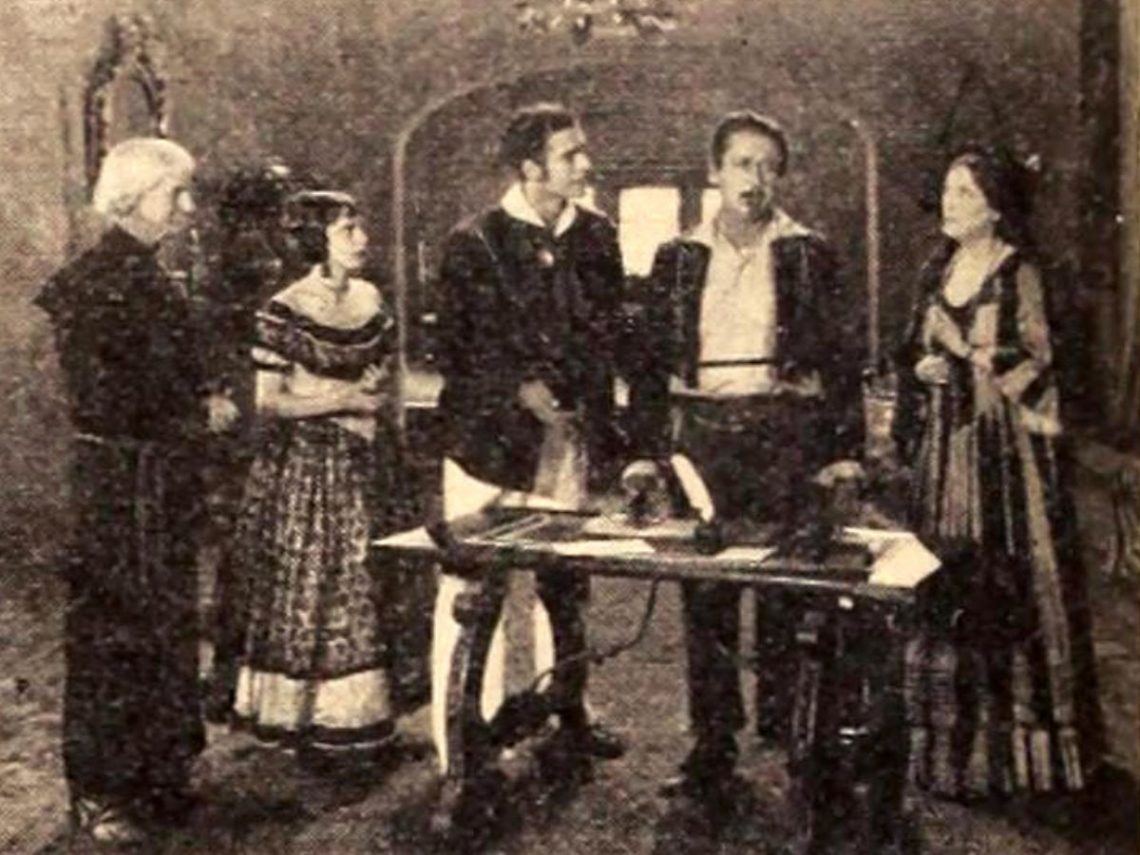
However, seven years later, the first-ever 3D feature film, The Power of Love, was made by directors Nat G. Deverich and Harry K. Fairall. Comprised of five reels, the film premiered on September 27th, 1922, at the Ambassador Hotel Theatre in Los Angeles. Sadly, the film is now considered lost, as well as its 2D version. All that remains are some promotional stills.
The Power of Love used the red-and-green anaglyph system to create a 3D experience, giving the audience the option of two different endings depending on whether they looked through only one colour of the lenses. Apparently, one ending was happy, whereas the other one was tragic.
The film remains the only one ever to be made using Fairall and Robert F. Elder’s two-camera, two-projector Fairall-Elder stereoscopic format.
Despite the innovation, The Power of Love was only screened once more in 3D for the press in New York. Instead, the film was distributed in 2D as Forbidden Lover in 1923.
After the premiere of The Power of Love, William F. Cassidy and Laurens Hammond came up with an alternative method of 3D screening called Teleview. To view a film via Teleview, the audience would have to look through a machine attached to the arms of the cinema chair. This invention was installed in just one New York cinema which showed a series of shorts and a feature called The Man from M.A.R.S.
3D cinema was made less popular in the late 1920s and 1930s by the Great Depression. However, it picked up again in the 1950s as cinema needed to find new ways to compete with television.
Since then, 3D cinema has moved in and out of popularity over the decades, finding particular success in the 2000s. The 3D movie fad seems to be on its way out now, with only a small handful released this year, most of them being 2D to 3D conversions, such as Jaws. Hopefully, it stays that way.
