


What songs did Bob Dylan write with Jacques Levy?

“He knew exactly what he was doing,” Emmylou Harris once reflected, discussing her work with Bob Dylan for the Desire sessions in 1976. This would be Dylan’s most collaborative affair yet, with a fresh and creative mind bolstered by a desire to enhance the chaos of his own thinking. Unlike Blood On The Tracks, Dylan’s next record was driven by intuition, the kind that not even he was inherently aware of.
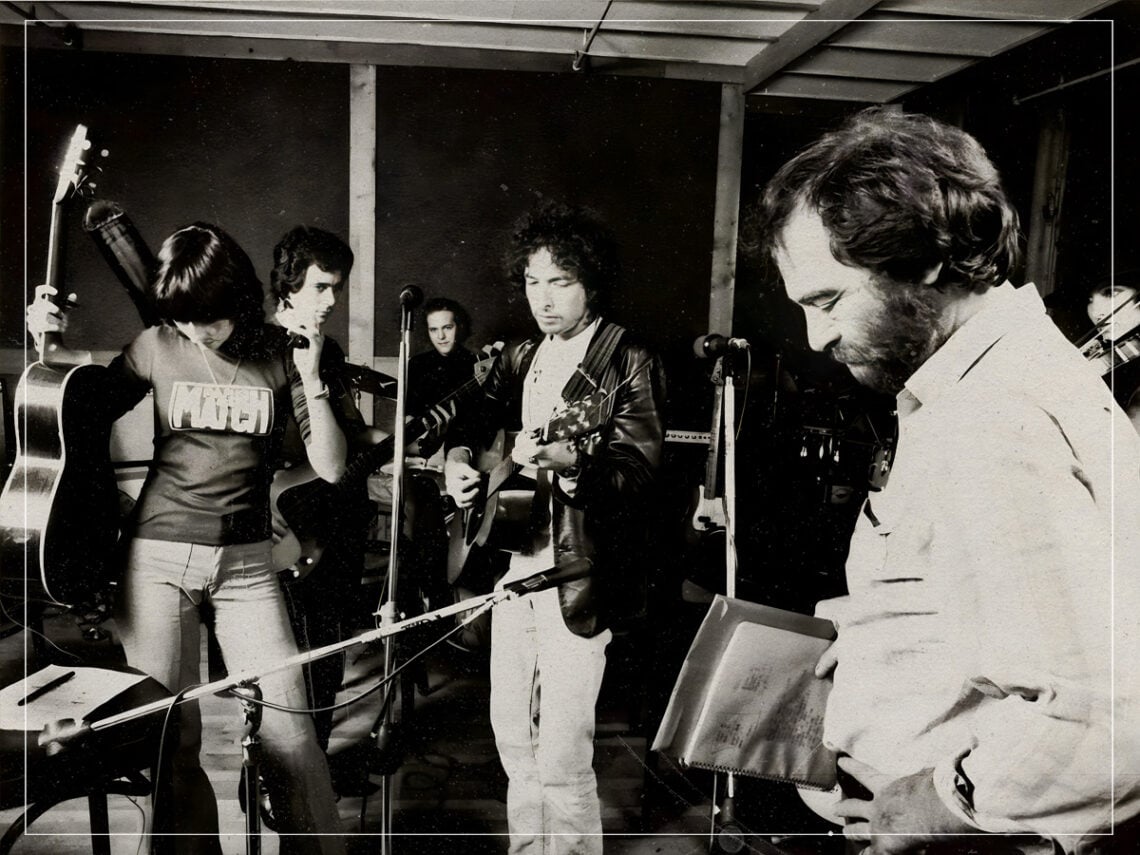
Dylan knew exactly what he was doing by leaving most things to do with Desire up to happenstance. This began when, one evening, he came across Jacques Levy unplanned while walking around Greenwich Village. Up until that point, the writer had most familiarly worked on some songs with The Byrds, but Dylan invited him to a popular folk function that evening before going to his apartment to work on a song that would eventually become ‘Isis’.
They soon got to work at Dylan’s Hamptons home, writing songs for Desire under no false pretences, letting their unofficial co-writing partnership flourish in any way it did naturally. By complete chance, Levy became Desire‘s primary point of collaboration, adopting a tone and sonic flavour that appeared entirely different to the record Dylan had put out a year prior. This, however, was the strand that ended up blessing Desire from start to finish.
“I guess I never intended to keep that going,” Dylan later said. “Sometimes you’ll get what you can out of these things, but you can’t stay there.”
As it was, Desire became Dylan’s transition out of his comfort zone, utilising Levy as a guiding principle, trusting whatever they came up with no matter how differently it felt to his usual disposition. Most of the songs they wrote during these sessions made it onto the album, including ‘Hurricane’, ‘Mozambique’, ‘Oh Sister’, ‘Joey’, ‘Romance in Durango’, and ‘Black Diamond Bay’, but some were placed in a vault and released on Dylan’s later compilations and releases.
Which musicians did Bob Dylan collaborate with on ‘Desire’?
Some of these include ‘Catfish’, which was released on Dylan’s 1991 The Bootleg Series, alongside ‘Rita May’, which was released as a B-side and part of Dylan’s compilation album Masterpieces. However, his work with the musician during Desire was a particularly creative affair, as Dylan also sought support from more collaborators than usual during these sessions, not just with regards to Levy and Harris but with Ronee Blakley and the host of musicians that featured on Dylan’s coveted Rolling Thunder Revue tours.
Interestingly, he kept this free-flowing collaborative atmosphere alive as much as possible during the actual sessions, opening up as many studios as he could to ensure its livelihood never faltered. However, according to bassist Rob Stoner, this was almost counterproductive, as it made the entire process feel like a “huge party” rather than a professional space.
“They had opened up all the adjacent studios to accommodate all these hangers-on and buffet tables,” he said, adding, “It was just like a huge party. And it wasn’t conducive to getting any work done,” per Rolling Stone.
After a while, things calmed down a little, enough for the core team to be able to focus on producing and cutting the album within about two nights, driven by the unmatched “level of excitement” that was there from the very beginning. “We didn’t want to lose the vibe. No drinking, no drugs, no nothing. It was pure adrenaline,” said Stoner, adding that the only reason they stopped when they did was because their cars would have been towed on the street otherwise.

Never Miss A Tale
The Far Out Bob Dylan Newsletter
All the latest stories about Bob Dylan from the independent voice of culture.
Straight to your inbox.