


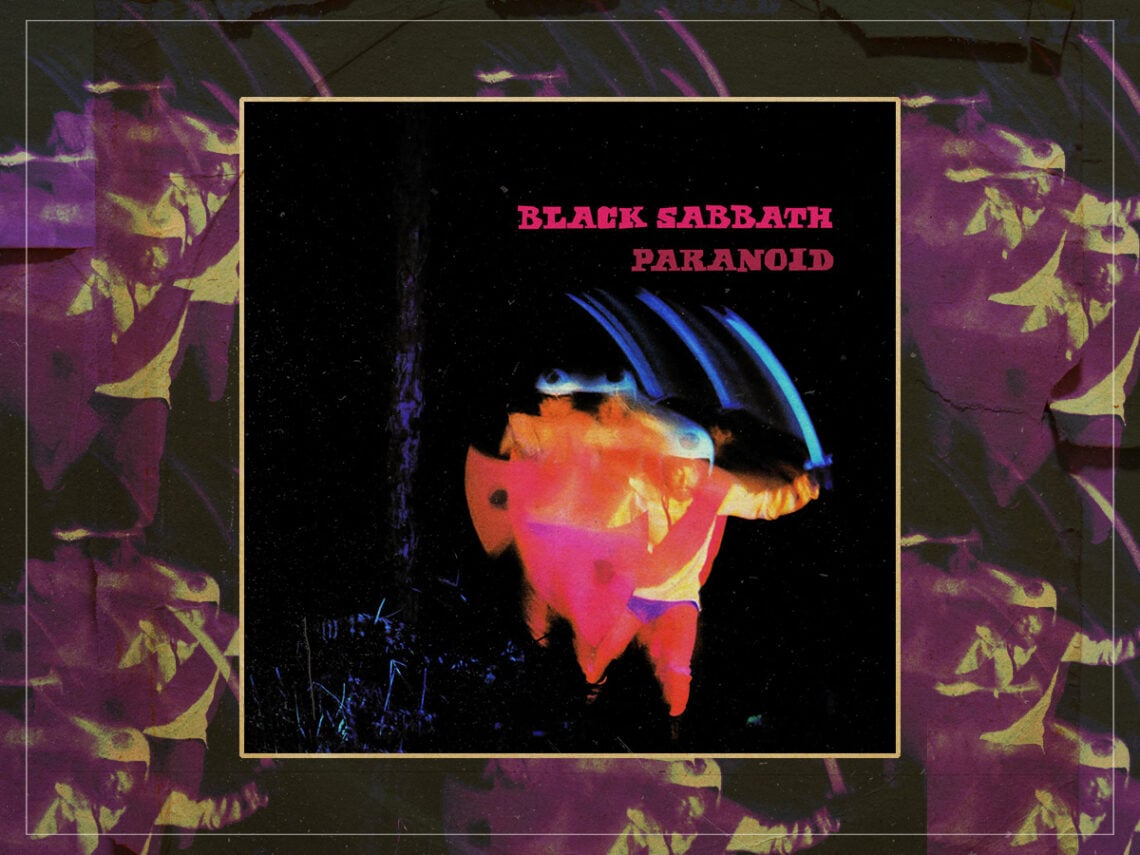
Why does Black Sabbath’s ‘Paranoid’ still sound so cutting edge 55 years after its release?

One of my favourite things to do in a bid to remind myself how far ahead of their time Black Sabbath were is to watch the music video for their song ‘Paranoid’.
You have to keep in mind when you go to watch this video that Black Sabbath are (rightly so) championed as being the founding fathers of heavy metal. All the bands who veer on the side of the alternative in the modern age owe something to Sabbath, as they showed that music could be heavier, doom-laden and dark. With that in mind, why have they been given such a psychedelic backdrop for ‘Paranoid’?
The video doesn’t play into the themes of the song at all. The band are dressed in flares, and behind them is a strange, spinning, pretty mechanism that keeps turning as they play. The whole thing plays as relatively sweet. You would expect the band’s faces to start melting off towards the end of the song, or for the set to catch fire, but instead, it stays as it is, and it makes for a compelling watch.
The truth is, given Black Sabbath were one of the first bands to champion the heavy metal sound, record labels weren’t sure how they should market them. Towards the end of the 1960s / beginning of the ‘70s, psychedelic music was dominating the charts, and as such, it appears that Sabbath’s label opted to go for a similarly inspired backdrop. If they came out today, we would have a better understanding of how to market them, but at the time, they were a musical force unlike anything people had come across before.
We have recently celebrated 55 years since Sabbath released their hit single ‘Paranoid’. There is a lot of scope open for the most influential Sabbath song of all time, as they did a great deal throughout their career; however, regardless of what you think the answer is, ‘Paranoid’ has to hop on your train of thought at some point.

Sabbath’s self-titled debut was a great showcase of everything that people liked about the band: it was raw, energetic, grim, and a great reflection of life in Britain at the time of release. It was unpolished as well, which appealed to a lot of people because they had a new sound, and their record label didn’t want to invest in a lot of studio time for a band who might not be a success. That album was recorded in eight hours, with the majority of tracks being laid down live.
When it proved a success, the label gave Sabbath more money, so they could take a bit more time putting the next album together. With a backlog of music already clogging their creative inhibitions, the motley got straight back in the studio and started laying down the songs that would make up Paranoid. Only one song was missing, and that was the title track itself.
55 years after its release, after the creation of that out-of-touch music video, and this cut still sounds current and exciting. How? Well, there are a couple reasons but one of the first is likely the urgency with which it was crafted.
I interviewed The Coral recently, a very different sound to Black Sabbath, granted, but one of the things that James Skelly said in our chat stayed with me: “Limitation is the mother of invention”. The idea being that a lot of great art has been born not because of resources available to an artist, but lack thereof, and what Black Sabbath lacked when they started working on the song ‘Paranoid’ was time.
“The song ‘Paranoid’ was written as an afterthought,” explained Geezer Butler, “We basically needed a three-minute filler for the album, and Tony [Iommi] came up with the riff. I quickly did the lyrics, and Ozzy was reading them as he was singing.”
Tony Iommi admitted the same, as he said that the song was written to make up lost time on the album, and that it was only released as a single because it was the right length. “The song was written as a filler for the album, it was never intended on being anything else,” he said, “But it became a single because it was a short song, and because it became what it did, most people knew us because of ‘Paranoid’ in them days.”

You can hear that urgency in the song. The notes are played at a rate quicker than necessary, and the sped-up nature of the track, paired with the step down tuning, Butler’s mimicking bassline, and chaotic drums, all make for a combination of sounds that you still don’t come across in the modern age. The frequency with which you hear the song feels off-kilter, and it plays into the paranoid feeling that bleeds into it.
Of course, this brings us to another reason why the track still sounds cutting-edge, and that’s its theme. Paranoia wasn’t something that people sang about much towards the back end of the ‘60s, and yet the lyrics within the track resonated with a lot of listeners. This is likely because when writing the words, Butler tapped into feelings surrounding his mental health, and these were feelings so untapped by so many that he didn’t even realise he was being brave by discussing them. During a period when mental health was hardly a topic deemed relevant in general, let alone in art, Butler made a song that spoke to something deep within those who listened.
“Basically, it’s just about depression because I didn’t really know the difference between depression and paranoia,” explained Butler, “It’s a drug thing; when you’re smoking a joint, you get totally paranoid about people, you can’t relate to people. There’s that crossover between the paranoia you get when you’re smoking dope and the depression afterwards.”
When Ozzy Osbourne passed away, it shook the musical world to its core, and it was innovative Sabbath songs like this that made him and the rest of the band such icons for so many. 55 years, and that track would be exciting and genre-defining if it were released tomorrow. Limitation, innovation, and a group of exceptional musicians all play into its brilliance, as it continues to be considered timeless by all those who listen.
