


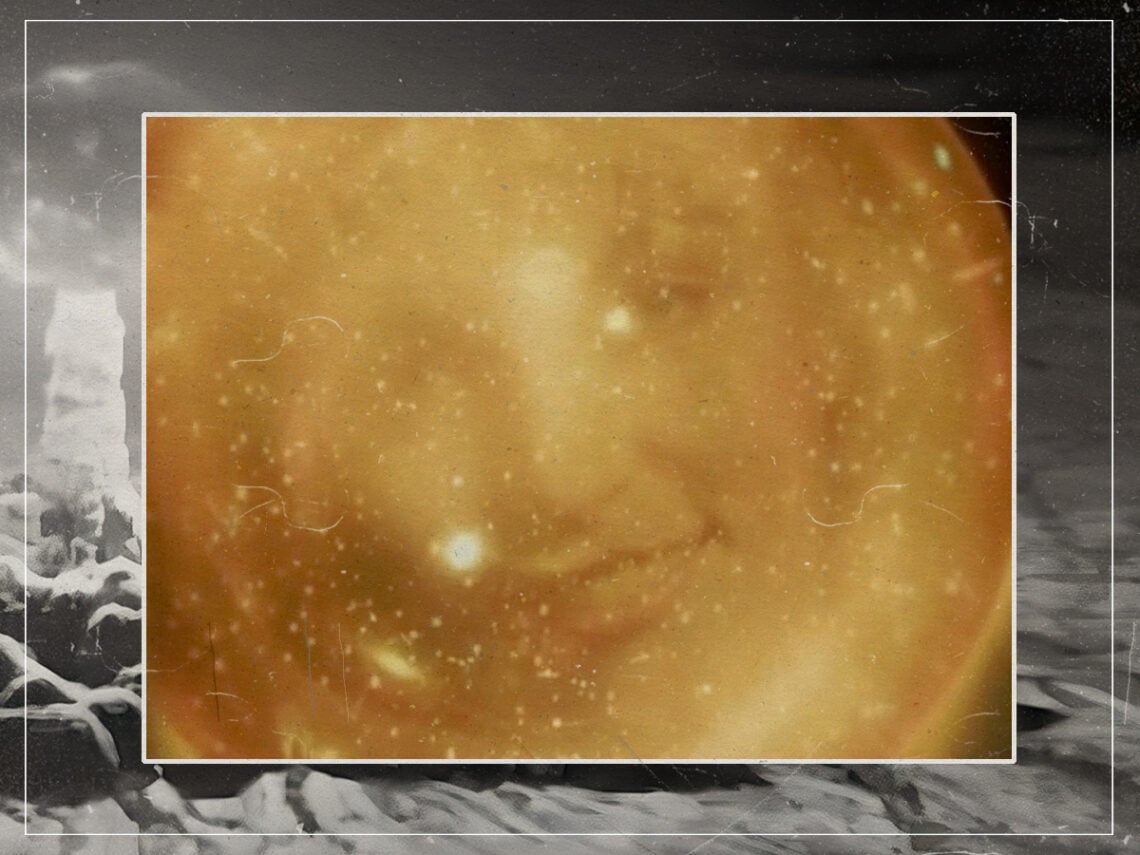
What is the significance of the atom bomb in ‘Twin Peaks’?

As tends to be the case with anything born from the mind of David Lynch, the atomic detonation in Twin Peaks has opened the doors to debate over what it really means. In typically Lynchian fashion, though, no concrete answers have ever been provided to leave it entirely up to the viewer.
One thing that can’t be denied is that the filmmaker has always been captivated by the surroundings and time period in which he grew up. The first nuclear detonation in history took place under the supervision of J. Robert Oppenheimer in July 1945, with Lynch being brought into this world seven months later in January 1946, so it was presumably a source of endless fascination for the future filmmaker.
In literal terms, the atom bomb going off in the eighth episode of season three is suitably surreal, giving rise to Killer Bob, the interdimensional entity that feeds on sorrow. The Trinity test changed the course of history in the real world, but through Lynch’s own lens, it also altered the course of Twin Peaks and its mind-melting chronology.
One interpretation is that the explosion is one of America’s greatest sins, with Bob manifesting out of a heinous act that placed a black mark against the country forevermore, given what followed in the aftermath. Things are quaint – idyllic, even – up to that point, but ‘The Return, Part 8’ showcased the dark and dingy underbelly of Americana through the brightest of glows, both literal and figurative.
Ten years later, the after-effects are still being felt by the characters within proximity to the blast site, with the bomb also being viewed as a complete and total loss of innocence for not just the nation and its leading scientific minds but also the residents of Twin Peaks who end up being caught in its viciously perpetual cycle, all of which can be traced back to that fateful day.
That the scene is soundtracked to Krzysztof Penderecki’s ‘Threnody to the Victims of Hiroshima’ only heightens the belief that as well as bringing Bob into the world, Twin Peaks‘ depiction of the Trinity test underlines how an event that can be weaponised against nature, society, and humanity is capable of giving rise to the greatest and most indistinguishable of evils, which stems from who wields such untold power and how they choose to use it.
Who is Señorita Dido?
In the aftermath of the Trinity test, Joy Nash’s Señorita Dido is found listening to a phonograph while alone in her room, which starts emitting a strange noise investigated by the Fireman, who then promptly leaves.
From there, Dido follows the Fireman to a theatre where he’s found floating in the air and displaying an orb that carries an image of Sheryl Lee’s Laura Palmer. Again, it’s hardly spelt out in specific and decipherable terms, but Dido could theoretically serve a number of functions.
Various theories have suggested she’s the representation of artistic freedom and creative expressions; some have posited she’s an extension of Laura herself, whereas visually, she’s dressed in fashions and makeup evocative of the 1920s and 1930s, which could signify her as the embodiment of a quainter period in human history before the bomb is dropped and Bob emerges.
Who was Bob in Twin Peaks?
Trying to explain anything that goes on in Twin Peaks with any degree of certainty opens the door to becoming tied in knots, but in the most basic of terms, Bob – or Killer Bob – is a spirit that possesses human beings and uses them as vessels to commit horrific acts.
In Fire Walk With Me, it’s revealed the suffering the suffering he feasts on his called garmonbozia and can take the form of creamed corn for reasons only known truly to Lynch, but at the end of the day, Bob is an interdimensional entity with an unquenchable hunger that can only be satisfied by abject misery.
Frank Silva was a set dresser given the role because Lynch liked his face, but he didn’t become a regular fixture of the series until the second season, where he evolves into Twin Peaks‘ primary antagonist. The explosion in ‘Part 8’ acts as an origin story of sorts, but as tends to be the case, the Experiment showcasing an orb with his face raises just as many questions as it offers answers.
Is there video of the Trinity test?
Christopher Nolan had plenty of footage to draw on for accuracy when crafting Oppenheimer, with the Manhattan Project recording through at least 52 different cameras being placed at various points around Los Alamos to capture the Trinity test.
Some of them were still cameras, and others recorded video as well, but due to the limitations of the technology, there are a great deal more moving images than discernible audio. No recordings were made specifically to capture sound, but the monumental moment that secured a spot in history was nonetheless captured by dozens upon dozens of cameras, with plenty of footage surviving to this day.
