


What is “America’s tortured brow” and what does Mickey Mouse have to do with it?

Sometimes a lyric means seemingly nothing, but says what it needs to say absolutely perfectly, and David Bowie’s ‘Life On Mars’ is a prime example of that.
It has been over five decades since Bowie released the hit from his fourth album, Hunky Dory. Even before the song hit the ears of the masses, it went through many life cycles. Initially, the artist wanted it to be a parody of sorts. He wanted it to be a kind of rewrite of Frank Sinatra’s ‘My Way’, but instead of having the crooner listing highs and lows, achievements and moments of perseverance, he wanted to look around at the weird world and muse on its various contradictions and oddities.
The whole of Hunky Dory as an album does just that. While later records would see the star going all in on fictional worlds and fictional characters, this offering feels so rooted in real life thanks to his various references to people like Bob Dylan and Andy Warhol. It was very much an album for the end of the 1960s, even a memorial of sorts. On ‘Song For Bob Dylan’, he seems to be calling out for a leader to come back, singing, “Tell him we’ve lost his poems / So we’re writing on the walls / Give us back our unity”.
However, it’s less about Dylan himself and more about a loosening and fading sense of community. While the 1960s was a time of peace and love, and the rise of counterculture seemed to give the youth especially a purpose and a feeling of belonging, that was fading as the various idols changed and faded too. The world was growing weirder and scarier, and after counterculture had risen to the top and proved to not be a saviour, art too now felt dystopian and odd.
On ‘Life On Mars’, Bowie deals directly with exactly that. As a loose, overarching story, the song follows a girl who goes to the cinema to escape reality, looking for art to take her away from it all, but through the strange and surreal images, it’s clear that the escape she’s after can no longer be found.
“The film is a saddening bore / For she’s lived it ten times or more,” Bowie sings, poetically addressing the fact that art imitates life and cannot be removed from its context. While the ‘60s would have liked to ignore that fact, the coming of the ‘70s felt confronting as the bubbling issues of racial and gender inequality, the Vietnam War, worsening economics and politics and the dangerous effects of hedonism were coming to a boil, but somehow only seemed to have created a broad sense of apathy.
Bob Dylan had given up on protesting. The Beatles had split up after singing about revolution. The hippie crowd was dissipating, burnt out by drugs. Woodstock had called in the National Guard, and the movie industry had taken counterculture and simply absorbed it into Hollywood. JFK was shot, Martin Luther King was shot, Jimi Hendrix died: across America, especially, the prevailing emotion at the start of the 1970s was bitter disappointment.
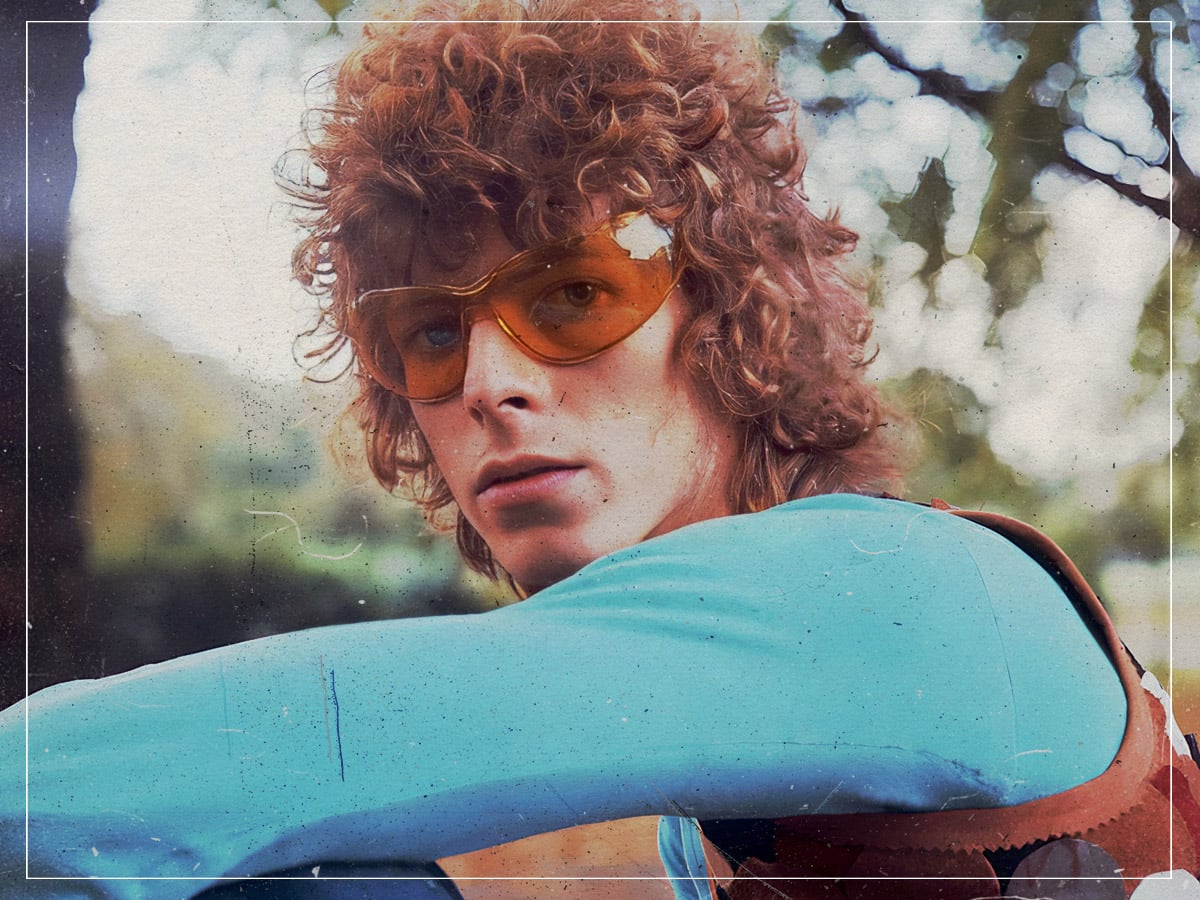

“It’s on America’s tortured brow / That Mickey Mouse has grown up a cow”.
Specifically, the sense at the start of the ‘70s was bitter disappointment that had clearly been stalling for a long, long time. In ‘Life On Mars’, this line seems to hold all the weight of that. The image of the “tortured brow” brings up the face of an exhausted, worn-down adult. “Tortured” isn’t so much angry or upset, but subtly and enduringly broken down as if the pain and upset have been going on for so long.
Then, with the idea of Mickey Mouse growing up to not be what he seemed at all, or not be what the kids were promised, the two connected images make up a statement about America being exhausted because all of their hopes and dreams were illusions at best, and straight-up lies at worse.
Then, as he changes the line with “the film is a saddening bore / ‘Cause I wrote it ten times or more / It’s about to be writ again,” Bowie offers no solution but merely points out that all those broken promises that have got the world down will simply be refreshed and repeated.
Really, it’s a nihilistic song for the modern world. He’s saying that the lies will continue, the letdowns will keep coming, and art cannot save us. Cheerful!
