


What happened to Hollywood’s teenage ‘It Girls’ of the 1980s?

Every decade has its ‘It Girls.’ In the 1920s, it was Clara Bow and Louise Brooks. In the 1960s, it was Edie Sedgwick and Twiggy. In the 2000s, it was Paris Hilton and Lindsay Lohan. The unifying element is a certain type of coolness that influences and defines an era, not only from a fashion standpoint, but from a personality standpoint. ‘It Girls’ embody the aspirations of their decade, whether it was Bow and Brooks’s flapper hedonism or Hilton and Lohan’s colourful extravagance.
In the 1980s, America’s ‘It Girls’ were the actors who populated high school-oriented movies. Molly Ringwald, Phoebe Cates, Ally Sheedy, Ione Skye, and Mia Sara were the epitome of coolness in an era when American teens became a distinct and powerful demographic. The rise of women in the workforce meant that high schoolers had more autonomy than ever. With both parents out of the house, they could develop their own identities separate from their families. The decade saw a boom in mall culture and the introduction of MTV, both of which turned teens into a key consumer demographic.
Directors like John Hughes seized the moment and brought American high school life to the big screen. Sixteens Candles, The Breakfast Club, and Amy Heckerling’s Fast Times at Ridgemont High showed teens heightened versions of their own lives and became a winning formula at the box office. In the process, it turned a host of young female actors into stars who were both believable as suburban high school students and as movie stars. Four decades later, however, many of these young actors have disappeared so definitively from the spotlight that their names barely ring a bell. So, what happened?
For one thing, many of these actors became famous at a young age. Child stardom is notoriously treacherous, especially in an era before Hollywood had gone through a reckoning over its treatment of young performers. Youth also meant that these actors were typecast as teenagers even after they aged out of high school roles. No matter how close she was in age, Molly Ringwald was probably not going to out-compete Julia Roberts or Sandra Bullock for roles.
All of these ’80s teen actors had their own paths, of course, so it’s worth highlighting what they’ve said about their careers. Sara, for example, got started in acting as a teen and made the Ridley Scott movie Legend, starring Tom Cruise, before landing the role of Sloane in Ferris Bueller’s Day Off. She described the experience as uncomfortable given that she was the only teenager in the main cast, and although she continued working intermittently over the years, she told Game Rant in 2010 that she didn’t like the spotlight and had all but retired into writing poetry and raising a family.

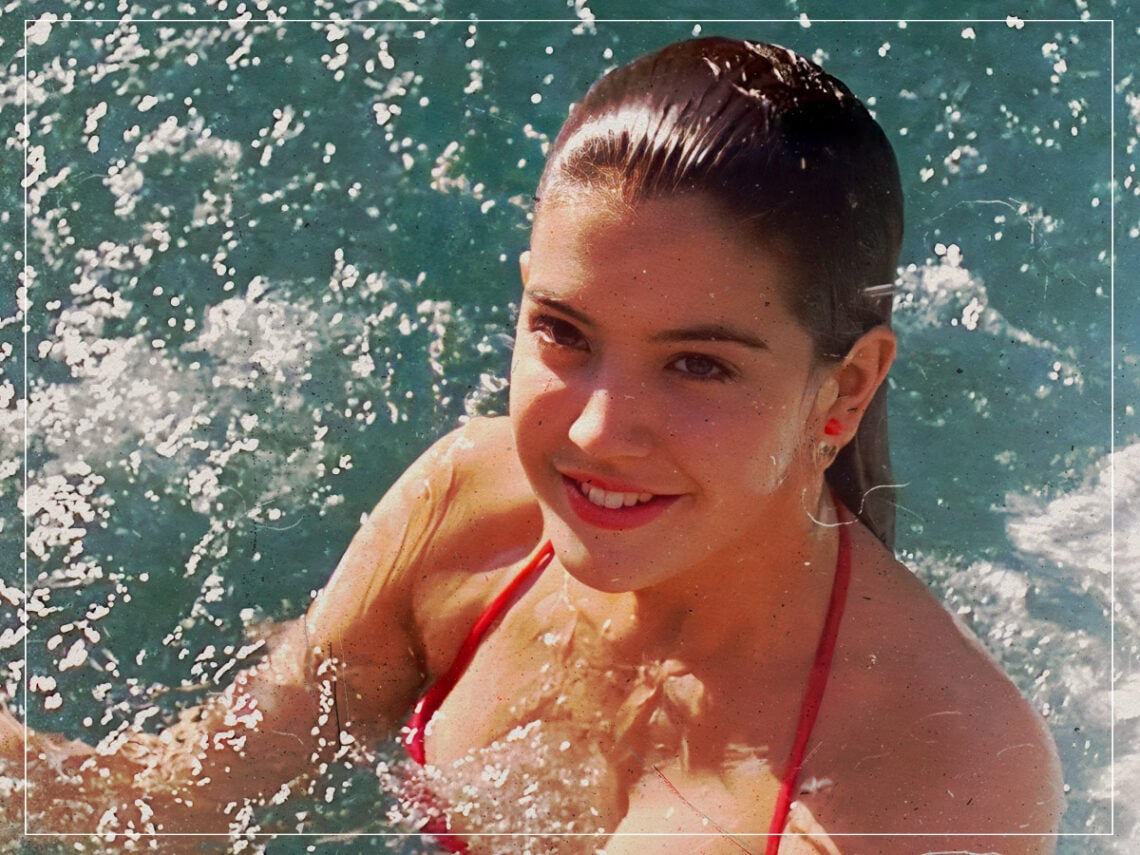
Phoebe Cates followed a similar trajectory. She rocketed to fame after an infamous scene in Fast Times at Ridgemont High in which a character fantasises about her emerging from a pool and removing her bikini. After several similar roles, she bemoaned the lack of opportunities in the late ’80s and, by the early ’90s, had stepped away from Hollywood altogether to raise a family with her husband, Kevin Kline.
Others found the pressures of fame more challenging. The drug culture in Hollywood in the ’80s was rampant, with many members of the so-called Brat Pack, including Rob Lowe, Demi Moore, and Andrew McCarthy, facing battles with addiction. Ione Skye, who made her debut at 16 in the teen drama River’s Edge and played John Cusack’s love interest in Say Anything… several years later, also struggled with substance abuse.
In a 2015 interview with The Fix, she said that early fame and addiction went hand-in-hand. “Celebrity does cause more problems, in that the ego of being special reinforces the idea that you can get away with things, delaying clarity and growth,” she said. “Alcoholics already feel a constant sense of ‘I need this.’ Being famous can boost that ego of separateness. I felt I could hide out in being an actress or somewhat famous.”
Ally Sheedy, who starred in WarGames, The Breakfast Club, and St Elmo’s Fire, also faced the crippling challenges of early fame. She has detailed having an abortion at 16, struggles with bulimia, and an addiction to sleeping pills, but also revealed in 1998 that work dried up after she left the realm of ‘teen star.’ “It’s been frustrating to the point of being just devastating,” she told The New York Times. “I couldn’t get arrested. I’d go to an audition and it’d be like: ‘Surprise us. Shock us. Show us something new. We already know what you can do. Now show us something else. Prove yourself to us.'”
Of all the ’80s’ It Girls,’ Molly Ringwald was the most famous. She played the picture-perfect girl next door in Sixteen Candles, The Breakfast Club, and Pretty in Pink, becoming John Hughes’s go-to star. Having started acting as a child, she found that, as she reached her late teens and early twenties, she was too old for high school roles and too young for adult roles, so she decided to leave Hollywood for France. “I had been working for so long that I didn’t have any experience of what it was like to be a person,” she told Marc Maron on the WTF podcast in 2024, adding, “I was ‘that girl’ for a while and I felt like I needed to know what it felt like to not be ‘that girl.'”
The wild drug culture of the ’80s and ’90s that killed the likes of River Phoenix and Kurt Cobain may have subsided, but the struggles of being in the spotlight at a young age continue. Lindsay Lohan, Macaulay Culkin, and Amanda Bynes are all proof that the damage can last much longer than the fame. More recently, the death of One Direction star Liam Payne, the mental health struggles of Justin Bieber, and online debate over Millie Bobby Brown’s appearance demonstrate that, no matter how aware we are as a culture that fame can be destructive on young stars, awareness alone does not solve the problem.
Recently, Brown took to social media to call out tabloids that criticised her appearance. “Disillusioned people can’t handle seeing a girl become a woman on her terms, not theirs,” the Stranger Things actor said in an Instagram post, concluding, “I refuse to apologise for growing up. I refuse to make myself smaller to fit the unrealistic expectations of people who can’t handle seeing a girl become a woman.”
It’s tempting to look back on the treacherous, truncated careers of ’80s teenage actors and conclude that everything is fine now, but thanks to social media, the pressures that young stars face from every angle are worse than ever. It’s quite possible that in 40 years, we’ll be asking what happened to the current group of teenage celebrities. The best-case scenario, it seems, is that they retire early and either find more meaningful pursuits, or, like Ringwald, return once they’ve recovered from early stardom.
