


What happened to Cinerama? The Bradford cinema holding on to movie history

People are quick to judge Bradford, and it’s understandable.
When a place is frequently labelled as one of the UK’s most dangerous cities, with incredibly high crime and drug statistics, it’s not a surprise that people turn their noses up, but Bradford’s passion for keeping culture alive should be equally focused on.
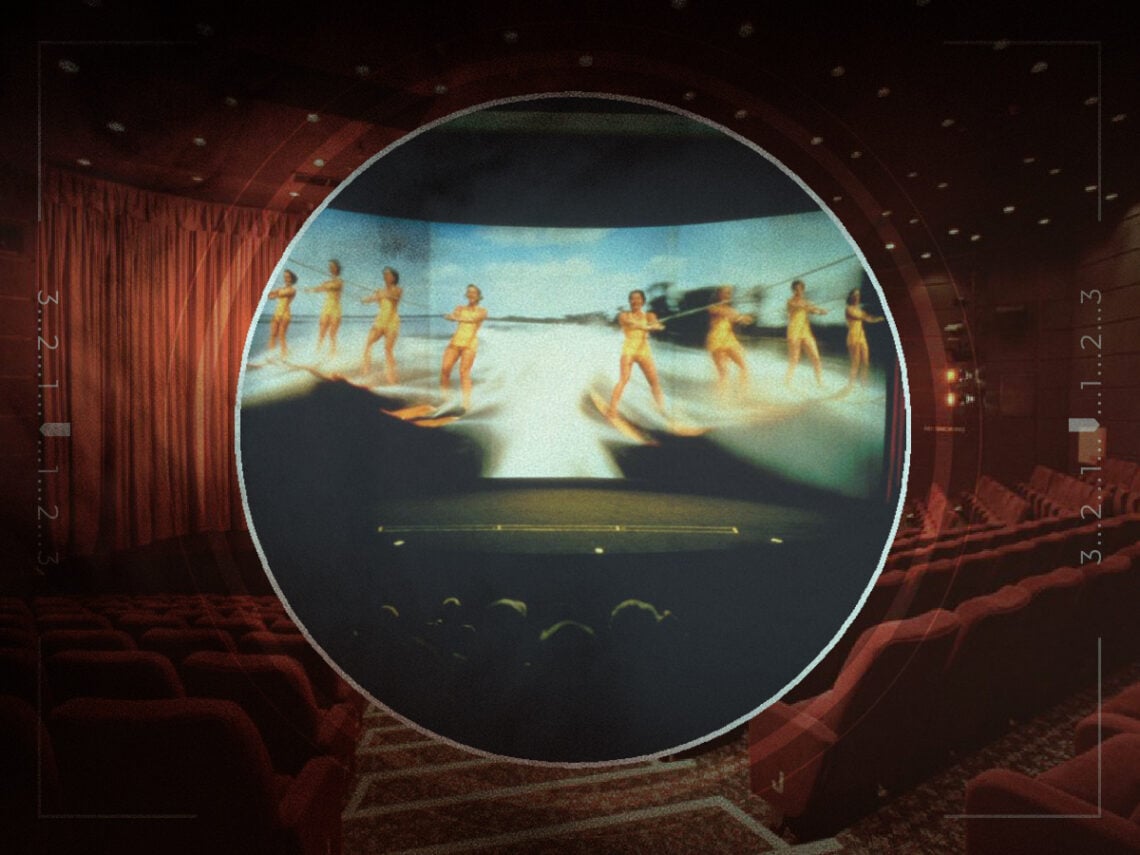
Named the first Unesco City of Film in 2009, Bradford was also given the title of UK City of Culture in 2025, not least because it is home to the National Science and Media Museum, one of the country’s most impressive displays of cinematic history. So, alongside the Brontë Parsonage in Haworth and dedicated exhibitions for David Hockney in Saltaire, Bradford also boasts a cinema and museum that contains the world’s only Cinerama screen available to the public.
You might think Bradford an odd place for such a landmark part of cinematic history to find a home, but the city’s rich and diverse cultural and creative heritage, paired with the fact that Yorkshire kind of gave birth to cinema, makes it perfectly fitting; so, if you hop off the train at either Bradford Interchange or Bradford Forster Square, you only have to walk a short distance to find yourself at this cinematic temple, home to the Pictureville Cinema and that beautiful movie relic, a Cinerama screen.
Cinerama screenings never really took off, mainly because they were incredibly impractical. The process involves taking three synchronised projectors so that the screen appears really wide, but as you can imagine, this was slightly novel, and inevitably unsustainable.
Still, it was a really interesting moment in cinema history, marking a time of experimentation as cinema started to dominate people’s social lives even more. Going to the cinema was a proper experience, and this was the ultimate immersive kind, as Hollywood was changing, and with its emergence in 1952, Cinerama suggested a new era for cinematic consumption.
Instead, CinemaScope soon came and proved to be the better option, so the medium fell to the wayside. There was no way the average theatre could install three projectors to execute the ultra-widescreen effect, and as a result, it died a quiet death, but not before How the West Was Won came in 1963, which was shot specifically for Cinerama screens.
So, with Cinerama no longer in circulation, only a select few theatres continued to house the ability to screen films in this fashion. Interestingly, Bradford’s Pictureville made the bold move to host Cinerama screenings when it opened in the ‘90s, long after the medium had fallen out of use, but with their concentrated efforts to preserve movie history, this was a no-brainer.
Every so often, you can enjoy the real Cinerama experience as part of the cinema’s Widescreen Weekends, which you can’t do anywhere else in the world. Not even in London or LA. It’s such a delight to have a piece of cinematic history preserved in a Bradford media museum rather than one of the world’s bigger, more film-oriented cities, and you can even discover the history of photography, immerse yourself in interactive science exhibitions, and see a giant Feathers McGraw climbing the wall while you’re at it.
