


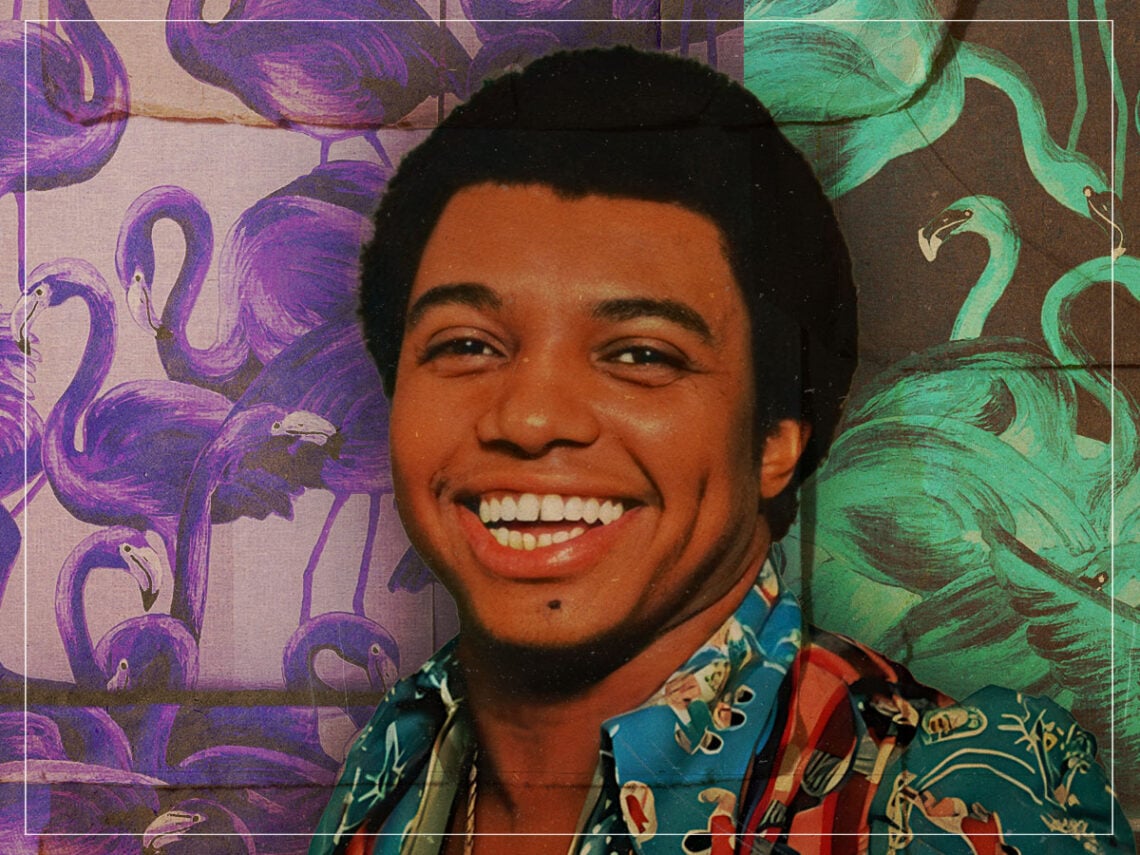
Wess Johnson: The American vocalist who brought funk and soul to Italy

During the 1960s, the United States was defined by soul music. From the chart-topping hits of labels like Motown, Stax, and Atlantic to the obscure labels of Detroit and Chicago, soul captured the social and political spirit of the era. Particularly during the early 1960s, however, this vibrant musical revolution was largely confined to the 50 states; the world at large had yet to take notice. What’s more, the scene became so over-saturated that it was near-impossible for a budding young soul star to make a name for themselves without a bursting Rolodex of contacts.
Soul might have been largely confined to the United States, but it did not take long before Europeans began to be infected by its driving beat. Pockets of mods in the south of England had cottoned on to the sounds of Motown, and the presence of American servicemen in Cold War-era mainland Europe soon led the entire continent to become aware of its musical power. For the most part, however, the artists orchestrating the soul scene were confined to the States, so Europe had to seek out live performers in unlikely places.
In France, for instance, a young band of sailors, Rocky Roberts and the Airedales, had found local appreciation in Paris for their funk and soul sound. In fact, the band became so popular in Parisian clubs that they decided to extend their stay in Europe indefinitely. In 1966, they relocated to Rome, Italy, where their stylish young bassist, Wess Johnson, took over leadership of the group.
Johnson was born in North Carolina in 1945 and spent much of his childhood immersed in music. During his high school years, the budding young bassist played in the teenage combo The Teentones, but that is where his origin story becomes somewhat sketchy. The bassist ended up in Europe during the early 1960s as a teenager searching for funk and soul stardom, but it seems as though he gave various friends and family members different accounts of his plans.
Some claimed that he declared he was going to Virginia to work with R&B singer Gary US Bonds, who has since disputed that claim. Others recalled him skipping towns with a saxophonist, never to be seen again until he resurfaced years later in Italy. Either way, Johnson rose to the forefront of Italy’s primitive funk and soul scene in 1967, with the release of the album The Sound of Soul and the blisteringly good single ‘I Miei Giorni Felici’ backed with ‘I’ll Never Turn My Back On You’.
The Airedales repertoire, under the leadership of Johnson, was composed largely of strange Italian ballads, Italian-language covers of popular American tracks (‘I Miei Giorni Felici’ was their take on The Dubs’ ‘Chapel of Dreams’), and their own soul compositions. With this ever-broadening sound and the polished, tight instrumentation of a band that had, by that point, been together for years, The Airedales blazed a trail for the entirety of the Italian soul scene.
Local groups and artists soon took note of Wess and the Airedales, spawning a particularly inventive soul scene across the Rome region. With their baby-faced frontman, The Airedales lasted until 1972, releasing six incredible – and often overlooked – studio albums which set out the blueprints for the Italian soul scene.
Even after the dissolution of his band, Johnson himself was not quite ready to return to the United States. Instead, he turned his attention to the ever-developing Italio-pop sound, working alongside Dori Ghezzi on the song ‘Era’, which went on to represent Italy at the Eurovision Song Contest in 1975. Despite his exceptional body of work with The Airedales, it was this appearance in Eurovision that gave Johnson mainstream attention for the very first time.
Perhaps Johnson would have stood a better chance of widespread relevancy and success had he stayed in his homeland of North Carolina rather than seeking out sunnier climbs in Rome. Nevertheless, for those clued up on the landscape of European funk and soul, the discography of the young American remains a captivating gold standard that has certainly stood the test of time.
