

The horrendous feud between Werner Herzog and Klaus Kinski
Read More


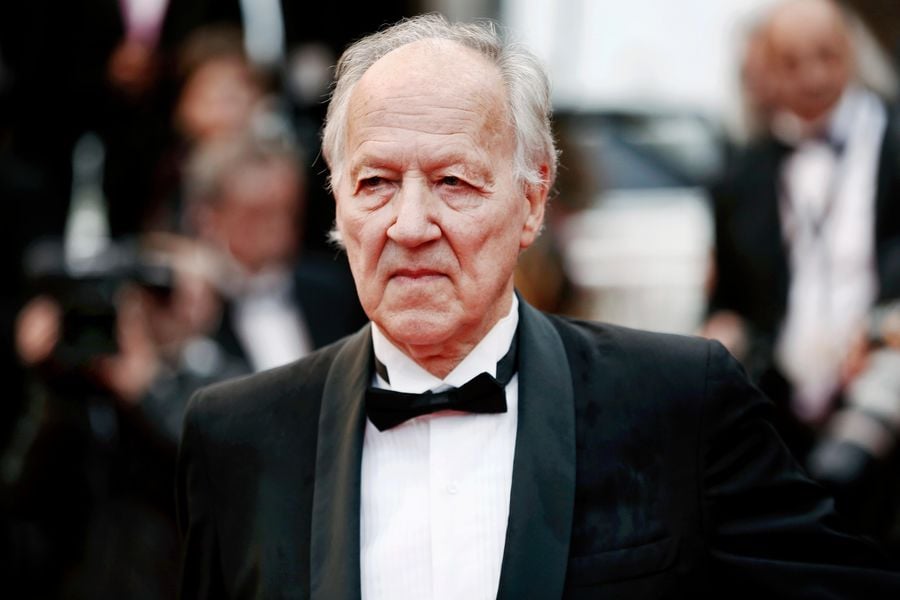
Having earned his stripes in the realms of both narrative and documentary filmmaking, German director Werner Herzog has become one of the most beloved industry icons of all time. Together with his philosophical musings on modern day life, Herzog has created a filmmaking niche where his psychoactive trips take audiences into a deep dive into some of life’s most fascinating topics.
Indeed, for Herzog, no two filmmaking journeys are the same, taking on each of his projects with a sagacious eye, looking at everything from loneliness and personal satisfaction in Grizzly Man to modern-day existentialism in Lo and Behold, Reveries of the Connected World. Despite making his first movie 61 years ago, when Herzog makes a movie, the world of cinema sits up to listen.
Recognised as a widely respected filmmaker, the iconic French filmmaker François Truffaut once called Herzog “the most important film director alive,” and for a good reason, too, with the complicated creative often addressing life’s most difficult questions with philosophical resolve. Making numerous critically acclaimed releases across the course of his half-century-long career, including Aguirre, The Wrath Of God, Fitzcarraldo and Encounters at the End of the World, Herzog remains as pertinent today as he ever has in the past.
The German filmmaker spoke to The Guardian earlier in 2022 and was asked about how he reflects on his approach to cinema. When proposed the idea that, in his films, time was “allowed to be itself,” Herzog responded: “I allow the key moments the necessary time to breathe and sink in, so they become part of you. I do have patience but am impatient if a film is not good”.
Lending his thoughts to the rapid consumption of modern media, the director adds, “You see young kids watching films on their cell phones. When they’re bored, they speed them up to twice as fast. I understand that. Digitally, I edit very fast. I edited Grizzly Man, a complex film, in nine days. I can edit almost as fast as I can think”.
Tackling tricky areas of conversation that often dig under the skin and analyse what makes us human, asking the existential questions as to where an individual fits in a wider universe, Herzog is often thought of as something of a macabre filmmaker. For example, in Grizzly Man, he declared, “I believe the common denominator of the universe is not harmony but chaos, hostility and murder”.
When this line was presented back to the filmmaker in the conversation, the interviewer, Kate Kellaway, further added, “Does harmony also exist?”. Pondering the question, the filmmaker responded, “Not out there in the universe. It’s too chaotic. You don’t need to be an expert, astronomer or astrophysicist to know that it is very messy, hostile and unliveable out there”.
Keen to not be confused as a “romanticist,” Herzog sees the idea of him being ‘drawn to the light’ as being “too new age”. Mulling the question over, however, he adds: “Sometimes, I’ve the feeling a film of mine has balance. It has a certain equilibrium that probably has something in common with harmony but which I can’t easily describe”.
Displaying a wide range of philosophical approaches throughout his filmography, it’s difficult to pigeonhole the work of such a dynamic filmmaker who refuses to sit still, wriggling in his quest to illustrate the trials and tribulations of life.
