

Visit Kualoa Ranch, the Hawaiian filming site for ‘Jurassic Park’, ‘Pearl Harbor’ and more
Read More


Britain is full of eccentric people loyal to tradition, even if those customs seemingly make no sense. Towns throughout the country beam with pride because of a sequence of strange annual events ranging from the bizarre to the downright confusing.
Perhaps, the most famous of these is Cooper’s Hill Cheese-Rolling and Wake, which takes place in rural Gloucestershire. As the name suggests, this competition pits locals against one another as they chase a round of Double Gloucester cheese down a 200-ft hill. In recent years, this event has become famous across the world and attracts international visitors every year.
The cheese usually weighs around four kilograms and is sent down the hill slightly before competitors can begin chasing after the ball of dairy. Astonishingly, the block of cheese can reach up to 110 kilometres an hour. As a result, there have been safety concerns over the years because of the many injuries suffered by attendees.
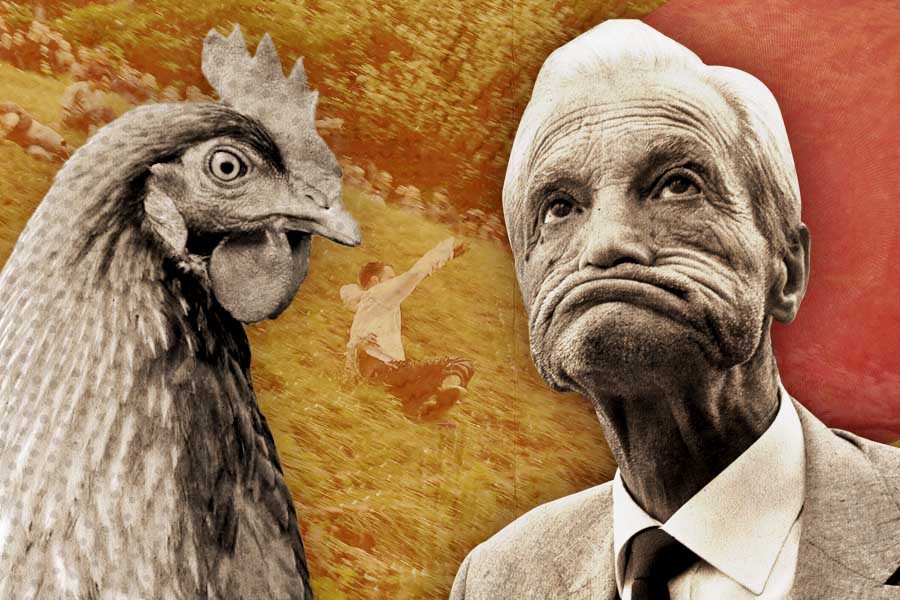
Although that’s the most prominent strange tradition, it’s probably not even the weirdest. The Derbyshire village of Bonsall is home to The World Hen Racing Championship, which sees hens race over a 20-yard course, and has been running for over 100 years.
For some unbeknown reason, at the Bottle Inn pub in Marshwood, Dorset, locals compete to eat as many 2ft long stalks of nettles as possible in one hour, with previous winners eating as much as 70ft of stinging nettles within the timeframe.
Meanwhile, the Cumbrian town, Egremont, is home to the World Gurning Championships, which surprisingly doesn’t take place at Creamfields. Competitors have to pull the most horrific face possible and distort their features. Nobody is more equipped for this contest than Tommy Mattinson, who has won 16 times.
For many of these events, the historical reasons behind these traditions are unknown, and there’s an air of mystery surrounding how they were created. Take the Atherstone Ball Game as an example, legend has it that the yearly match began in 1199 when Warwickshire took on Leicestershire, and it’s now a staple of the calendar.
The medieval football match was initially played with a bag of gold used as the ball, and although that has changed, it still takes place every year on Shrove Tuesday. For the day, the Warwickshire town is brought to a standstill with shops closed and children allowed the day off school.
Unlike most ball games, it’s an individual sport, and the winner is the person in possession of the ball at the end of the two-hour match.
While these traditions are almost inexplicable to understand if you’re someone from even five miles away from any given town mentioned, it’s a source of pride for locals. When people feel more divided than ever, and our sense of community dissipates, these seemingly trivial activities make people forget that, even if it’s just for a day.
