


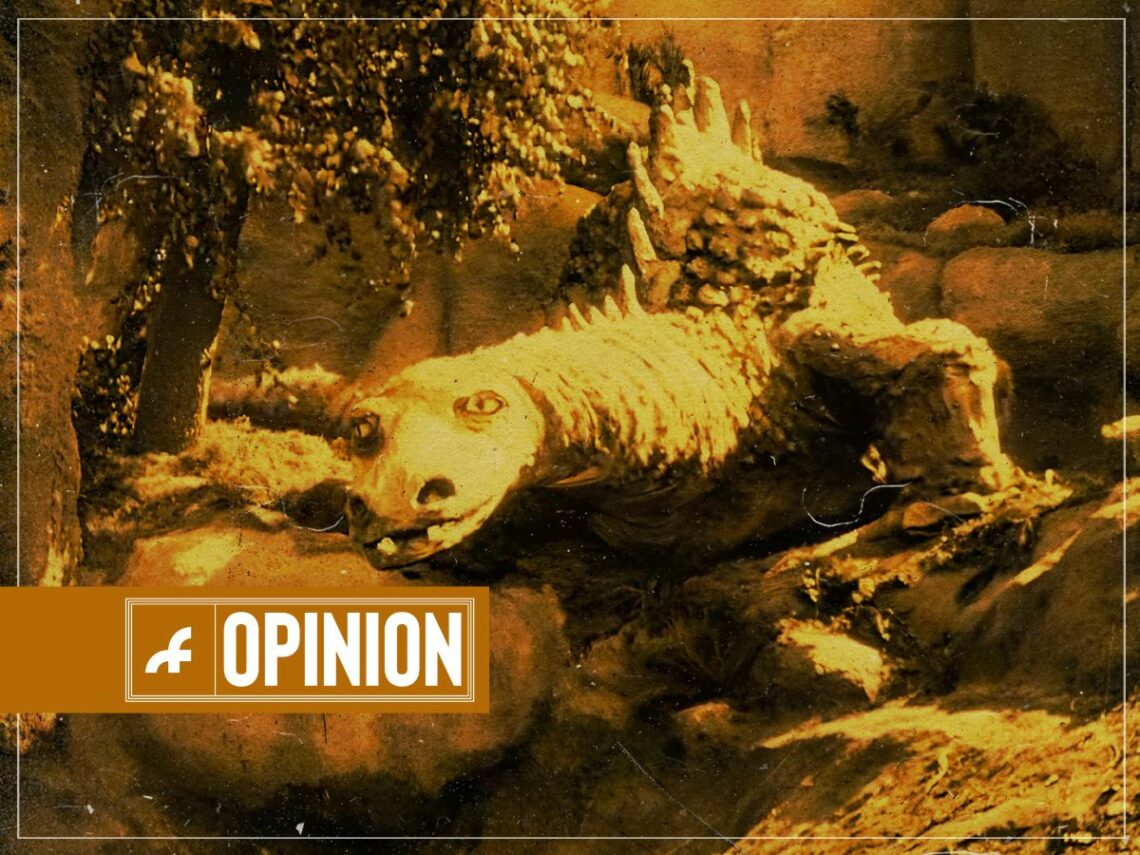
Hear Me Out: We need more ‘elevated’ fantasy movies

In recent years, the term ‘elevated’ has been thrown around to describe a certain kind of movie, particularly within the horror genre. Movies like Hereditary and The Witch have risen above traditional expectations to provide viewers with a complex, nuanced, and often emotionally harrowing experience. Yet, there’s another genre waiting for a similar revolution: fantasy. While ‘elevated’ horror has dominated the spotlight, it’s time to shift our attention to ‘elevated’ fantasy, a genre brimming with untapped potential for serious, thought-provoking and yet wildly entertaining storytelling.
The concept of high-brow, ‘literary’ fantasy films is not new. Some of the very earliest instances of cinema fall firmly in that category. From Alice Guy’s The Cabbage-Patch Fairy in 1896, which showed a dream-like yet thoroughly disturbing vignette of a fairy snatching babies from prams and presenting them to the camera, to Georges Méliès 1902 work A Trip to the Moon, which used a sci-fi fantasy tale as a vehicle for anti-imperialist satire, directors have been using lavish production design and ingenious special effects to transport audiences to new worlds.
Perhaps the earliest example that closely resembles what we would consider a traditional feature-length fantasy film today dates back almost a century with Fritz Lang’s 1924 masterpiece, Die Nibelungen. Lang ventured into the mythological realm to offer a visually arresting, emotionally rich narrative inspired by the Nibelungenlied, a Middle High German epic poem. Unlike some cookie-cutter, overly simplistic fantasy flicks, Die Nibelungen dealt with themes of loyalty, betrayal, and the complexities of human morality – and boasted stunning creature designs to boot. It was a fantasy movie that demanded as much intellectual engagement as emotional investment.
It also introduced something that, in retrospect, would become what could be argued as a hallmark for respectable, quality fantasy: drawing from the rich tapestry of ancient folklore. All the things your standard, cheap fantasy fare would include are still there: adventurous knights, epic duels, mythical creatures. But running deep in most Slavic, Germanic and Celtic texts is a potent undercurrent of abstract, trippy, hallucinogenic imagery – and themes on the very nature of reality. Now, I’m citing these specific cultures due to the stereotypical representation of fantasy worlds in media, rooted in traditional and medieval European aesthetics.
What fantasy films could be like
But think of all the untapped potential from across the world. Studio Ghibli has long rendered their ancient, fantastical Japanese tales onto the screen with beautiful, hand-illustrated animation. Now imagine the likes of a Hollywood budget behind a live-action adaptation of those stories. Or, a film chronicling encounters with Jinn and the epic journey through the mystical lands of the poet-knight, Antarah ibn Shaddad. In 2016, Babak Anvari masterfully blended Arabian folklore with modern-day politics in Under the Shadow. It is ostensibly a horror, but it nonetheless touches on fantasy themes with the main character’s suspicion that an Iraqi missile has brought a malevolent evil spirit.
During the 2000s, we had Peter Jackson’s The Lord of the Rings trilogy, a monumental cinematic endeavour that did justice to J.R.R. Tolkien’s complex novels. These films were a significant milestone in portraying what ‘elevated’ fantasy could achieve—compelling character arcs, a deeply-layered narrative, and breathtaking visuals. All these elements were complemented by underlying themes of sacrifice, the corrosiveness of power, and the resilience of the human (or Hobbit) spirit.
Several years later, in 2006, Guillermo del Toro’s Pan’s Labyrinth took elevated fantasy into a different, darker direction. Like Under the Shadow, it utilised fantastical themes to explore genuine issues. Set against the backdrop of post-Civil War Spain, this haunting fairy tale dove deep into the realms of cruelty and loss of innocence, reminding us that the realm of fantasy can be much more than pure escapism into another world.
Fast on the heels of the elevated horror trend, which was in part rejuvenated by Robert Eggers himself, 2022’s The Northman tackled Norse sagas in a way that elevates the material beyond mere swords and sorcery. This film tapped into a primal sort of storytelling, balancing myth and man in a narrative that was as gritty and brutal as it was fantastical. In one moment, we saw two hulking Vikings hacking at each other; in another, we saw the glistening, cosmic and spectral pathway to Valhalla.
The audience is there – and waiting
The extraordinary success of the Game of Thrones television series is another testament to the viability and hunger for high-quality, elevated fantasy. The show captured global attention for its dragons and battles – but even more so for its intricate political gamesmanship, flawed characters, and ethical quandaries. The series proves that there’s a massive audience ready and waiting for fantasy that challenges as much as it entertains.
At the opposite end of the spectrum, we have fantasy movies that are, frankly, an embarrassment to the genre — works that treat their source material or themes with such flippancy that they border on parody. Movies that present a superficial treatment of their worlds, reducing rich lore and intricate characters to mere caricatures. Such movies do a disservice to their creators and audiences eager for a more substantive and nourishing fantasy experience.
So why do we need more ‘elevated’ fantasy films? Because in a world increasingly driven by complexity and nuance, our stories should reflect that. The possibilities for intellectual and emotional depth are endless in a genre so inherently tied to the limitless and ancient bounds of human imagination. Just as elevated horror has redefined what fright can mean, it’s time for elevated fantasy to expand its wings, offering viewers new worlds that engage, challenge, and provoke. The audience is ready. Directors, it’s your move.
