


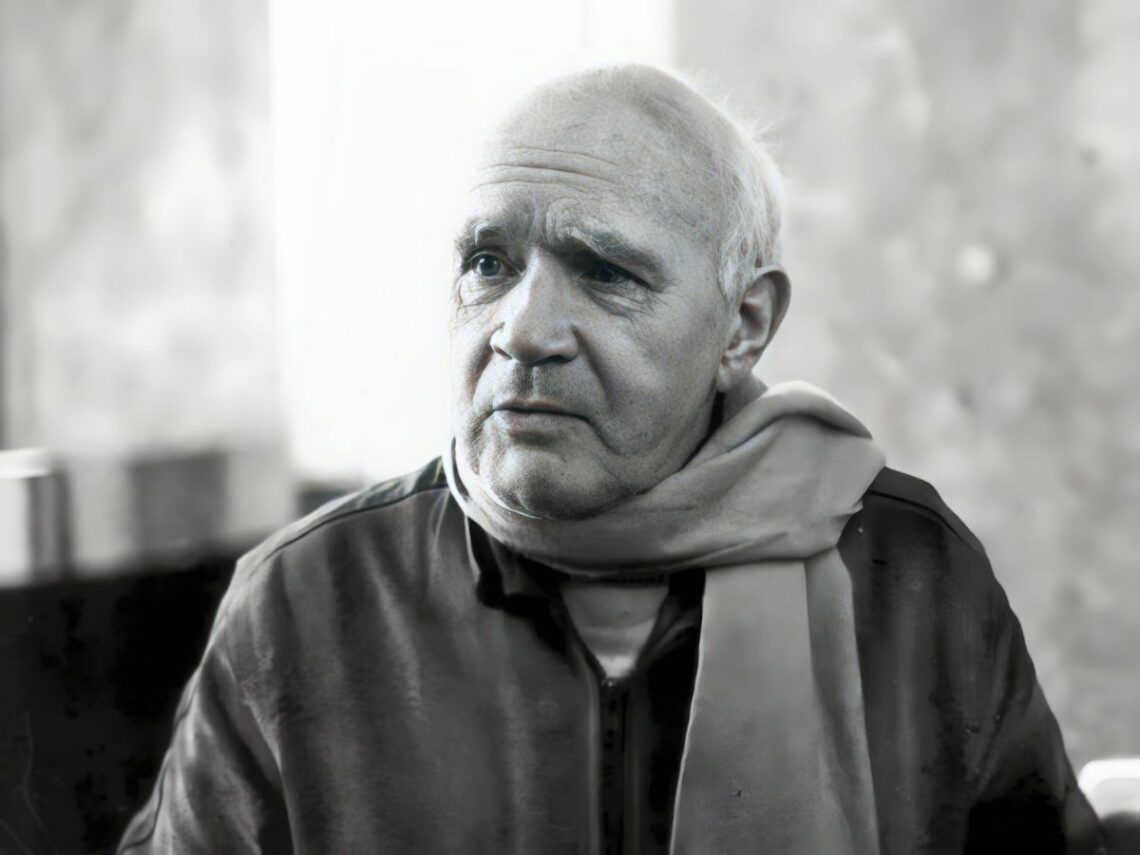
Watch the only movie of Jean Genet’s career

There aren’t many filmmakers in the world who have had songs written about them. But when David Bowie sat down to write his seminal hit, ‘Jean Genie’, he took inspiration from not only his friend and creative cohort, Iggy Pop, but also the wild-eyed wonder known as Jean Genet. While having a superstar pay tribute to you in song is one thing, being able to achieve such a feat with only one film credit to your name is even more impressive.
Of course, Genet’s work is rarely categorised by his contributions to cinema. Primarily known as a playwright and novelist, the queer icon does have one directing credit for A Song of Love (Un chant d’amour), and it’s an accurate depiction of a writer who refused to be confined by societal norms.
Authorities banned the short film after the content was judged to be offensive to audiences of the 1950s. Shot in grainy black and white film, the silent short shows a relationship between prison inmates. Passionately connecting as much as their confined status allows, the prisoners become increasingly engaged with one another, desperately trying to manifest their love. The movie finishes with bodies writhing in passion with a lone guard watching on with vicious, acerbic judgement and jealousy.
A Song of Love (Un chant d’amour) has reflections on Genet’s first novel. Our Lady of the Flowers may have erred on the side of perfumed pulp, but it certainly struck a chord as Genet’s highly erotic content found a baying audience and was written while the novelist was serving out a sentence in prison. During the 1940s, Genet spent most of his time in and out of prison for a range of offences and clearly took some of the things he saw into his one and only film adventure.
Genet saw the view of the outcast as important to deliver to his audience. Whether in his novels or in his plays, Genet was always hellbent on delivering an alternative view of life as beautiful and tremendous as life itself.
The ban came in 1966 when Sol Landau attempted to screen the movie. Police threatened him and took the department to court. The Alameda County Superior Court viewed the film on two occasions and determined that it “explicitly and vividly depicted acts of masturbation, oral copulation, sodomy (referred to as ‘the infamous crime against nature’), voyeurism, nudity, sadism, masochism, and sexual activity.” The court dismissed Landau’s lawsuit and additionally criticised the film as “low-grade pornography intended to advocate homosexuality, deviance, and abnormal sexual behaviours.”
Released in 1950, it’s not difficult to see why the movie was banned by the cinematic establishment unwilling to stray away from the conservative view on life. But what is perhaps a little more shocking is that Genet himself disowned the movie, despite it arguably setting the foundations for queer cinema to truly flourish. Providing possibly the first images of homosexual love ever seen on screen, Jean Genet may have only provided one movie in his career, but it was a groundbreaking moment.
