


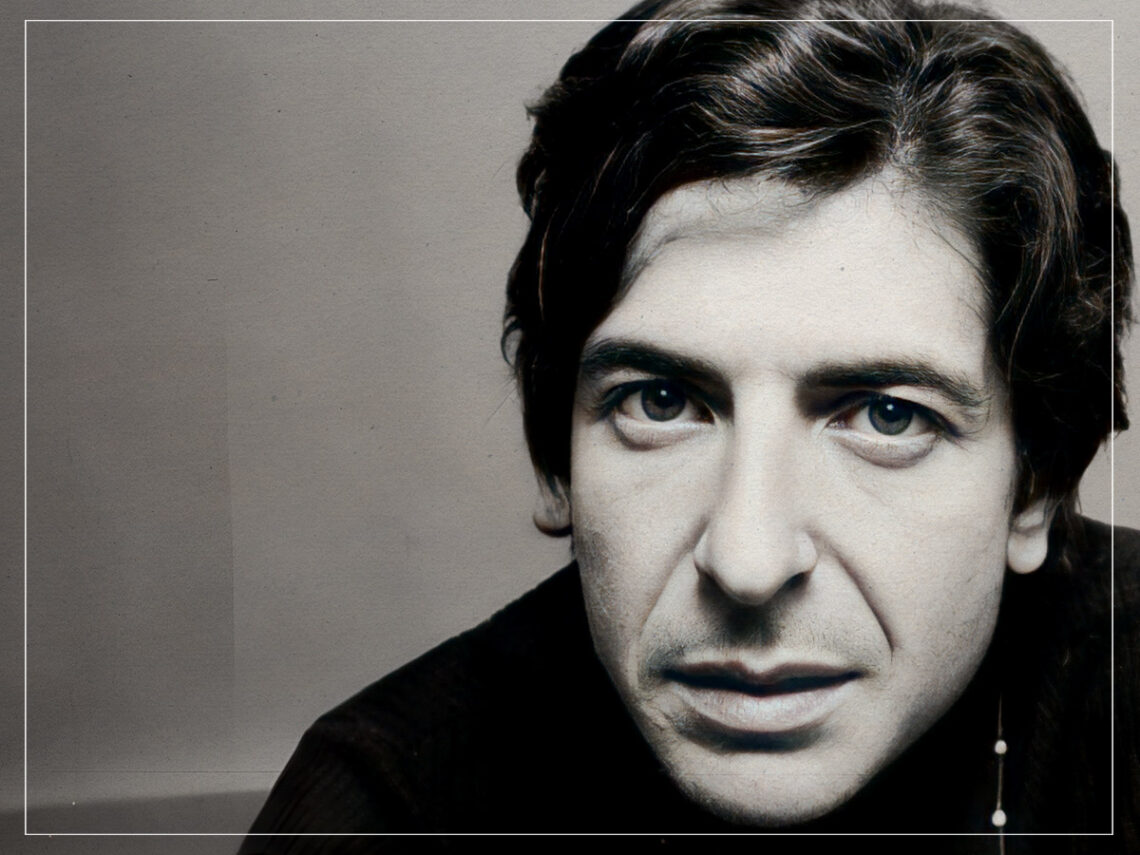
Leaving the page: Watch Leonard Cohen’s first ever recorded musical performance

When Jack Kerouac wrote On The Road in three weeks, reams of writers from the history of literature would’ve all asked one question: Why?
Kerouac would, of course, have scorned their economic snobbery, but beyond mere circumstance, he would’ve pointed to the evidence that he had caused a revolution with his rapidity that they have failed to rouse in long years of rumination. Jack Kerouac had, quite literally, got the show on the road, and in the process, he proved that literature wasn’t enough anymore.
He had held a mirror to the realities of America, and that was lapped up. And he did it in real time with dirty hands, not in a waffle of well-thought-out revisionism. So, On The Road might not have been perfect, but it was, in some ways, one of the first examples of elevated pop culture, and it ensured that elevated pop culture would be the paramount art form of the future.
In his book, Kerouac foresaw that pop music would grab hold of the masses. He mentions songs and jazz artists endlessly, capturing how the weekend heroes in the jukejoints were the ones who really brought exultation to the live’s of the populace. As he put it himself, “The only truth is music.”
Years later, Leonard Cohen would deploy a similar quote, clearly proving that he was on the same page as the late Lowell novelst, when he wrote, “Music is the emotional life of most people.”
This line is all the more notable given that for years, Cohen had tried to move people through the printed page. As a poet and novelist in Canada, Cohen had struggled to make a living. Though he was certainly met with some acclaim, with the critic Robert Weaver commenting that he was “probably the best young poet in English Canada right now” in the early 1960s, that hardly put him in league with The Beatles.
So, when his poetic talents were noted enough for him to receive a $2000 grant from the Canadian Arts Council, it is highly indicative of his way of thinking at the time that rather than reinvest this in his work within the field of the written word, he figured he would use it to launch his transition into music.
At that moment, music was making itself known as the source of a modern renaissance. Cohen wanted to get involved. Nothing made that clear quite like his first recorded appearance on CBC. He was on Take Thirty to promote his new book Beautiful Losers, and while the concepts it contained would remain ever-present throughout his career, it was clear from the fact that he sat there with a guitar in hand rather than a manuscript, that he had all but given up on it.
Instead, he played a primitive rendition of ‘The Stranger Song’, and the rest is history. Meanwhile, his book was racking up accolades like, “This is, among other things, the most revolting book ever written in Canada.“
