


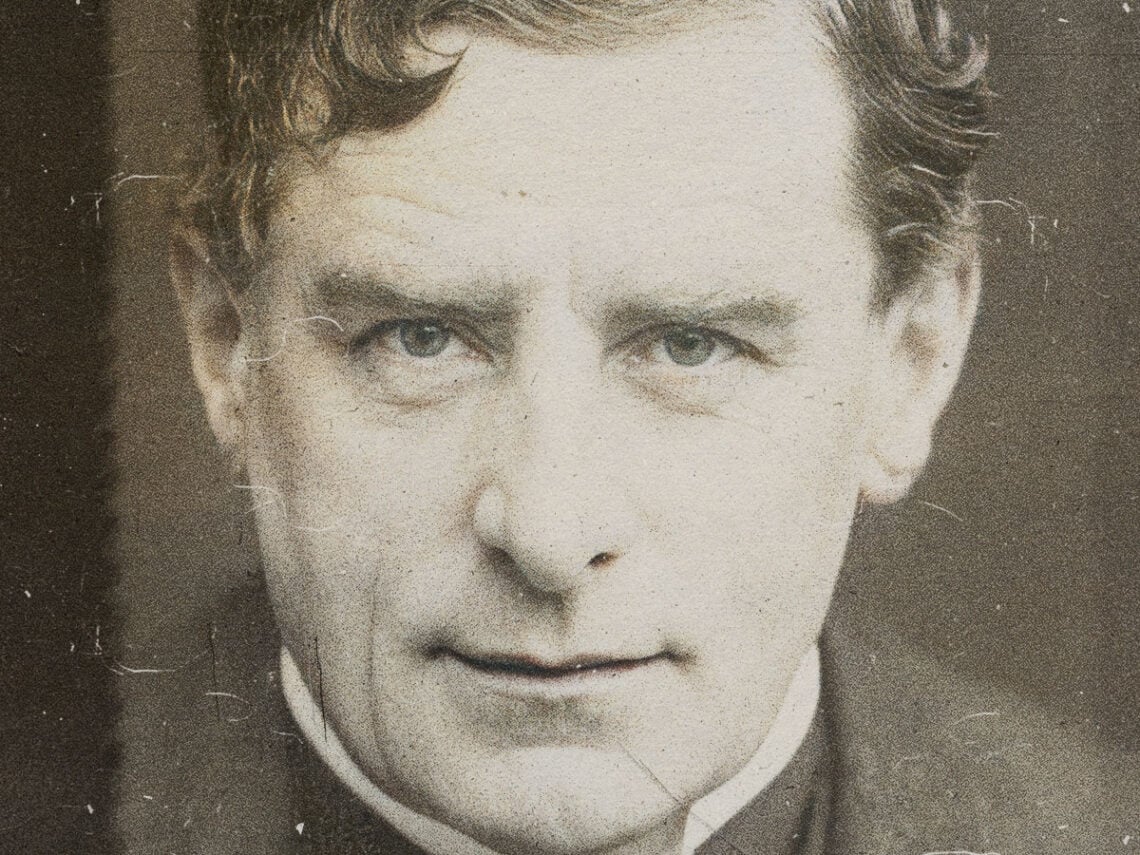
Walter Sickert: The influential painter accused of being Jack the Ripper

The Jack the Ripper murders have been the source of terror and intrigue since the attacks rocked the late Victorian era in 1888. A host of explanations exist, with the culprits encompassing a variety of guises, from royalty to European immigrants. Most of these theories, from the probable to the outlandish, have been dispelled by experts. A prominent rumour is that German-British painter and printmaker Walter Sickert, an influential member of the Camden Town Group of Post-Impressionists, was the serial killer. Whilst it’s safe to say that Sickert did not commit the crimes, given what we know today, this has not stopped the theory from abounding. Its most prominent adherent is famed crime author Patricia Cornwell.
A man known for his eccentricity and cosmopolitanism, there’s no surprise that Sickert has been named by some as the killer, given his proximity to the crimes. He personally took a great interest in Jack’s killing spree and even believed that he had lodged in a room previously used by the murderer. Sickert had been given reason to think this by his landlady, who suspected one of her previous lodgers from 1881.
Adding fuel to the fire is that Sickert painted the room circa 1907, naming it Jack the Ripper’s Bedroom. A dark and arcane offering, it played into people’s sentiments about Jack, which some took as a reflection of the artist’s overly morbid interest in the subject. After all, Sickert once said: “Murder is as good a subject as any other”. However, such comments have now been noted as an exhibition of the painter’s grasp of the power of sensationalism.
Whilst there is substantial evidence to suggest that Sickert spent most of 1888 outside of the UK, for over 80 years, there was no real mention of him being a suspect. In the 1970s, though, things started to change. Some began exploring the notion that he was either the killer or their long-suspected accomplice.
Much of this comes from Stephen Knight’s 1976 book, Jack the Ripper: The Final Solution, which claimed that Sickert was forced to become an accomplice to The Ripper. Interestingly, the author’s information came from Joseph Gorman, a man claiming to be Sickert’s illegitimate son, which he later admitted was a hoax. Another work that stoked the flames was Jean Overton Fuller’s Sickert and the Ripper Crimes, which too claimed he was the killer.
Elsewhere, Sickert is featured in Alan Moore and Eddie Campbell’s profound graphic retelling of events, From Hell, which draws on Knight’s theory but, more importantly, does not figure Sickert as the killer; instead, a good-willed character stuck in the middle of a dark royal conspiracy.
The most prominent believer in the Sickert theory is Patricia Cornwell. She claims to have spent $7million of her private money in the hope of proving her assumptions and has written two books on the matter, 2002’s Portrait of a Killer: Jack the Ripper—Case Closed and 2017’s Ripper: The Secret Life of Walter Sickert.Cornwell told The Telegraph in 2017: “Over the past five years I’ve spent thousands of hours as well as another small fortune investing in Sickert’s art, memorabilia and more importantly, other original documents, evidence and technologies.”
The author explained: “I’ve continued working with top scientists and art experts, sifting through piles of archival materials, utilising non-destructive forensic paper analysis and special light sources. The upshot is I’ve never been surer of Sickert’s guilt. I believe he was responsible for the Jack the Ripper crimes and other debaucheries as well that include dismemberment, cannibalism, and the murder and mutilation of children”.
It has also been reported that Cornwell purchased and destroyed one of Sickert’s paintings to look for clues. “I do believe 100% that Walter Richard Sickert committed those serial crimes, that he is the Whitechapel murderer,” she maintained on a US TV show. “This painter never painted anything he had not seen,” she also claimed. “This man was a very smart man. If you have these murders going on then you started painting pictures of disembowelled women on the streets, somebody is going to say, ‘Let’s go take a look at this guy.'”
In 2001, a London art dealer who sold Cornwell two Sickert pieces told The Guardian that she had “gone beyond the pale”. Andrew Patrick of the Fine Arts Society refused to disclose what painting she had purchased but said: “If as is claimed a painting was cut up, that is very wrong. Everyone knows this stuff about Sickert is nonsense. He loved these dramatic titles, and to play with the idea of menace.”
Matthew Sturgis, who published a comprehensive biography of Sickert in 2005, was scathing in his account of Cornwell. That year, he told The Independent: “In her desire to find answers, she simply hasn’t followed very sound principles of investigation. It is a nonsensical misreading of the facts.” In his ‘Postscript’ of the book, Sturgis analyses the claims of Cornwell and others, beginning with “Walter Sickert was not Jack the Ripper”.
In his review of Sturgis’ biography, art historian Richard Shone described “Sturgis’s superb demolition of Cornwell”, adding that he “lays waste the crimewriter’s theory with extraordinary conviction.” Then, a 2019 Science article – a journal by the American Association for the Advancement of Science – claimed that Cornwell’s allegations about Sickert are based on DNA analysis of letters “many experts believe … to be fake” and that “another genetic analysis of the letters claimed the murderer could have been a woman”. This presented what might be the final nail in the coffin for the Sickert theory.
All in all, we’re still looking for Jack the Ripper. However, it does seem almost certain that Sickert was not the killer. If it were ever proved that he was, it would be the revelation of the century.
