


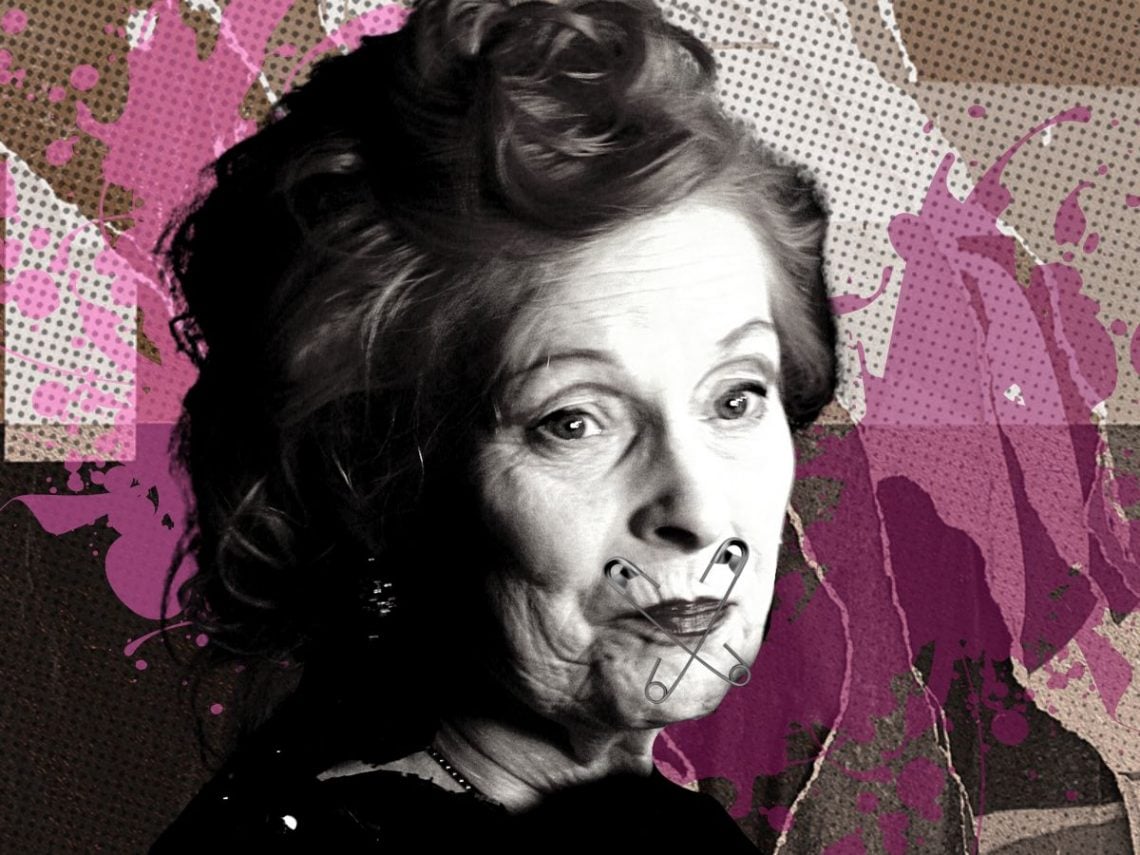
The origin of the Vivienne Westwood safety pin

“The only reason I’m in fashion is to destroy the word conformity.” – Vivienne Westwood (1941-2022)
Punk was a fashion craze. And I don’t say that to belittle it as a fabricated fad. On the contrary, it proved that fashion can change the world. Before one out-of-tune note rang out from the Sex Pistols, that message was already clear. These rotters had a revolution tucked up their tattered sleeves.
John Cooper Clarke was converted to the cause at the mere sight of a tiny mugshot accompanying the first Sex Pistols piece he ever witnessed in the NME. The future resident poet of the genre saw the waspy face of the wild-eyed character apparently launching an assault on the decency of turgid prog-rock and went on to recall the look of “his paranoid face frozen in a mask of fugitive anxiety, eyes like saucers, his hair a multi-directional mess of greasy spikes, gaunt sunken cheeks, and the complexion of a compulsive blood donor.”
As he concludes in his memoir’s retrospective appraisal of that spectre pictured in print: “It was Johnny Rotten. Wow! Is that his real name? Fancy looking like that!” Fancy looking like that indeed. Imagine materialising the essence of subversiveness in hair and rags. Imagine ridiculing the pomposity or sartorial standards in the arts (let alone anywhere else) with a few safety pins, some hair dye, and the studied carelessness of a well-worn late night. Vivienne Westwood and her then-husband Malcolm McLaren were the Dr Frankensteins behind this revolutionary mess. But all artists steal, and punk was perhaps the proudest thieving layabout of all artistry. So where did they snatch their SEX look from?
“The Sex Pistols were all variations of the whole new look created by Vivienne Westwood and Malcolm McLaren,” Clarke continues to muse in I Wanna Be Yours. “This involved visual elements of every youth tribe since the Second World War blended in a thoughtful, attractive, and artistic way: a three-button blazer, a ripped-up pullover, a leather jacket or a Teddy Boy drape worn with peg pants or bondage trousers along with shit-kickers, Day-Glo socks, and a homemade, slashed-up haircut.”
It was a smorgasbord of outward anarchy. The one earthy factor it missed to truly make a political point of ragtag rising was a safety pin. And for that, we venture to the punk origins of New York City. “Malcolm McLaren was in New York in the mid-Seventies,” punk fashionista Josh McConnell told Rolling Stone. “[He] saw Richard Hell, and Richard Hell would rip his clothing and safety-pin it back together. I believe that Malcolm McLaren took that look directly back to London at the right time, and put it on the Sex Pistols.”
This punk appropriation caused the culthood of safety-pinned nonconformity to kick off in the UK. “That caused the first wave of punk-rock youth in London to rip their clothes and safety-pin it back up,” McConnell continues, “I think you could also probably contribute the Richard Hell spiky-hair look. Malcolm McLaren probably brought that spiky hair-look back to London, and stuck it on Johnny Rotten and Sid Vicious,” with the help of the skilled Westwood.
At the time that Hell was spotted, the Voidoids frontman and godfather of the punk look was dragging his gangly carcass around various New York bookstores slopping the last remnants of his corpse’s soul onto the fouled carpet. The slits in his clothes, it would seem, were to help it seep out easier—the pins were for the practical purpose of being shielded from the cold. At the time, New York had slipped into a dystopia, so rags and pins seemed fitting. If you’re in the gutter, then you may as well gaze upwards, and he was steadfast to build art out of the rubble around him, even reflecting it in his fashion. As he proclaims: “It’s great to be anywhere as a writer. It saves you from implication in the ugliness of place and justifies your being there.”
Westwood had much the same idea with her fashion. It might have been politicised beyond its actual intent since it first graced the streets, but how could you not? The impact of punk is there for all to see whether the rags were meant to reap those cultural riches or not. Punk music might have been saying that you don’t have to be a virtuoso to go out there and do it, art is about having something to express with sincerity and some form of vitality, but Westwood said it in even less time than the spat-out songs. After all, what could scream home the DIY revolution quicker than ‘cut your clothes and stick a pin in it’: done.

Never Miss A Beat
The Far Out Punk Newsletter
All the latest Punk content from the independent voice of culture.
Straight to your inbox.