


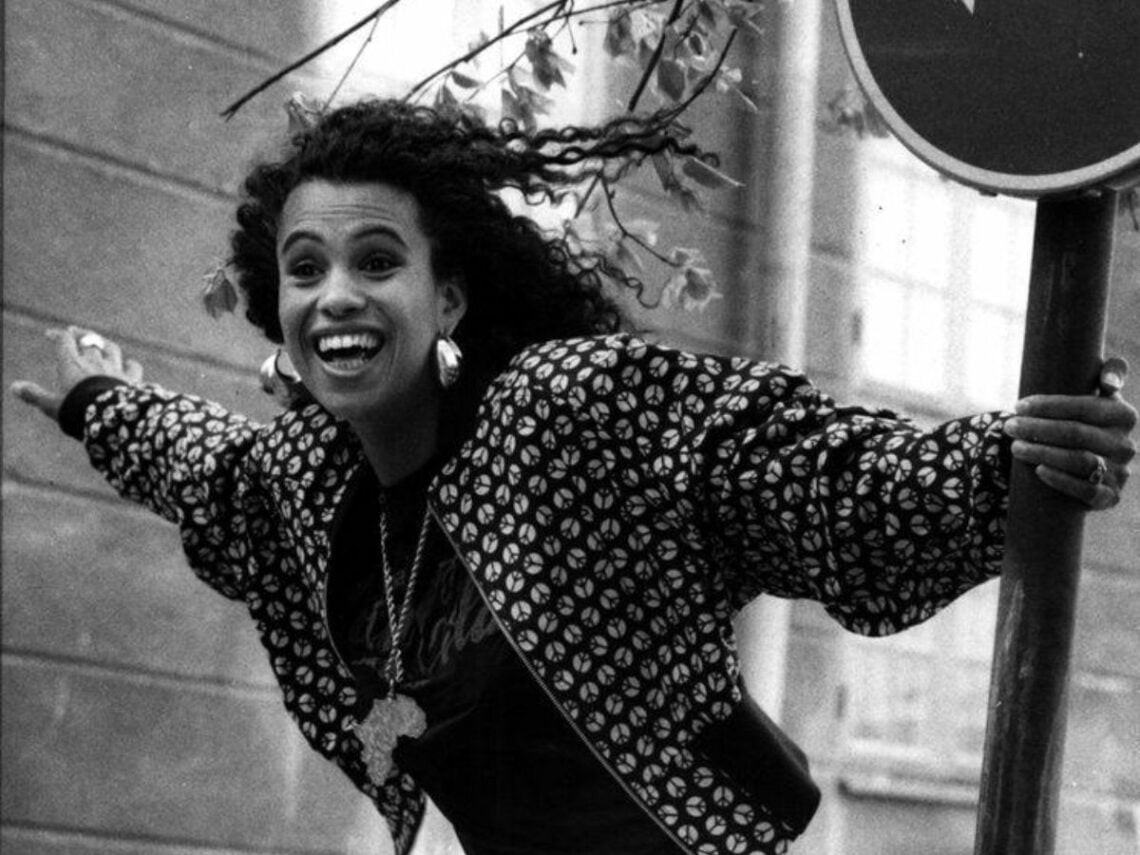
The vital role Neneh Cherry played in the early success of Massive Attack

In the 1980s, amid the concrete obscurity of Bristol streets where US hip-hop had begun to permeate, Massive Attack was born. The phoenix emerged from the ashes of a partying hip-hop and reggae DJ collective known as The Wild Bunch, where founding members Robert “3D” Del Naja, Adrian “Tricky” Thaws, Andrew “Mushroom” Vowles and Grant “Daddy G” Marshall all earned their stripes.
Massive Attack officially formed in 1988 to release their debut single, ‘Any Love’, as part of a street art exhibition at Bristol’s MShed Museum. With a more than adequate sonic accompaniment to Del Naja’s graffiti art, the band began to build a small following from local fans and a scattering of prominent figures in the music industry.
Among the notable disciples at this juncture was the mercurial Swedish artist Neneh Cherry. Over her illustrious four-decade career, Cherry has shown restless curiosity as a singer-songwriter, punk artist, DJ and broadcaster. When she first became acquainted with Massive Attack (then members of The Wild Bunch) in the mid-’80s, she had already made a name for herself as a member of the rock groups The Slits and Rip Rig + Panic.
In 1989, Cherry released her debut solo LP, Raw Like Sushi, which saw her traverse from punk-rock roots to an eclectic R&B and hip-hop-infused medley. Beyond the apparent nod in her ‘Buffalo Stance’ B-side of 1986, ‘Looking Good Diving with the Wild Bunch’, Cherry collaborated with Massive Attack’s Vowles and Del Naja on the debut record. The former performed on ‘Kisses on the Wind’, ‘The Next Generation’ and ‘So Here I Come’, while the latter co-wrote ‘Manchild’.
The album was a critical and commercial success, reaching number two on the UK Albums Chart, buoyed by its lead single ‘Buffalo Stance’, which reached number three in the UK and the US. As calendars flipped towards the 1990s, Cherry looked to return the favour to the newly-formed Massive Attack.
As well as helping to finance and assist the arrangement of Massive Attack’s pivotal 1991 debut album, Blue Lines, Cherry became a de facto bandleader, peeling the group from the sofa for studio work amid distractions like Christmas and the 1990 football World Cup. “We worked on Blue Lines for about eight months, with breaks for Christmas and the World Cup,” Del Naja told Select in 1992. “But we started out with a selection of ideas that were up to seven years old. Songs like ‘Safe from Harm’ and ‘Lately’ had been around for a while, from when we were The Wild Bunch or from our time on the sound systems in Bristol. But the more we worked on them, the more we began to conceive new ideas too – like, ‘Five Man Army’ came together as a jam.”
“We were lazy Bristol twats,” Marshall added in a 2004 conversation with The Observer. “It was Neneh Cherry who kicked our arses and got us in the studio. We recorded a lot at her house, in her baby’s room. It stank for months, and eventually, we found a dirty nappy behind a radiator. I was still DJing, but what we were trying to do was create dance music for the head rather than the feet. I think it’s our freshest album; we were at our strongest then.”
In terms of Marshall’s above-mentioned ambition to create “dance music for the head rather than the feet,” Massive Attack undoubtedly flourished. As they progressed through the 1990s, the band released the seminal albums Protection and Mezzanine: two huge evolutionary strides that still drop jaws to this day.
Hear ‘Unfinished Sympathy’, the lead single from Blue Lines, below. Alongside Shara Nelson’s powerful vocals, the track benefits from powerful orchestral string arrangements recorded at Abbey Road Studios, which were financed by the reluctant sale of the band’s car.
