


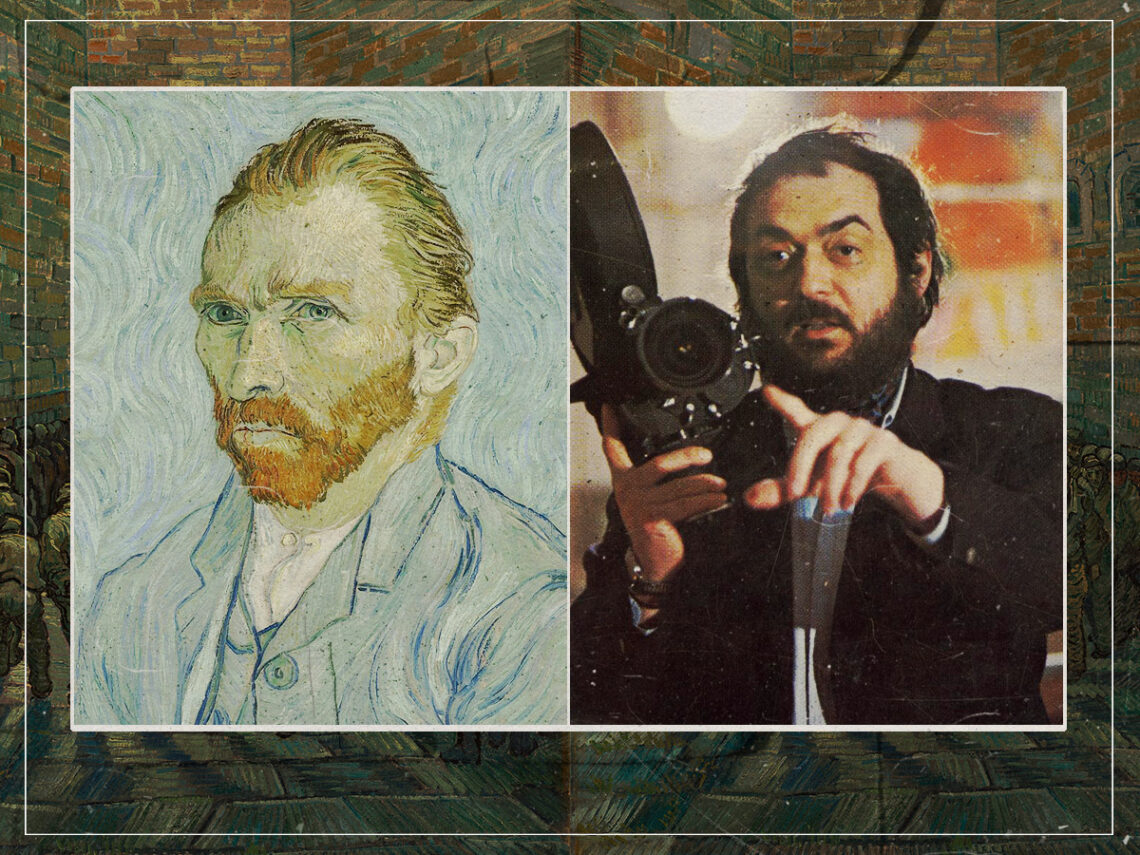
How Vincent van Gogh inspired a classic Stanley Kubrick scene

A Clockwork Orange is laced with cultural references more closely associated with music. ‘Singin’ in the Rain’ and Beethoven’s compositions have tremendous importance to the plot, a bleak examination of free will and violence as a nightmarish psychological experiment plays out. But the Stanley Kubrick movie trades on visual power in more ways than one. While the unethical treatment of Alex DeLarge’s sadistic impulses saw him forced to watch films of sex and violence, Kubrick also utilised the aesthetic brilliance of Vincent van Gogh, fully realising the significance of art across broader culture and using it to illustrate the film’s core themes.
Alex is a delinquent whose gangs of droogs find joy in senseless and depraved violence. When he is eventually caught and punished for his various crimes, he is imprisoned and forced to undergo a dystopian kind of aversion therapy engineered to stop reoffending and make him feel sick when shown violent scenes. The film seems to exist almost outside of a definable time period, but the punishment is strangely futuristic and Draconian at the same time.
It makes Kubrick’s reliance on van Gogh’s Prisoners Exercising all the more impactful. The 1980 work spoke to the imposing prison measures of the film, as they are led in aimless circles around a prison yard in one scene. Van Gogh painted it while on a depressive spiral in a Saint-Rémy asylum, and it’s no coincidence that Kubrick utilised one of the most long-suffering artists in history to inform his vision of the tragic human condition.
The men in the paintings stumble in a circle trudge, indistinguishable only by their height. It’s one uniform circle that never ends, inspired by a similarly dark artist’s own version. Gustave Doré created London: A Pilgrimage in an effort to capture the city at its most authentic and gritty and chose to depict a Newgate exercise yard.
Both the Kubrick scene and van Gogh’s work also recall Oscar Wilde’s The Ballad of Reading Gaol: “I walked, with other souls in pain / Within another ring / And was wondering if the man had done / A great or little thing,” a tortured poem that used the endless circular walk as a way of highlighting how trapped prisoners became.
In van Gogh’s image, only one face peeks out: a man in the centre with red hair and a sickly-looking complexion. He’s practically green; he is so washed out, which mirrors Alex’s treatment in the film. The scene borrowed from van Gogh’s painting was claustrophobic, the imposing high walls van Gogh painted making their way onto the set to translate just how tightly confined the prisoners were.
Although Kubrick once said films could convey emotions and mood in a way that “no other art form can hope to tackle,” van Gogh’s hand in the scene ultimately added to its impact.
