


Valerie Solanas: The radical feminist who shot Andy Warhol at point-blank range

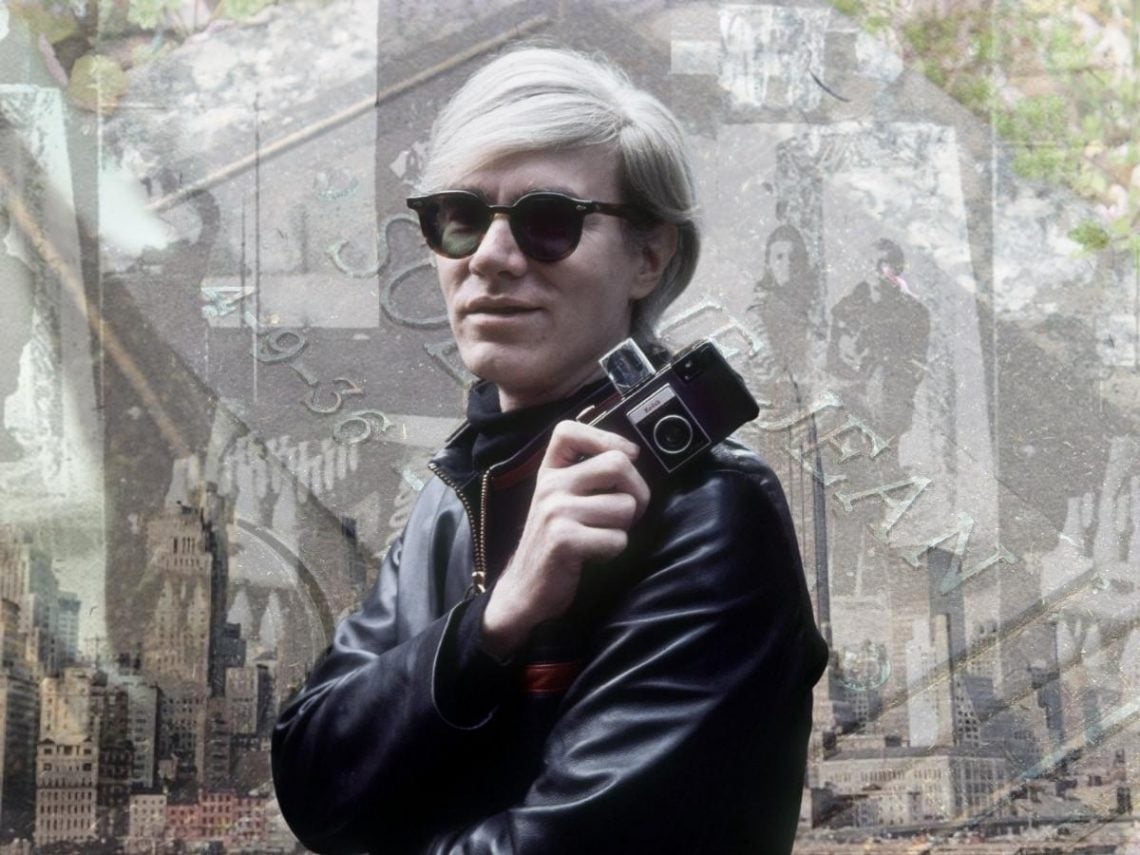
Andy Warhol was pronounced dead on June 3rd, 1968. He’d been shot three times at close range, and the bullets had punctured his stomach, liver, spleen, oesophagus and lungs. At that moment, the doctors were sure he was a goner. In fact, they’d just reeled off the time of death when Warhol’s heart monitor began emitting a steady pulse. He would live another 19 years with a surgical corset strapped around his abdomen.
Earlier that day, Valerie Solanas had walked into Warhol’s new studio at 33 Union Square West with a 32 Beretta hidden in her pocket. She’d spent most of the morning waiting outside The Chelsea Hotel – the boho haunt from which she was frequently evicted – hoping to run into the artist. She waited an hour or so, leaving several times only to return. The director Paul Morrisey was in the office that day and told her that Mr Warhol would not be coming in. Eventually, she bumped into Andy crossing a busy road, and they rode the building’s elevator up to the sixth-floor side by side.
On entering the Factory, Warhol nervously complimented Valerie on her appearance. She was, rather uncharacteristically, wearing makeup. By this time, Morrisey threatened to toss her out on the street if she didn’t leave, to beat the hell out of her. Then, the phone rang. Warhol picked up while Morrisey went to the bathroom. While he was out of the room, Valerie pulled the gun from her pocket and fired at Warhol three times. The first two shots missed, but the third tore a hole through his body. She then shot art critic Mario Amaya in the hip before grabbing Fred Hughes, Warhol’s manager, and pressing the muzzle of her pistol against his forehead. He squeezed his eyes shut. She pulled the trigger, but the gun was jammed.
Solanas had been living on the edge for some time. In the mid-1960s, after a difficult childhood (she claimed that her father and grandfather sexually abused her), she moved to New York with ambitions of earning a living through writing. She was forced to support herself through begging and prostitution. In 1966, she captured those experiences in a short story titled ‘A Young Girl’s Primer’, which appeared in Cavalier magazine, a Playboy-style gentleman’s mag that regularly published work by Ray Bradbury and Stephen King.
The year after, she began seeking a producer for her play Up Your Ass and selling copies of her SCUM Manifesto, in which she proposed the mass extermination of men. “Life in this society being, at best, an utter bore and no aspect of society being at all relevant to women,” she wrote, “there remains to civic-minded, responsible, thrill-seeking females only to overthrow the government, eliminate the money system, institute complete automation and destroy the male sex.”
While selling copies of SCUM on the streets of New York, Solanas was often asked how the human species hoped to reproduce without men. It’s easy to imagine her pointing to the following passage: “We should produce only whole, complete beings, not physical defects or deficiencies, including emotional deficiencies, such as maleness.”
Andy Warhol was, at this time, the most famous artist in America. Valerie wanted him to promote SCUM, asking, at one point, if he’d like to join SCUM’s male auxiliary unit – made up of sympathetic men willing to, as the manifesto puts it, “eliminate themselves.” She also showed him a copy of Up Your Ass in the hope that he would agree to produce it. Warhol loathed the script and purposefully misplaced it in a moment of theatrical dunderheadedness. However, he cast her in his 1967 erotic film I, a Man.
The evening after the shooting, Solanas handed herself over to the police, telling one officer that Warhol had “too much control over my life.” She was charged with attempted murder, assault and possession of a dangerous weapon. She was deemed unfit to stand trial and was sent for a psychiatric evaluation at Elmhurst Hospital in Queens, where she was diagnosed with paranoid schizophrenia.
Beyond the confines of her psychiatric ward, copies of SCUM were flying off the shelves. The shooting brought her work to national attention and divided feminist groups across the country. To some, Solanas was a symbol of female power; to others, she was yet another lunatic with a pistol. Ultimately, the Warhol shooting was lost in a much larger debate concerning gun violence. Robert F. Kennady had, after all, been shot and killed just the day after Warhol was taken to hospital.
On June 13th, ten days after the shooting, Solanas was ruled insane by the Supreme Court of the State of New York and incarcerated in a high-security psychiatric hospital. Following her release in December, she began sending threatening messages to Warhol, leading to her arrest in January 1969.
After three years in prison, she spent a year and a half working as an editor for Majority Report: The Women’s Liberation Newsletter and began work on a new book, in which she intended to deal with the “conspiracy” of her arrest. By the 1980s, she was destitute and living in welfare hotels in San Fransisco. On April 25th, 1988, Solanas was found kneeling by her bed, covered in maggots – a pile of papers stacked neatly on her desk. She’d been dead for five days. They misspelt her name in the police report.
