


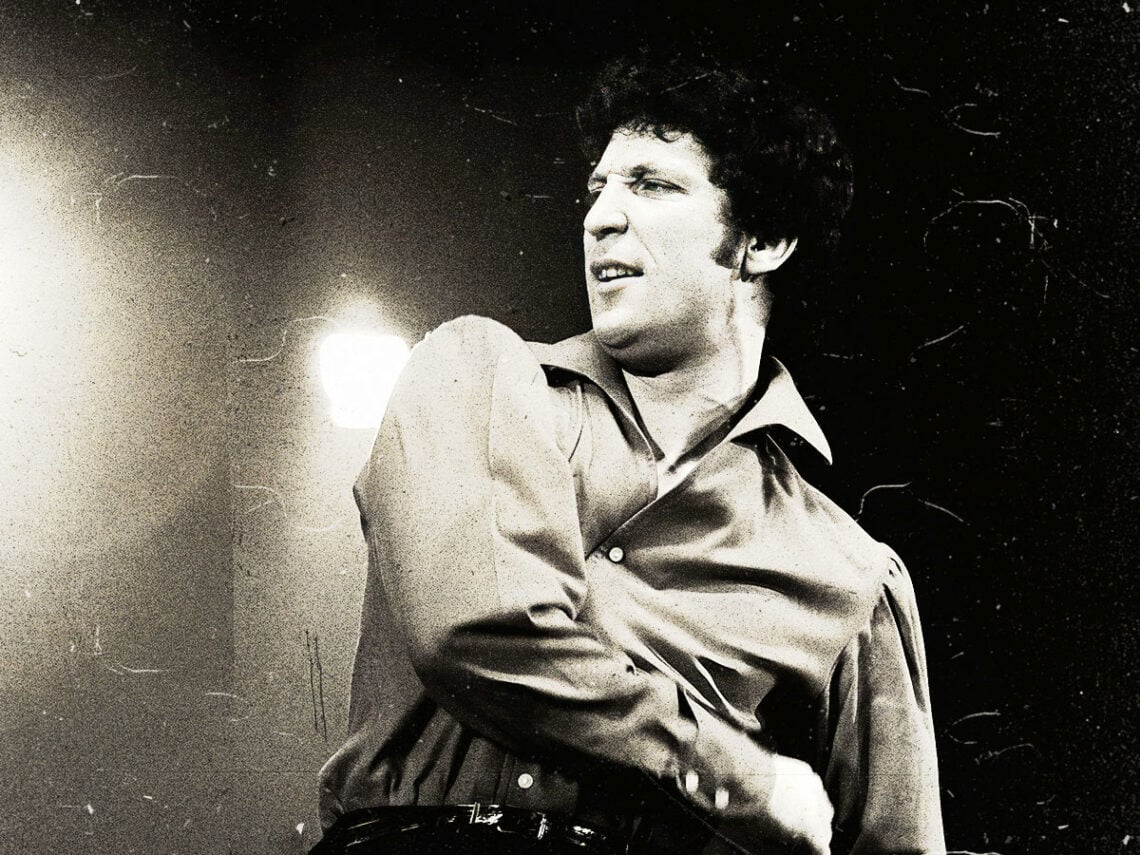
Tom Jones discusses the unsung hero who “changed everything” about music

Before his rise to stardom in the mid-1960s, Tom Jones toiled in construction jobs and even took on work at a glove factory. From these modest beginnings in the Welsh mining town of Pontypridd, the star achieved fame for his baritone croon, which energised the traditional approaches of Frank Sinatra and Dean Martin fit for a generation on the move. Though he was never much of a songwriter, Jones eventually connected with audiences around the world and became well-acquainted with the charts.
While the Welsh crooner’s first solo single, ‘Chills and Fever’, written by Billy Ness and Bobby Rackep, didn’t chart, his second, ‘It’s Not Unusual’, became an instant classic, reaching number one in the UK and number ten in the US. Though it was released in 1964, ‘It’s Not Unusual’ struck number one in 1965, setting a precedent for the remainder of the year, which would turn out to be the most momentous of Jones’ career.
Speaking to The Guardian in 2008, Jones remembered initially working with producer Joe Meek on ‘Chills and Fever’. “That ended when I grabbed him by the neck and ripped up my contract,” he recalled. Supposedly, the pair entered a stressful period after the failure of their first few demos and debut single, which ended in a bitter spat.
Fortunately, the tides turned when Jones entered an unsuspecting role as a demo recorder. “I was doing demo records for other singers, and we cut ‘It’s Not Unusual’ in Regent Sound in Soho as a demo for Sandie Shaw, who turned it down,” Jones continued. “I told my manager I had to have this song, but the first version we recorded wasn’t anything special. Then my producer Peter Sullivan said: ‘You’ve got a big voice. Nice is not enough. You are not nice!’ As a result, the song jumped out of the speakers and became a hit.”

After his big break, Jones hit a streak with ‘What’s New Pussycat’ and the James Bond theme for Thunderball. With worldwide popularity burgeoning, he made his first trip to the US in 1965. During the tour, Jones continued to explore contemporary American music, mostly within his associative realm of soul. During this tour, the penny finally dropped regarding the young songwriting dynamo Bob Dylan, too.
In 2021, Jones was challenged to pick out his favourite Dylan song and remembered how he hadn’t been instantly moved by the troubadour’s unconventional vocal style. “I was on tour in the States in the summer of ’65 with a British act, Peter and Gordon,” Jones said. As it transpires, Gordon Waller was a huge Dylan fan and would play his early records on the road during hotel stop-overs.
Jones, 25 at the time, noted that he “wasn’t struck by Dylan’s voice at first.” However, all that changed when he laid ears on ‘Blowin’ in the Wind’. “I’ve been a fan ever since,” he beamed. “The lyrics are fantastic. He’s basically asking, ‘How many times do we have to go through all this shit before we realise that we’re fucking up the world?'”
Undoubtedly, Bob Dylan changed music forever with his profound lyricism, which later earned him a Nobel Prize for Literature. The detractors will claim that Dylan is overrated, but like The Beatles, whether or not you like his music, his impact was vast, enduring and culturally enriching. However, within the 1960s’ thriving musical melting pot, there were plenty of names worthy of more attention.
As far as Jones is concerned, one of the true unsung heroes of the decade was the recording engineer Tom Dowd. Like many behind-the-scenes figures, Dowd’s efforts were heard by many but seen by very few. The first time Jones visited New York City to appear on the Ed Sullivan Show, he heard Wilson Pickett’s ‘In The Midnight Hour’ for the first time. The song struck him immediately, and ever since, a cover of the track has never been far from his repertoire.
Beyond Pickett’s bold, impassioned delivery, Jones commended the production work of Jim Stewart and Steve Cropper and the unsung engineering of Dowd. “Jackie Wilson had been doing something similar with an orchestra, but ‘Midnight Hour’ was raw, and that appealed to me,” he explained. “I had heard early rock ‘n’ roll records before that, but they always sounded very rough indeed. Then Tom Dowd, the engineer for Atlantic Records, changed everything by recording songs that were direct but with great production, like this one.”

Never Miss A Tale
The Far Out Bob Dylan Newsletter
All the latest stories about Bob Dylan from the independent voice of culture.
Straight to your inbox.