


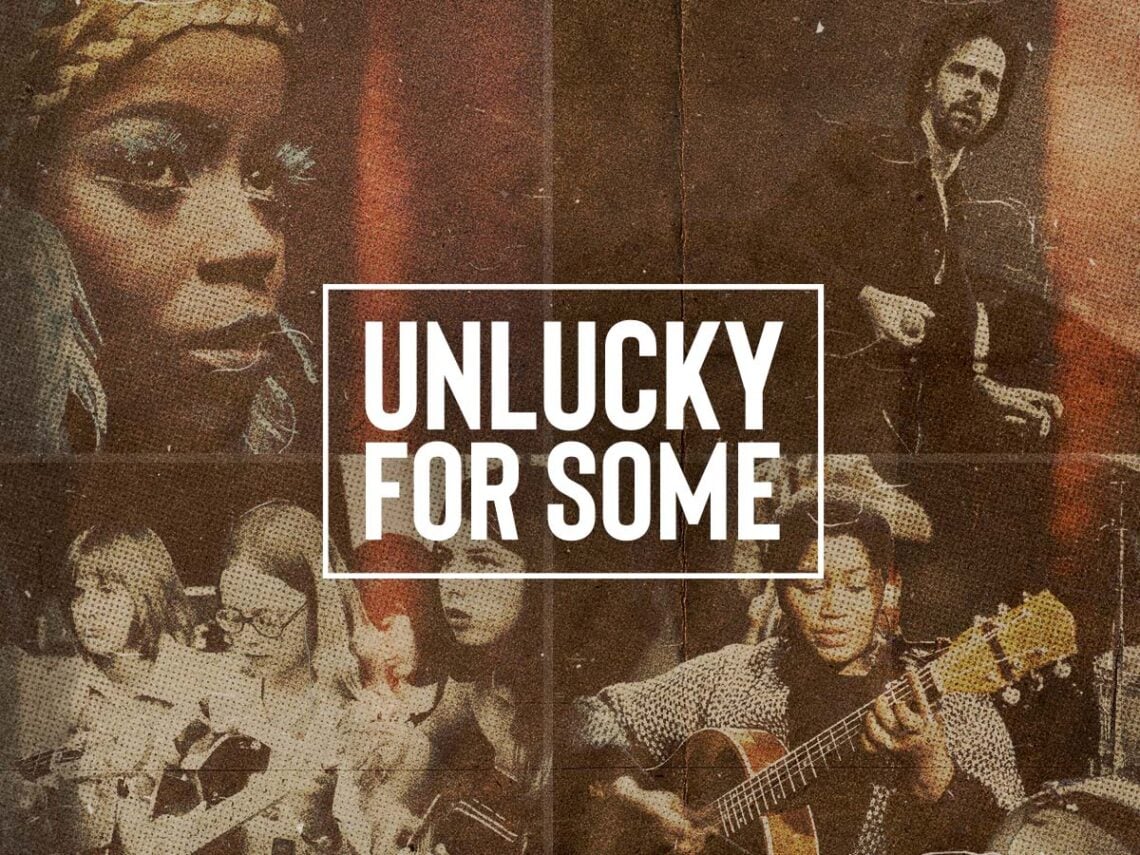
Unlucky For Some: The 13 most underrated cover songs of all time

What makes a great cover song? Now there’s a question that would’ve even had Plato musing for hours in his less academic downtime. The fabled cover is a quandary that the likes of Bob Dylan and Paul McCartney have frittered away precious hours thinking about it. It’s far from easy to answer but I’d say one thing to take into account is that a straight like-for-like is largely pointless. However, you don’t want to go too far the other way and lose the essence of the song that made it a hit in the first place—that is unless you’re unearthing something new or subverting it entirely.
All in all, when they’re done right, an artist can make it seem like the track was written for them all along. As Dylan said of Jimi Hendrix’s cover of ‘All Along the Watchtower’: “I liked Jimi Hendrix’s record of this and ever since he died, I’ve been doing it that way. Strange how when I sing it, I always feel it’s a tribute to him in some kind of way.” And Hendrix himself upheld the other end of this symbiosis, stating: “I am as Dylan, none of us can sing normally. Sometimes, I play Dylan’s songs and they are so much like me that it seems to me that I wrote them.”
So, with that in mind, you might think that two artists have to be similar to make a cover work. Alas, that is not right either. Simply put, there is just a certain metaphysical magic that arises out of a great cover that is as unknowable and unrepeatable as the sorcery of a superb spontaneous night out.
Such is the weirdness of this odd musical science; the list below is as eclectic as it gets. From the innocent of school children reckoning the demise of a Desperado to the comic recapitulation of a pop classic, these might not scream brilliance at face value, but the end result begs to differ. While the classic covers are accounted for, we delved into the land of the lesser-known for some amazing send-ups that have skirted under the radar for too long. And we’ve wrapped them up in a playlist at the foot of the piece to boot.
The 13 most underrated cover songs of all time:
‘Every Night’ – Odetta (Paul McCartney)
Nobody sings them quite like Odetta. The folk star who inspired Dylan to put down the electric as a young rocking kid and purvey the power of humility, can strip a song bare and somehow makes it seem bedecked in a whole wardrobe of brilliance in the process. This cover of Paul McCartney’s solo classic might mellow out his rocking riffage, but she certainly captures the essence of hungover weariness alleviated by companionship by doing so.
The Greenwich Village hero who later spearheaded the civil rights movement in the city, howls “youuu” with such perfection that as you lull to its tone, the fact that it is nuanced with fragile vulnerability and spades of relief is easy to gloss over. Alas, therein lies the brilliance, she isn’t just performing the song brilliantly and offering a stripped-down alternative, she’s also thrusting the message of love’s calming influence right to the forefront.
‘Positively 4th Street’ – Johnny Rivers (Bob Dylan)
Bob Dylan said that this is the best cover of a Bob Dylan song that he has ever heard (which is saying something considering he is one of the most covered artists of all time). “Of all the versions of my recorded songs,” Dylan begins in his memoir. “The Johnny Rivers one was my favourite. It was obvious that we were from the same side of town, had been read the same citations, came from the same musical family and were cut from the same cloth. Most of the cover versions of my songs seemed to take them out into left field somewhere, but Rivers’s version had the mandate down – the attitude, the melodic sense to complete and surpass even the feeling that I had put into it.”
Rivers’ version celebrates the same vicious juxtaposition that Dylan offered, with unbridled disdain parading on a sanguine soundscape to give the impression of pure indifference. Rivers’ acoustic guitar tone is of such honeyed belle for the perfectly picked intro, that he offers no hint of the ‘bags long ago packed’ lambast of the chorus to come. If hell hath no fury like a Dylan scorned, then Rivers proved he could handle the heat. He harnesses the tempered wrath and forges his own little beautifully filigreed and sweet ‘f–k you’. It deserves all the praise that Dylan has given it.
‘Desperado’ – The Langley Schools Music Project (Eagles)
The Langley Schools Music Project was undertaken by Canadian music teacher Hans Fenger in 1976-77. For the project, he curated choral covers of pop hits by four different elementary schools. He writes in the liner notes: “I knew virtually nothing about conventional music education, and didn’t know how to teach singing. Above all, I knew nothing of what children’s music was supposed to be. But the kids had a grasp of what they liked: emotion, drama, and making music as a group. Whether the results were good, bad, in tune or out was no big deal — they had élan. This was not the way music was traditionally taught. But then I never liked conventional ‘children’s music,’ which is condescending and ignores the reality of children’s lives, which can be dark and scary. These children hated ‘cute.’ They cherished songs that evoked loneliness and sadness.”
If music, at its best, is about duality, then this cover is like a feather hitting a window and causing it to shatter on impact. It straddles hopeful innocence and weary despair, placing your heart on The Rack and ripping it apart (somehow in a good way). The mystery of what became of Sheila Behman and her superlative singing only adds to the beauty (but if you know her then please get do in touch).
‘Rocket Man’ – William Shatner (Elton John)
“What is it that makes a performance compelling?” Woody Harrelson once mused, “I guess it’s the degree of vulnerability, maybe.” Harrelson had Ulrich Mühe’s performance in The Lives of Others in mind when he proclaimed that, but you can just as easily apply it to William Shatner tackling Elton John while coolly smoking a cigarette.
A truly great cover can unearth things that you never noticed in the original—this classic reveals reams of absurdity. Take, for instance, Bernie Taupin’s nonsensical lyrics: being high as a kite works in reference to being on drugs, but in terms of a rocket launch, 50m above ground level is a dangerously low altitude (and there is no poetic meaning being missed here). In short, it’s the perfect song for Shatner to be himself with, sweetened all the more in recent times by the fact that the actor has just been fired into space by the billionaire book salesman Jeff Bezos. We live in a strange world.
‘To Feel in Love’ – Big Search (Lucio Battisti)
Lucio Battisiti’s original is one of the most underrated songs of all time so it’s only right that Big Search should provide a beauteous cover to match. As I’ve said before about this anthem in our Unlucky For Some feature, pleasant should be a platitude amid the superlatives we use to describe music at its finest, but pretence gets in the way of striving for something so simple and daft side-steps of dissonance, and drab middle eights often enter the mix. This ode to the summery balm of being smitten is a victory for note-perfect joy that flows with the same unimpeached exuberance as a beer garden IPA.
Without meddling with the euphoric original Big Search hit upon a gorgeous, muted bass sound to add more oomph to the stone-skimming rhythm than a stationary dashboard (OO mph). The indie-fied coolness of their effort could surely convince the bastard figures who rule this world to acquiesce from the currency of power of purvey the virtue of peace if only it was to rain down from the clouds for an auditory miracle one fine day.
‘Ruby Tuesday’ – Franco Battiato (The Rolling Stones)
There is something joyously off-kilter about this baroque beauty. Yes, it’s camp, it’s affable, and it’s wildly over the top, but when push comes to shove it is effortlessly charming. There is so much pathos in this gem that you can’t help but feel like you’re in the midst of that moment in a bad comedy when the moral beneath the laughs is delivered with all the subtlety of a policeman’s knock.
The operatic flourishes even approach being laugh out loud, and yet still you wouldn’t be embarrassed to hear it crop up on shuffle in a social situation, simply because Battiato’s charisma is stupendously infectious. Ultimately, that is all that makes it soar: a fantastic melody served up with a sense of fun and wonder by a beguiling musician.
‘The First Cut Is the Deepest’ – P.P. Arnold (Yusuf / Cat Stevens)
Sometimes a song suits someone’s voice like a sonic glass slipper to such an extent that everything else falls in line behind it. The song that Yusuf / Cat Stevens wrote in 1967 was far more morose than the belting version that Arnold unleashed but when she set her soulful pipes upon it, the instruments simply had to tag along.
The result is heartbreak transfigured into a chorus of defiance. Arnold offers pitch-perfect swagger and sledgehammer of emotion to make for an anthemic effort that launched her career in a new rocking direction. It’s rare that you find this level of Shakespearean drama drummed-up in just over three minutes of perfectly constructed music.
‘Something’s Gotten Hold of My Heart’ – Nick Cave & The Bad Seeds (Gene Pitney)
Back when Nick Cave was an incendiary goth, he got the Bad Seeds together for the covers album Kicking Against the Pricks. These records are usually the province of stalwart musicians whose inkwells have been drained to such an extent that the drought seems like a catastrophic by-product of global warming. However, with the Bad Seeds, it is obvious that they were still settling into the vein of sonic exploration and coupling it with profound character. As Cave told Rolling Stone ten years on from its release: “It allowed us to discover different elements, to actually make and perform a variety of different sorts of music successfully. I think that helped subsequent records tremendously.”
The results are most shining on ‘Something’s Gotten Hold of My Heart’. The Gene Pitney pop aria is the sort of song that has been subsumed into classic radio to such an extent that it barely seems like a song now; it’s like the musical equivalent of cornflakes. However, Nick Cave and his cohorts transcend the malaise that comes with being ever-present and somehow twisted it into something gut-wrenching and vibrant—crunchy nut, if you will.
‘I Want to Know What Love Is’ – Amason (Foreigner)
Music is a very difficult thing to master. Nevertheless, Pythagoras said there was theory behind the beautiful metaphysics and that in some ways it was the secret language of maths. Thus, in the right light of happenstance, you can suddenly crack it. That is how Foreigner’s Mick Jones feels about his opus. “I always worked late at night, when everybody left and the phone stopped ringing. ‘I Want to Know What Love Is’ came up at three in the morning sometime in 1984,” he told Classic Rock. “I don’t know where it came from. I consider it a gift that was sent through me. I think there was something bigger than me behind it. I’d say it was probably written entirely by a higher force.”
The Swedish outfit Amason capture that post-midnight mysticism behind the track perfectly. Somewhere in the wistfulness of Amanda Bergman’s voice is a darkened highway and a thousand other personal corroborations colouring the cover with the luminous hue of experiential depth. It might be a simple pop ditty but there are multitudes lingering in the mellowed and tastefully produced welter.
‘Fly Me to the Moon (In Other Words)’ – Bobby Womack (Kaye Ballard)
Although his superb version of ‘California Soul’ may well be the most well-known take from his 1969 solo debut, it is the titular take on the Bart Howard-written classic that seems to be most scintillatingly Womack-Esque, swaggering along Tin Pan Alley late for yet another appointment because it all just comes far too easy—and that shows brilliantly in the seamlessness of the songs.
His composition of the classic piece is chocked full of all that is best about soul. The gentle intro riff could peel apart your curtains and then the horns and vocals bring the spring in through your window. His eye for a groove is in full swing. Womack was a man with his musical finger to the pulse and his Minit Records debut is a sensual piece of soul brilliance that should have catapulted his star into the stratosphere if only the world was fair.
‘Lost in Music’ – The Fall (Sister Sledge)
A man like Mark E. Smith has no business wandering into the world of carefree disco and coming out on top, but I’ll be damned if he doesn’t triumph with this reappraisal of Sister Sledge. After slurring some French, punk’s foremost misanthropissed lets his hair down to his toes and sloshes about in the nectar melody of this Friday-night-feeling masterpiece.
Punk and disco were always two sides of the same coin—this effort magically brings them together through Smith’s stumbling sleight of hand. Suddenly, Nile Rodgers and Smith make sense as bad-cop-good-cop drinking buddies. Bassist Stephen Hanley writes in his memoir: “It’s as dancy as The Fall get but, once the vocals are in place, it goes from feeling like the happy disco celebration of the original to something more sinister.”
‘The Night They Drove Old Dixie Down’ – Richie Havens (The Band)
Anything that Richie Havens touches is tinged with an added sense of spiritualism. His voice wraps around any tune like a blanket and serves up a patch of comforting bliss. He’s been practising the art of covers since his days inspiring Bob Dylan as a pioneer amid the Greenwhich Village folk scene, and his epic cover of ‘The Night They Drove Old Dixie Down’ reaps the rewards of his dogeared timeless renditions.
He’s found the heart of the song here in such a way that I’m not even sure The Band themselves managed to do until they played it live for The Last Waltz. Havens masterfully unearths some hidden quietism in the track by toning it down a touch, while championing the triumph of the chorus all the same.
‘Someday’ – Julia Jacklin (The Strokes)
Australian radio station Triple J’s ‘Like A Version’ series is an enterprise that has given the world more than its fair share of magical covers. “It was the first song I ever heard by The Strokes when I was around 12 years old at my next door neighbour’s house,” Jacklin told the station. “A song that came at the time when you’re starting to figure out what music you actually like, not just what you’re told to like. It was super nice to revisit it so many years later when I’m a musician myself.”
It seems fitting that she should mention her memory of the song, because it is one of those rare tracks that seems to mystically hold the essence of nostalgia in its grasp. Jacklin takes that reverie and renders it pillow-propped, mellowing it out so that it is no longer as visceral as round the corner to your childhood street or revisiting an old indie bar in your 30s, and it feels more like leafing through a photo album and having the memories wash back in gentle waves.

Never Miss A Tale
The Far Out Bob Dylan Newsletter
All the latest stories about Bob Dylan from the independent voice of culture.
Straight to your inbox.