


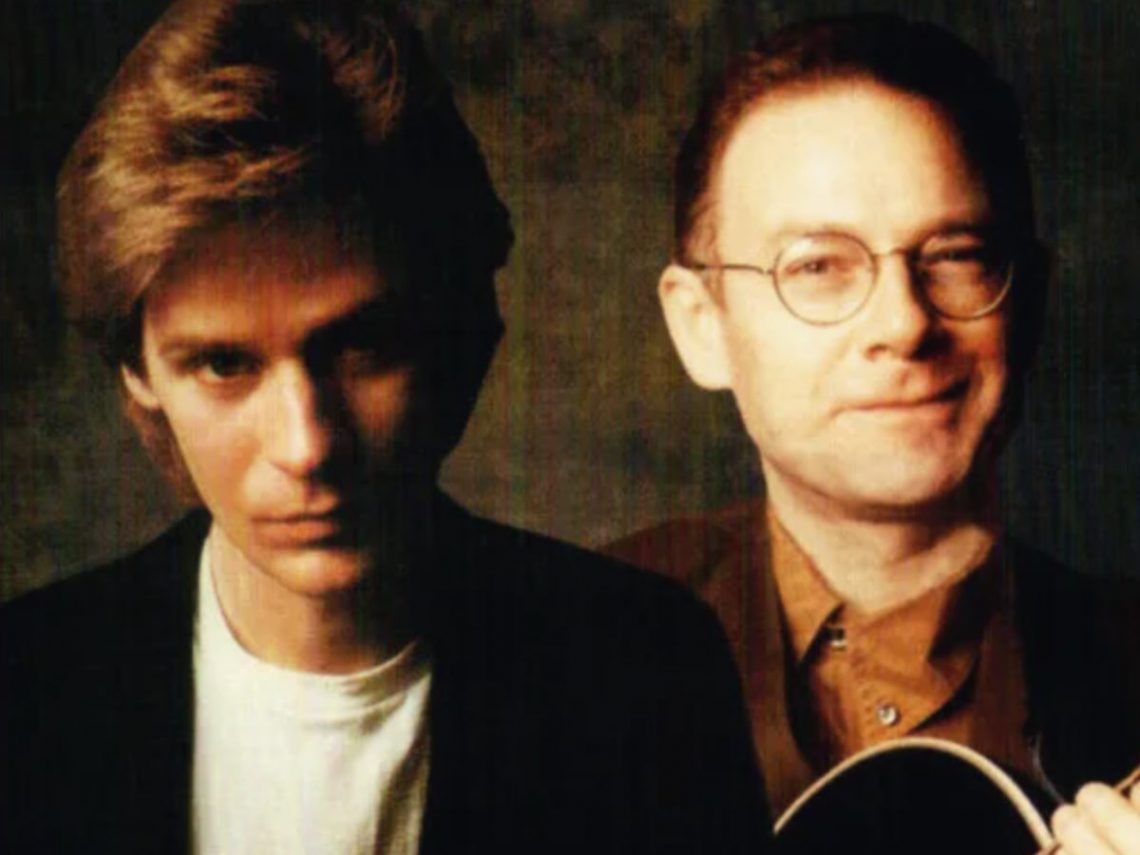
The unlikely friendship and collaboration of Robert Fripp and Daryl Hall

On the face of it, one wouldn’t mention Robert Fripp and Daryl Hall in the same breath. However, in the late 1970s, the pair worked together on an album after sharing a long-held mutual respect for one another, and for a time, it looked likely that the pair would even form a band together — but it was not to be. However, the two have showered praise in each other’s direction over the years, with their brief collaboration helping Fripp to establish the fourth iteration of his first band, the prog-rock pioneers King Crimson.
Throughout the 1970s, Daryl Hall delivered hit after hit with songwriting partner John Oates in the duo Hall & Oates. From there, he established himself as one of his generation’s best vocalists and songwriters. However, by 1977, he had started to feel stale and wanted to do something different with his creativity that would allow him to express himself more.
As for Fripp, the Dorset native dissolved King Crimson in 1974. It was confirmed that he had opted to take a complete break from music to recollect himself before making a return to the industry with a host of guest appearances and session work. It is said that Fripp and Hall met in 1974, and as both were already familiar with each other’s efforts, the two hit it off and decided to collaborate.
The alliance wouldn’t come to fruition for another three years, though. When Hall was writing songs for his debut solo album, he enlisted Fripp as guitarist and producer, with Hall creating the bulk of the songs and the former King Crimson man penning ‘Urban Landscape’ and ‘NYCNY’. Some of these tracks then made their way onto Fripp’s 1979 album Exposure.
Hall’s album became Sacred Songs, and it was recorded over just three weeks, with the tracks initially captured by Hall singing and playing the piano with Fripp accompanying him on guitar; this was then followed by overdubs from the regular touring band of Hall & Oates. Hall insisted on having his own band for the album instead of the Los Angeles touring musicians who played on the fifth Hall & Oates record, 1976’s Bigger Than Both of Us, as he felt they’d be more connected to his work. The album was also conceived to be a part of a trilogy of records alongside Peter Gabriel’s self-titled 1978 album and Exposure.
Despite the final product still existing within the realm of pop, it was nowhere near as marketable as the record label, RCA, might have hoped, and duly, they were scared of its prospects of flopping, so they shelved it. Not taking no for an answer, Hall and Fripp passed copies of the album to DJs and journalists, creating a buzz inside the industry, which was capped off by Hall’s fans writing letters to RCA requesting that the album finally be released.
In a way, RCA was right. Although the album sold well and it was critically well-recieved, it didn’t spawn any hits, and before too long, it became hailed as one of the most outstanding cult records of the day.
Understanding that they shared a powerful creative understanding, for a time, the pair seriously toyed with the idea of starting a full-time band alongside bassist Tony Levin and drummer Jerry Marotta. Eventually, however, only Levin stayed, with Adrian Belew and the eminent Bill Bruford replacing Hall and Moratta, respectively. Over time this became the fourth iteration of King Crimson, a significant point in itself.
Although their collaboration ended there, this hasn’t stopped the pair from praising each other. Looking back on that time when describing Fripp’s talent, Hall was quoted as saying that when he plays the six-string, “It sounds like the universe crying”.
“Daryl is a remarkable singer,” Fripp told Best magazine 1979 with a little dig at Hall’s day job. “It is too bad RCA is limiting the scope of his career. As for Hall and Oates, they are a very profitable group. They limit their format and possibilities on purpose as part of a commercial compromise they accept.”
“When you get into a relationship or a collaboration with a musician, it’s almost like a romantic relationship – and that’s the best way I could put it. You get into somebody’s heart. And Robert, I think, had visions that he was going to steal me away from John (Oates),” Hall then told Pitchfork in 2007, whilst indicating the difficulties the pair faced. “And I think that he thought that we were going to work together. That was never my intention, and because of all the difficulties we had, that was his response to all that. I understand where he’s coming from. That was his way of spraying out his frustration.”
Later, Fripp said of his friend’s undoubted talent: “Daryl’s pipes were a wonder. I have never worked with a more able singer.”
