


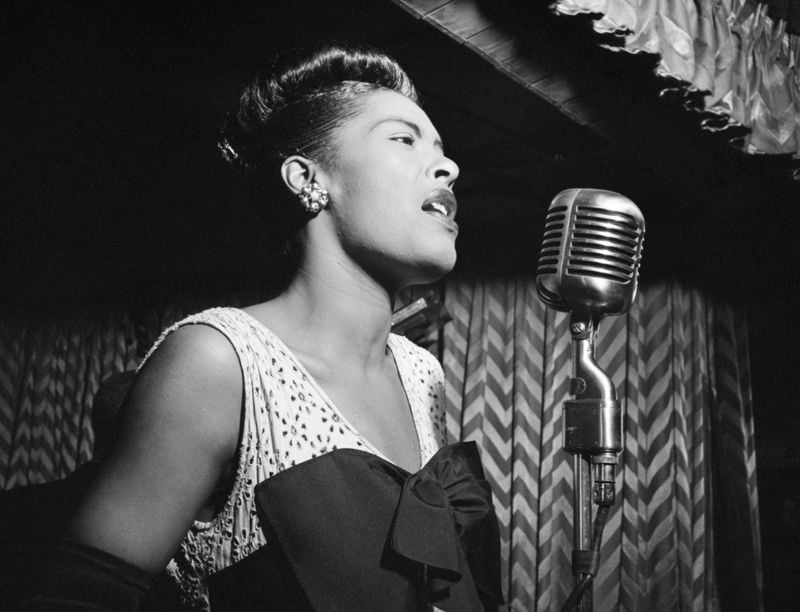
United States of America versus Billie Holiday: the racist trial that derailed a hero

Nick Cave once said, “As human beings, we have enormous capabilities that allow us to rise above our suffering – that we are hardwired for transcendence”. For Billie Holiday, music offered a conduit to the transcendence that her tragic life sorely called for. She became the greatest jazz singer of all time despite the odds waged against her, and she stands as an illuminating symbol in American history. Her legacy is one that we can learn a lot from, and one unfortunate battle with the law stands out as a particular point of discussion.
When Billie Holiday was in hospital dying of cirrhosis, the police came to her bedside and began trying to arrest her for possession of heroin, handcuffing her to the infirmary bed. By this stage, she was arguably the most important artist in American history. They wouldn’t have bothered if she wasn’t. In some sad way, this scene serves as a pastiche of the triumphs and tragedies of her short life.
This shocking incident had been a long time coming. Ever since Harry Anslinger was made head of the Federal Bureau of Narcotics in 1930, he had set his sights on the jazz scene. He racistly described the happening genre as “musical anarchy and evidence of a recurrence of the primitive impulses that lurk in black people, waiting to emerge.” Shockingly, this was a man of immense power. And his prejudice seemingly grew even more pointed when it came to musicians, whose lives he said “reek of filth”.
Holiday was a particularly easy target to prey upon, given the hardships she had already faced in her life. Her father abandoned her as a child, and her mother would frequently do the same. When she was just 11 years old, on Christmas Eve, her mother returned home to find Holiday fighting off a neighbour who was trying to rape her. He was arrested, but once again, Holiday, as a child, was held in protective custody for two months following the harrowing incident. Soon after her release, aged 12, she was working in a brothel attending to the upkeep.
In an ironic twist of fate, it was while working at the brothel that she first heard the music of Louis Armstrong and Bessie Smith and experienced the exultant boon of music that both insulated her from the cruelties of reality while simultaneously making sense of them. Soon, she would sing her own song and quickly became a starlet. Fame and fortune, however, often meant solitude. Her closest companion was her marvellously named dog, Mister Downbeat. With money, fame and very little support, she succumbed to heroin addiction.
In 1947, she was arrested for possession of narcotics, and as she recalled: “[The trial] was called the United States of America versus Billie Holliday. And that’s just the way it felt.” She was guilty, but the trial was a pig circus; even her own lawyer wouldn’t represent her. “In plain English, that meant no one in the world was interested in looking out for me,” she said.
She pled guilty while suffering from dehydration and was sent to Alderson Federal Prison Camp in West Virginia. She had her cabaret card revoked, severely hampering her career as she could no longer perform in venues that sold alcohol.
While her prison sentence might’ve been only a matter of weeks owing to good behaviour, in the years that followed, she struggled with addictions and abusive relationships but always sustained a level of performative brilliance that would lead her to sustain the crown of the greatest singer alive. But tragically, she wouldn’t be alive for much longer, and it is far from a leap to trace this to the stresses and torments she faced at the hands of the law when care and empathy would surely have sustained her brilliance for longer.
This is a battle that we witness recurrently with fellow Black stars from the era. As documents from Anslinger revealed, when his cracked down was questioned, he simply said he wouldn’t be discriminately harsh: “the good musicians, but the jazz type”. Thankfully, Holiday fought on to exhibit her transcendence even over this mounted attack, her legacy standing as an edifice of defiance that showcases lessons we can all learn form.

