


‘Undo’: Shunji Iwai’s dreamy despair

Since the 1990s, Shunji Iwai has changed the landscape of Japanese cinema in many fascinating ways that have captured the attention of film fans all over the world. Known for his complex and visually innovative gems like All About Lily Chou-Chou and A Bride for Rip Van Winkle, Iwai’s cinematic output is always a pleasure to dive into. That’s precisely why his minor works are often just as enigmatic as his acclaimed masterpieces.
The discourse surrounding Iwai is often dominated by movies like Swallowtail Butterfly, which Quentin Tarantino once famously called the “Japanese Pulp Fiction“. However, Iwai was artistically active before his first major feature, Love Letter, became a massive critical and commercial success in 1995. The period preceding Love Letter was a particularly interesting one for the Japanese auteur, as is evident in projects like Fireworks and Undo.
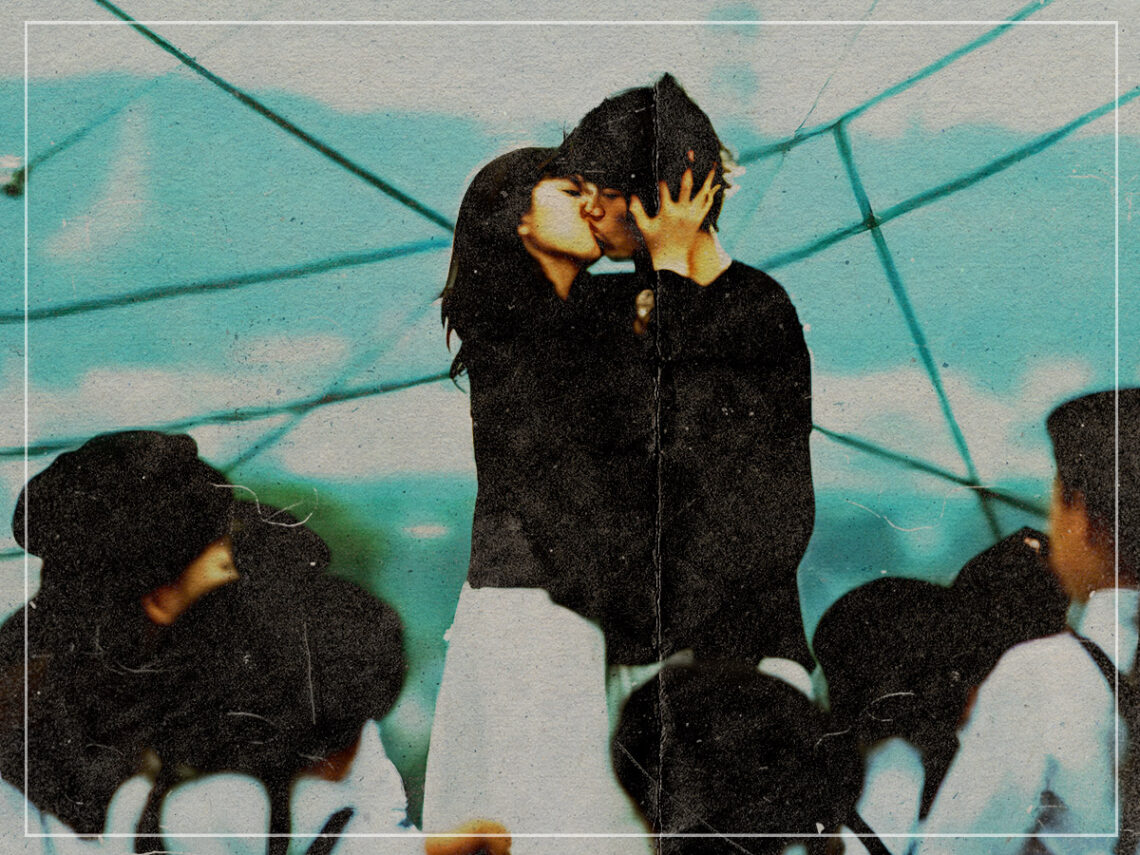
Undo, especially, set the tone for Iwai’s later experiments with images and sound as he kept developing his singular cinematic style. The 1994 film follows the strange tale of Yukio and Moemi – a couple who become entangled in a nightmarish descent into insanity, unable to escape their demons. When Moemi asks for a dog or a cat because she feels lonely, Yukio ends up getting her a pair of turtles instead due to building restrictions.
The world is oversaturated with movies about the beginning of romantic relationships, endless saccharine regurgitations of meet-cute sequences strung together to generate stale fantasies. That’s why works like Undo or even Ingmar Bergman’s Scenes from a Marriage are so important. They remind us of the inevitable trajectories of those illusory rom-coms, highlighting the suffocating collapse of disintegrating love.
As Yukio becomes more and more absorbed in his writing, Moemi drowns in the desolate psychosphere of her lonely mind and becomes completely obsessed with holding her life together with strings and knots. A doctor diagnoses her with ‘Obsessive Knot-Binding Syndrome’, a condition which he claims results from flaws in her relationship with Yukio. The further they drift apart, the fault lines of her psychosis deepen.
Undo is undoubtedly a fascinating portrait of falling out of love, but it would never work without Noboru Shinoda’s beautifully ominous cinematography. Shinoda, who went on to collaborate with Iwai on some of the greatest accomplishments of their respective careers, carefully films the interior of their strange apartment and transforms it into a spatial metaphor for their relationship as it becomes increasingly cluttered with vestigial rope. In addition, the troubling knots in the exterior world are also demonstrated by shots of landscapes held together by telephone wires and electric lines.
Visually outlining what it means to be imprisoned in a dying relationship, Yukio and Moemi transition from a world of tiny string artefacts to elaborate mechanisms following the principles of Japanese bondage art known as ‘Kinbaku’ or, as it is more commonly known in the West, ‘Shibari’. It is the psychosexual manifestation of their frustration, perfectly symbolising the self-destructive implosion of whatever love they once had for each other.
While these themes have been explored elsewhere, what’s absolutely striking about Undo is the power of the imagery. The visual language of the claustrophobic domestic chaos in Being John Malkovich is very similar to Iwai’s conceptualisation, in addition to the way in which the bondage of modernity and the cyberverse was depicted in Serial Experiments Lain. Iwai has gone on to work on projects of far greater artistic significance, but Undo is just another reminder that he was a visionary from the very beginning.
Watch the film below.
