


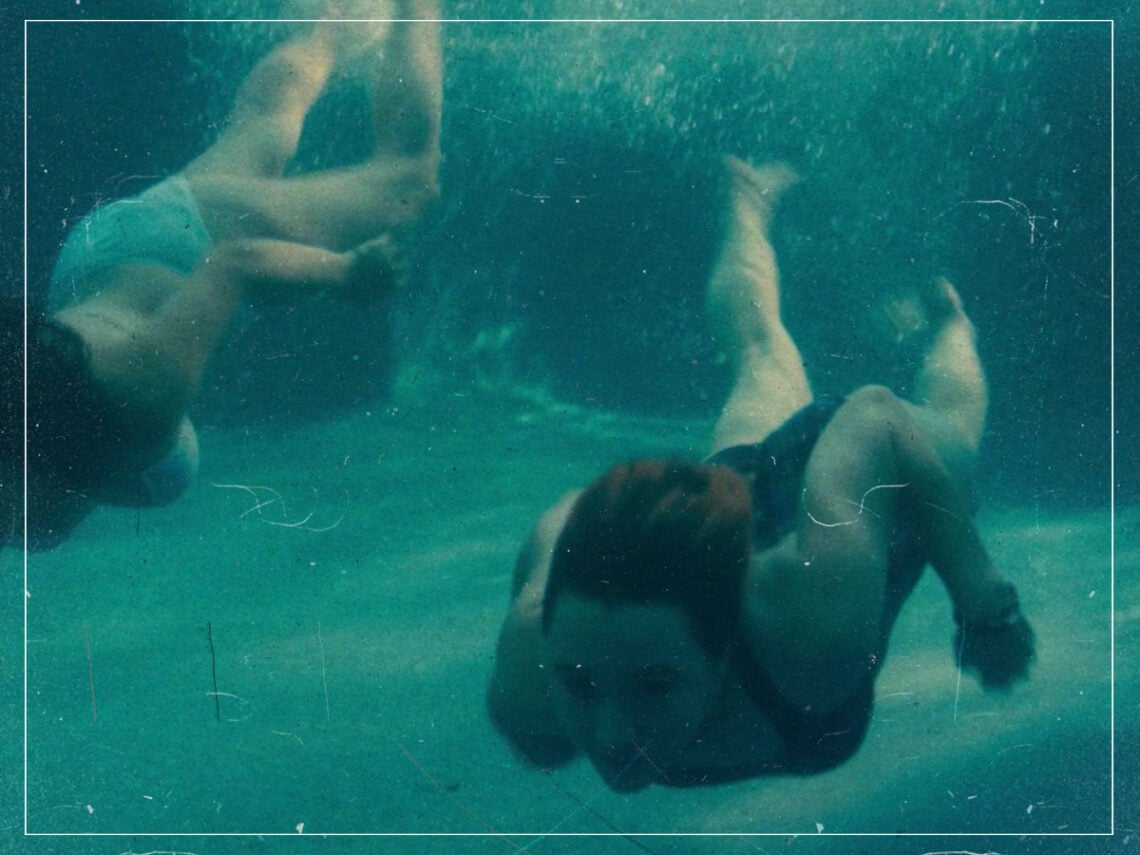
Underwater existentialism: the biggest cinematic cliché?

Have you ever watched a movie and suddenly a character decides to immerse themselves in water after the slightest bit of sadness, frustration or hopelessness? This could be a bath, a swimming pool or even the sea, with the camera joining them on their existential trip through the waves. The character might even attempt a scream to convey the true depths of their emotions.
When this occurs, it doesn’t always mean that a character is attempting to drown – in fact, they usually aren’t. Instead, their instinct when faced with despair or uncertainty is seemingly to submerge themselves in water for just a few seconds, which filmmakers often choose to present in slow motion, allowing us to see the characters’ emotions fully. By using techniques such as slow motion or extreme close-ups, these scenes are framed in a way that emphasises their importance to the character’s overall arc, signalling that they are facing a pivotal moment in their lives.
The trope can be found in a wide array of movies and television shows, such as Requiem for a Dream, Lady Bird, Maestro, Ferris Bueller’s Day Off, Don’t Worry Darling, Perfect Blue, Breaking Bad, I Believe In Unicorns and many, many more.
Water is a symbol of rejuvenation, clarity, cleansing and purity. Subsequently, when directors utilise water as a motif, they are likely trying to convey themes of hopefulness and new beginnings, with characters attempting to rid themselves of unpleasant feelings and uncertainty. At the same time, water can be associated with drowning (thus, death) and vastness, suggesting that characters might be feeling trapped in their mental or physical state, overwhelmed, or swamped with emotion.
The dichotomy between these two meanings works well together – many characters could be feeling lost and in despair, but by being filmed underwater, they could hope to find a sense of clearness or truth. Perhaps they’re looking for a sense of newness, calm, or escape from their situation. Typically, we will see the character resurface – they are trying to find a way out of drowning, trying to discover a sense of salvation and renewal. This draws parallels to religious acts like baptism, which symbolise the ridding of sin and the entry into a state of purification.
Sometimes, this trope can play out with an overwhelmingly cliché sensibility, even worse when a character attempts to scream under the waves. In the indie coming-of-age drama I Believe In Unicorns, Natalia Dyer’s character Davina is first introduced to us in the bath, submerging her head underwater before sitting up and gasping, her voiceover narration explaining how she needs to metaphorically learn how to breathe.
The film ends with her echoing a similar statement while floating underwater, following some tumultuous events. While I Believe In Unicorns isn’t necessarily a bad movie – in fact, its exploration of girlhood, male violence and loneliness is heartbreaking – these underwater scenes, despite being shot beautifully, feel inherently cliché.
Because this trope has been done so many times, when a character who has spent the entire film grappling with their mental state immerses themselves in water, the audience knows exactly what this means. They’re suffocated by their feelings (water also blocks out sound, allowing characters to silence what is bothering them); they’re looking for a sense of escape. It often feels lazy and uninspired, especially when nothing else in the narrative is related to swimming or set near a pool of water.
That’s not to say the underwater trope doesn’t always work. In Aftersun, the father and daughter duo go swimming, and both characters are filmed underwater. The shots of Paul Mescal’s Calum feel confronting – his face is rather emotionless, but it somehow tells us everything that we need to know. He is suffocating from his depression despite trying to stay afloat for the sake of his daughter, and the underwater motif serves to convey this idea well.
There is no clichéd speech over the top, and the scene fits nicely with the rest of the film. The pair are on holiday, so it makes sense for them to be enjoying a dip in the pool. Yet by capturing a close-up of Calum’s face, we are given greater insight into his mental state at a moment when he should be smiling.
The ‘existential underwater’ trope is not necessarily a bad thing. Sometimes, it can work well when executed properly. But if one thing is for certain, it is incredibly overused. While using a popular trope is an easy way of communicating with an audience through familiarity, it can also suggest a lack of originality on the filmmaker’s part. Although certain movies definitely make better use of it than others, it feels as though it is now time to retire the existential underwater trope for good.
