


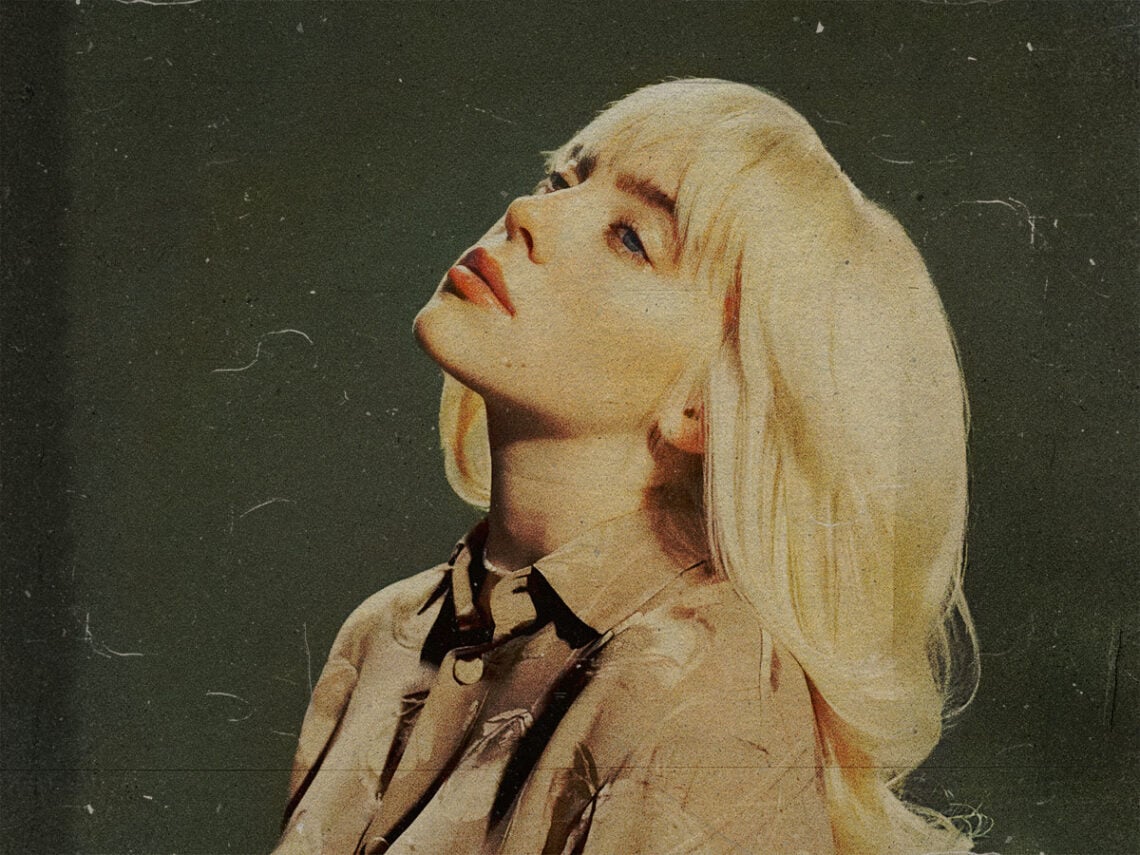
Lyrically Speaking: Understanding Billie Eilish’s tender ‘What Was I Made For?’

“Take my hand. Now close your eyes, and feel,” a voice guides you in as the humour and joy of Barbie breaks into something more emotional. As clips and images flash by of young girls playing, mothers with their babies, friends bonding and girls and women of all ages flicker past, Billie Eilish’s ‘What Was I Made For’ soundtracks the moment.
Months after seeing the film and first being emotionally bowled over by the song, something in it still hits me hard. The introductory chords alone, with Eilish’s gentle vocal riff, capture something. There’s a tenderness, a cautiousness, a softness. It’s like a hug and a devastating cry, maybe both at once. When it came to crafting a song to soundtrack the film’s central moment as Barbie watches a montage of womanhood, in all its beauty and all its pain, Eilish’s ballad bottles it in all its complexity.
“I used to float, now I just fall down/ I used to know, but I’m not sure now / What I was made for,” she begins. At first, her song is tied tightly to the film. Harking back to the plot and the moment when Margot Robbie’s Barbie malfunctions, she quite literally used to float off her house and into her car, but now she tumbles. There’s a metaphor in there for the way that life always feels so much easier as a young girl with the world in front of you. But as you grow up and attempt to navigate it as a woman, all the doubt and demanding voices from society feel heavier. They make you feel heavier. For all those girls floating on dreams and hopes, womanhood can feel just like that slam back to the ground when things turn out a lot harder than you once thought.
Throughout the song, Eilish does this as she weaves movie-specific moments with grander thoughts and feelings. It feels like a project that landed in the singer’s lap at the perfect time. As an artist in the spotlight after breaking out as a teenager, she’s spoken a lot about the struggles to maintain her identity and her passion as she attempts to navigate creativity along with mental struggles and the common carnage of growing up.
As a celebrity, perhaps more than anyone, Eilish can relate to the commodification of women and our complex connection to Barbie as a doll. Throughout the film, the character goes on a journey of trying to see herself as more than a project or “stereotypical Barbie”. When faced with the real world’s strife and struggles, she witnesses things like objectification and sexism, going through a similar journey that all girls do as we grow up and realise that the world isn’t fair to us. “Looked so alive, turns out I’m not real / Just something you paid for,” Eilish sings, attempting to capture the feeling of being boxed and made to feel like a product with parts of your personality moulded or picked apart by the world so you can be a more appealing version of yourself. Again, linking it to the very idea that Barbie is literally a product that’s bought and sold, Eilish’s lyricism lets humanism into it, too.
In stark contrast to the rest of the soundtrack and songs like Dua Lipa’s ‘Dance The Night’ or Lizzo’s ‘Pink’, Eilish’s track is soft and sad. “When did it end? All the enjoyment,” she sings as clips of young girls pass by the screen. While the moment is designed to be a moving one, the outcome is happy. Barbie sees womanhood in all its complexity and still chooses it. As the images of real people flicker past the screen, Eilish’s sombre lyricism on depression and purpose feels like a vital part of the moment as she offers up the harder side to life and the reality that not everything can be pink and perfect.
Women are three times more likely than men to experience a mental health issue. There are so many factors to that. Some people chalk it up to social media and the way that comparison and body image is worsening as the world becomes more digital. It could be accounted for by the sexism and abuse that is still rife in the world. It could even be put down to the pressure on women to be perfect, fun, light and the fear that sharing our sadness might push people away. “I’m sad again, don’t tell my boyfriend,” Eilish sings, capturing that thought as she does with all of these. Somehow, in the simple, relatively sparse lyricism, she captures all of it.
More so than any one moment in the movie, Eilish’s song ties the story of Barbie together in the grandest sense. By taking the plot points and expanding them out into universal sentiments in her lyricism, Eilish turns Barbie into a common tale of womanhood, growing from hopeful girls into wounded souls in a world not built to help but littered with issues and abuses like a minefield. As Barbie closes her eyes and feels, Eilish’s words capture every emotion.
But it ends on hope. As the video clips show moments of real love, joy and friendship, even Eilish’s words seem comforted by it. “Think I forgot how to be happy / Something I’m not, but something I can be / Something I wait for / Something I’m made for,” she sings in the final moments. With her soft voice and heavy emotional wait, the closing remarks feel like a necessary affirmation that things will be okay again, sung like a reminder to Eilish and millions of women everywhere.
