


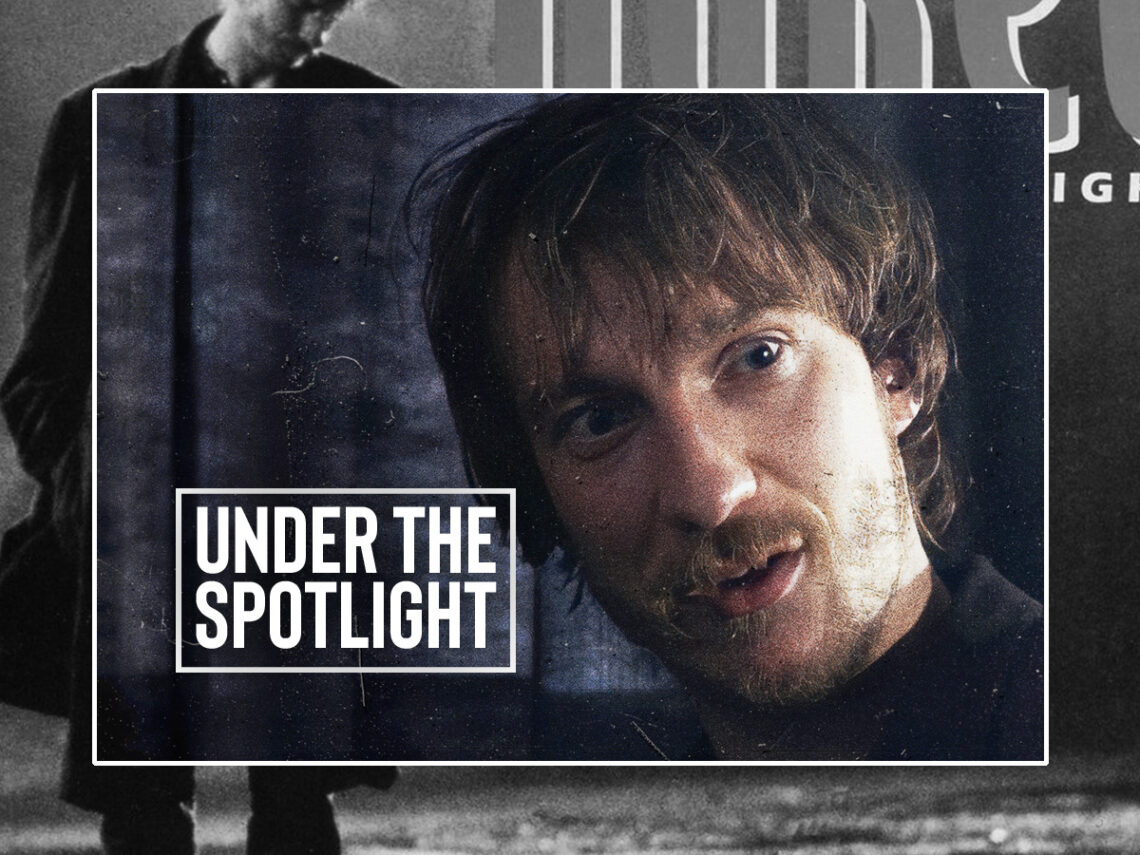
Under the Spotlight: David Thewlis’ nuanced fury in Mike Leigh movie ‘Naked’

Rarely do people evaluate the filmography of Mike Leigh and praise the master of British social realism for his powerful protagonists, with the auteur being better known for his carefully curated ensemble casts. Still, this is not to say that Leigh never crafted such a leading star, with Poppy in Happy-Go-Lucky perfectly embodying the confused optimism of Generation Y and Naked’s Johnny being the exact polar opposite, a deeply resentful and troubled man who sees the world through pessimistic lenses.
Certainly Leigh’s most sincere movie, 1993’s Naked, opens with protagonist Johnny, played by David Thewlis, raping a young woman in a Manchester alleyway before he flees to London to seek refuge in the house of a former girlfriend, Louise (Lesley Sharp). Barking observational philosophy whenever he gets a spare breath, Johnny is a homeless cynic, exposing the dark heart of an emerging technological revolution which he deeply loathes.
Given the background reading of Voltaire’s Candide, James Gleick’s Chaos and the teachings of Buddha, as well as the Bible and the Qur’an, English actor David Thewlis approached the role with bold creative freedom, especially when considering Leigh didn’t allow the actor to meet any of his fellow cast members beforehand. Consequently, he marches into the film with all the self-assured confidence of a philosophy student who has just marched out of a lecture about nihilism.
Partly forced out of his former girlfriend’s house, Johnny is left to stomp the streets of London like a spectre, ready to cast doubt and pessimism over the British capital in its approach to the 21st century. Lamenting the modern world, he spits: “That’s the trouble with everybody – you’re all so bored…now you want cheap thrills and, like, plenty of them, and it doesn’t matter how tawdry or vacuous they are as long as they’re new,” speaking down to Louise as if she’s a willing disciple rather than a passive listener.
Though, despite being such a dominating character, Thewlis provides the protagonist with a considered, methodical performance that doesn’t just rely on dramatic moments of emotional outbursts. Thewlis’ mind, and indeed the psyche of Johnny, is always ticking, waiting to react to the world around him and the people who inhabit his space, with every twitch of his eye holding a thousand words waiting to burst from his cranium.
Still, despite the flaws of Johnny, he remains a peculiar hero in Leigh’s story, thanks to the opposing character of Jeremy (Greg Cruttwell), a despicably misogynistic landlord who holds a tight grip over Louise’s life. “One knows Johnny’s, I wanted to probe somewhat into unacceptable aspects of male behaviour, but to do that, it was important in the representation of Johnny to have the landlord character,” Leigh told us in a 2021 interview.
Continuing, he added: “He really is a misogynist, and he is a bastard…Whereas Johnny isn’t, you know, it’s much more complex with what’s happening with Johnny”.
Making the audience sympathise with a largely detestable figure is no easy feat, yet it is thanks to the craftsmanship of Leigh’s screenplay and Thewlis’ delivery that one of the filmmaker’s greatest and most complex characters can thrive. Johnny is a dislikeable character, yes, but he is also a frail, fragile character, unable to truly express his own emotions in a society that gives him no agency, power or meaning to exist.
