


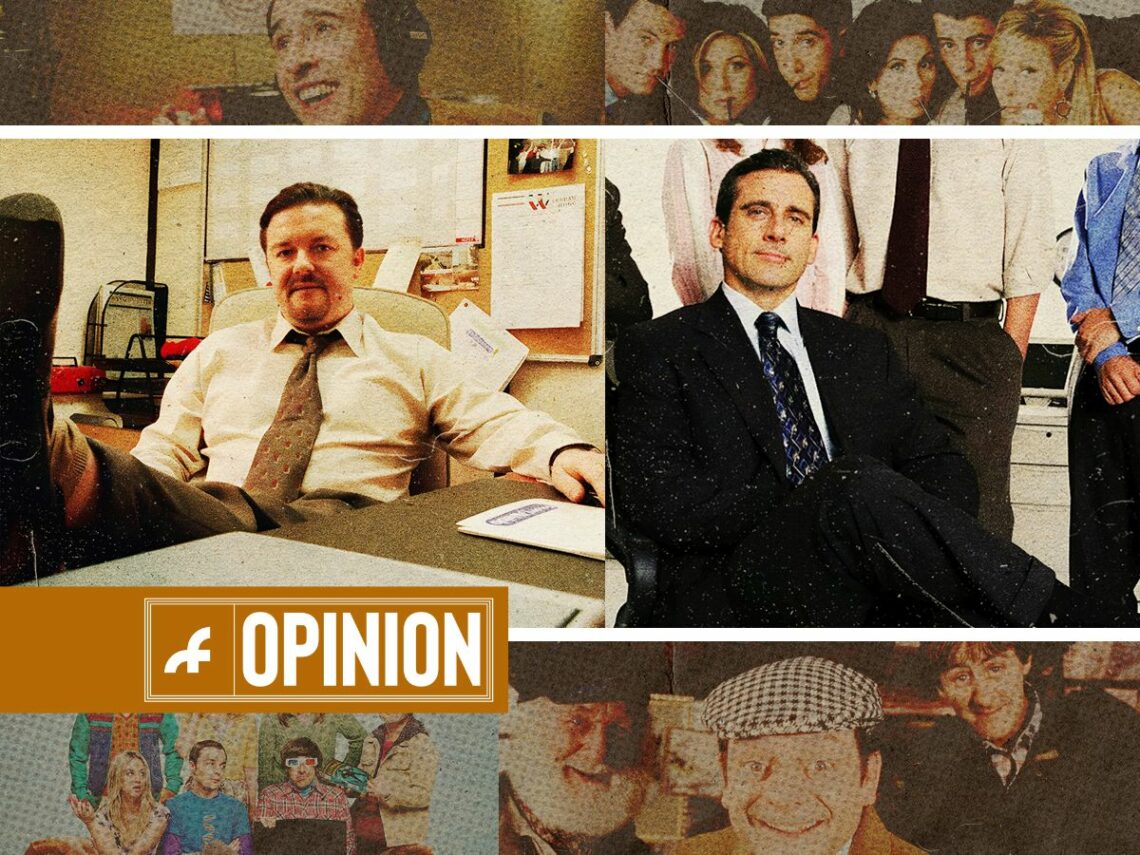
UK vs US comedy: A lesson in quality over quantity

Over here in the UK, we take our comedy very, well, seriously. Brits are known for their sense of humour, especially in the north and the midlands parts of the country. For us, humour and comedy are things that serve a far more significant purpose than mere entertainment. In fact, it’s often used as a way to get to the meaning of what we really want to say, the serious things that perhaps we’re too ashamed to admit directly. Whether this is a good thing or a hindrance is a conversation for another time, though.
But the fact remains that we absolutely love our comedy, and we might even stake the claim that we’ve provided some of the best comedy TV shows in the history of entertainment. That’s not to say that our American cousins haven’t brought in their fair share of hysterical laughter – of course, they have. But we might go so far as to say that we Brits just do it, well, better.
There are several proofs of this instance, and it essentially comes down to the fact that UK comedy shows often run for just a few seasons, packed to the rafters with quality and hidden moments that only reveal themselves after several viewings. By contrast, US comedy shows often go on for several seasons, mostly overstaying their welcome and having audiences become tired of their tropes and characters.
The most obvious instance of this comes, of course, through the British and American versions of The Office. Ricky Gervais delivered the first (and undoubtedly best) version of the famous workplace comedy in the early 2000s, and even watching today – after some previously 20 or so previous viewings – one can still find nuanced moments of true brilliance in just 12 episodes and two Christmas specials.
Quite simply, The Office UK contains within it not only some of the finest comedy ever written but the entirety of the tragedy of human life – seeking respect and not getting it, being in love with someone you can’t have, having to work a job you hate but still somehow finding joy within it, and confronting the banality and general meaningless of life.
By contrast, The Office US, though admittedly entertaining and on occasion funny, does little but flutter at our inner humour whilst occasionally making us feel slightly awkward and sympathetic for its characters. There are indeed touching moments and those of genuine hilarity too throughout its staggering nine seasons. And it’s those very nine seasons that are arguably the reason for the lack of overall quality. Littered amongst genuinely great TV moments is an entire fucking noise of filler, tired repeated jokes and tedious, increasingly farfetched story arcs.
Gervais’ original Office gets in, tells its story, and leaves with the party still in full swing, with the viewer dying for more. Of course, Gervais, no stranger to America, brought Brent back for the ill-fated Life on the Road movie, but it’s easy to admit that it was crap, to say the least. The song had been sung, we’d moved on, and this new Brent lacked the unpolished earnestness of the early 2000s original.
This ‘Quality vs Quantity’ debacle exists elsewhere, too, of course. I’m Alan Partridge, two seasons (although several previous appearances and later efforts of varying quality); Gervais’ Extras, two seasons; Fawlty Towers, two seasons; Dinnerladies, two seasons; The Royle Family, three seasons; Phoenix Nights, two seasons. We could go on.
Then let’s look at Friends, one of the most successful American comedy series of all time. While it has its detractors, Friends also possesses moments of great comedy. However, like The Office US, it more than overstays its welcome. The hilarity of the first two or three seasons, even five at a push, is soon replaced by a bombardment of the same jokes, a sense of oversentimentality and, overall, an outright delivery of unfunny tedium.
OK, maybe it’s not an entire Atlantic Ocean divide; there are British equivalents. Take Only Fools and Horses, for instance, an undoubted and absolute classic. The best seasons are certainly those early ones with Grandad, although Uncle Albert was a more than capable character replacement – but by the time we arrived at the Specials throughout the 1990s and early 2000s, the quality just wasn’t there.
But let’s say for the sake of argument that there is something in the respective waters of the UK and the US, and perhaps it comes down to the way we perceive not only comedy but value itself. America, the heart of Western capitalism, likes to cash in, rinsing the dishtowel until it’s bone dry. Over here, it can sometimes feel like we want something a little more lasting – although that sentiment is rapidly diminishing as our European identity becomes slowly replaced by a sense of being an island several thousand miles off the east coast – and that’s certainly what we’ve been given over the preceding years of comedy shows.
Perhaps it’s best not to dive too far into the reasons for this glaring difference between our respective comedies, though, for the proof is in the pudding. We’ve been quoting The Office UK for 20 years now, and it’s still just as funny as it was back then, if not more so, and more important, and I defy one to name but a handful of Office US moments that aren’t just either Michael Scott or Dwight Schrute acting like morons.
Comedy is serious around here. It’s not to be trifled with; it’s an essential part of our lives, not mere entertainment. Comedy is how we form our relationships with one another; it’s how we come to further understand the deeper facets of our lives. Don’t drag out our lives and make them tedious because sometimes they’re hard enough. Just come in, deliver the goods in one fell swoop and be on your way. We’ll remember you forever.
