


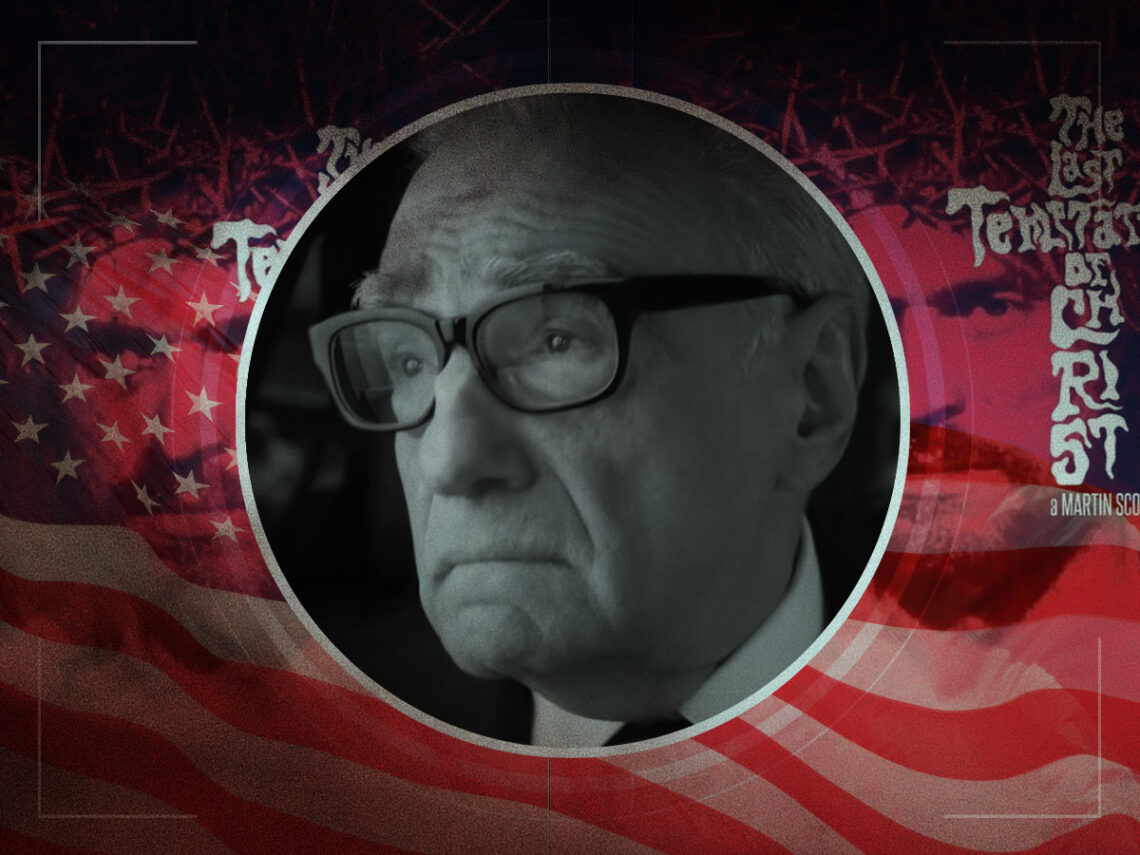
The US states that banned Martin Scorsese’s controversial ‘The Last Temptation of Christ’

It’s ridiculous that we live in a world where a Martin Scorsese movie can be considered controversial enough to be banned from public consumption, because let’s face it, he’s hardly Lars von Trier or Pier Paolo Pasolini.
The filmmaker rose to prominence with his groundbreaking look at masculinity and trauma, Taxi Driver, and while it certainly explored heavy themes – violence and child prostitution – Scorsese hadn’t exactly made something as shocking as Salò. While he has continued to make movies which often take on violent themes, with gangsters and crooks rounding out much of his cinematic universe, Scorsese has always remained one of Hollywood’s most bankable and popular filmmakers.
But when it came to making a religious epic about the more X-rated side of Jesus’ exploits, Scorsese soon found himself public enemy number one – at least with certain religious groups. The Last Temptation of Christ was released in 1988, with Willem Dafoe playing the main character, while Harvey Keitel took on the role of Judas. Many critics enjoyed the film, considering a bold approach to the genre, but countless Catholic groups were outraged by the depiction of Jesus as someone who indulged in fantasies of ‘sins’ such as premarital sex.
People were so pissed off, in fact, that it got to a point where some religious fanatics were so incensed by what they were seeing that they turned to terrorism. During a screening in a Paris cinema, an Integralist Catholic group placed an incendiary device under a chair, causing 13 people to suffer injuries. Luckily, no one died, but the fact that people were so angry about the film that they took to terrorism indicates just how powerful cinema can be – it really has the potential to incite violence if you make your film controversial enough.
Scorsese surely knew that some people would be offended by the movie, but in seeking to bring his artistic vision to life, he had to ignore the potential dangers. Good art will always offend. However, with something religious, the stakes are always much higher, and to this day, the movie remains banned in various countries, like Singapore and the Philippines.
You’d think that on Scorsese’s home turf, however, he’d face controversy but not outright bans. Yet, there was a brief period when several US states prohibited people from watching the film, which seems preposterous considering it was as recent as the late 1980s. Some devoutly religious areas of the country were just not pleased with this ‘blasphemous’ vision of Christ’s life, and did all they could so that people couldn’t witness such apparently heinous acts.
So, if you were a resident of Savannah, Georgia, access to the film was denied until six weeks after its official release date, when city officials finally gave in. You were less fortunate if you lived in Louisville, Kentucky, however, with the controversial conservative Traditional Values Coalition gunning for the ban. Eventually, it was overturned after much of the hype died down.
Scorsese went on to earn a ‘Best Director’ nomination at the Academy Awards for the film, and while the movie still faces censorship in certain parts of the world, it seems like the US quickly got over the initial shock of seeing Jesus fully naked on the cross.
